
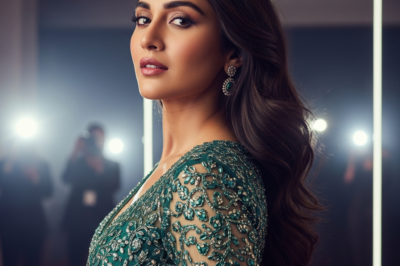
The Meteoric Rise of Wamiqa Gabbi
In the contemporary landscape of Indian entertainment, few actors have navigated the transition from regional cinema to national digital stardom with as much grace and tenacity as Wamiqa Gabbi. Known for her luminous screen presence and a pair of expressive eyes that seem to possess their own vocabulary, Gabbi has become the quintessential face of the Indian OTT (Over-The-Top) revolution. While many actors struggle to find their footing in the crowded digital space, Wamiqa has carved out a niche for herself by selecting roles that challenge the status quo and demand a high degree of emotional intelligence. Her journey is a fascinating study of how talent, when met with the right opportunity, can transcend linguistic and geographical barriers. From her early days in Chandigarh to becoming a household name across India, Wamiqa’s story is not just about stardom, but about the evolution of an artist who refuses to be pigeonholed.
Biography and Early Life: The Roots of a Performer
Wamiqa Gabbi was born on September 29, 1993, in the vibrant city of Chandigarh. Growing up in a culturally rich environment, she was exposed to the arts from a very young age. Her upbringing played a pivotal role in shaping her artistic sensibilities. She attended St. John’s High School and later pursued her higher education at DAV College in Chandigarh. Even during her school days, Wamiqa was known for her participation in dance and theater, showing an early inclination toward the performing arts. Unlike many who stumble into acting by chance, Wamiqa’s path was paved with a conscious desire to express herself through movement and dialogue. Her Punjabi roots gave her a strong sense of identity, which she later brought to her roles in the Punjabi film industry, often referred to as Pollywood. However, her ambitions were never limited by borders. She harbored a dream of making it big on the national stage, a dream that would eventually see her working with some of the most prestigious directors in the country.
Natural Talent and the Artistic Genesis
What sets Wamiqa Gabbi apart from her contemporaries is an innate, raw talent that feels unmanufactured. She is a trained Kathak dancer, a skill that has significantly contributed to her physical grace and her ability to emote through her eyes. In Indian classical dance, the ‘Abhinaya’ (art of expression) is paramount, and Wamiqa has masterfully translated this training into her screen acting. Her journey began with a small cameo in the iconic Bollywood film ‘Jab We Met,’ but it was the Punjabi film ‘Tu Mera 22 Main Tera 22’ alongside Yo Yo Honey Singh and Amrinder Gill that truly introduced her to the masses. Her ability to hold her own against established stars was immediate evidence of her natural flair. She didn’t just play characters; she lived them. This period of her career was crucial as it allowed her to experiment with various genres, from romantic comedies to intense dramas, honing her craft with every project. Her filmography in Punjabi, Telugu, Tamil, and Malayalam cinema serves as a testament to her versatility and her willingness to learn new languages and cultures to stay true to her characters.
Exclusive Acting Skills and the Mastery of Nuance
Wamiqa’s acting style is characterized by a subtle, understated elegance. In an era where ‘loud’ acting often garners attention, she chooses the power of silence. Her performance in the web series ‘Grahan’ is a prime example of this. Playing the character of Manu, she portrayed a woman caught in the crosshairs of history and personal tragedy with a vulnerability that was heart-wrenching. Her exclusive skill set includes an impeccable command over her facial expressions, particularly her eyes, which critics have often described as her most potent tool. Whether it is the mischievous spark in ‘Modern Love Chennai’ or the calculated ambition in ‘Jubilee,’ Wamiqa uses her features to convey complex internal monologues without saying a word. Furthermore, her collaboration with visionary director Vishal Bhardwaj has highlighted her ability to handle dark, complex, and poetic material. Working with Bhardwaj requires a certain intellectual depth, and Wamiqa has proven herself more than capable, blending into his atmospheric worlds with ease. Her ability to switch between a girl-next-door persona and a femme fatale indicates a range that is rare in the current generation of actors.
Family Background and Personal Values
Behind the glamour of the silver screen lies a strong support system that has kept Wamiqa grounded. Her father, Govardhan Gabbi, is a well-known Punjabi writer and scholar. It is perhaps from him that Wamiqa inherited her love for storytelling and her deep appreciation for literature and scripts. Having a father who understands the nuances of narrative has undoubtedly influenced Wamiqa’s choice of projects; she is known for being selective, often prioritizing the quality of the script over the commercial viability of a project. Her mother is a homemaker who has been a constant source of emotional strength. The Gabbi family’s emphasis on education and cultural values ensured that Wamiqa remained connected to her roots even as she ascended the heights of fame. She also has a brother, Haardik Gabbi, with whom she shares a close bond. Despite her busy schedule, Wamiqa often retreats to her family in Chandigarh to recharge, reflecting her belief that personal stability is the foundation of professional success. Her social media often offers glimpses of this personal side, showcasing her love for animals, nature, and her tight-knit circle of friends.
Recent Works: Dominating the Digital Landscape
The last few years have seen Wamiqa Gabbi dominate the digital space like no other. Her portrayal of Nilofer Qureshi in Vikramaditya Motwane’s ‘Jubilee’ was a turning point. Set in the golden age of Hindi cinema, Wamiqa played an aspiring actress with such authenticity that she seemed to have stepped right out of a 1950s film reel. Her performance was a masterclass in poise and ambition. Following the success of ‘Jubilee,’ she appeared in Vishal Bhardwaj’s ‘Charlie Chopra & The Mystery Of Solang Valley,’ where she played the lead detective. This role allowed her to showcase a completely different side of her personality—sharp, witty, and fiercely independent. Her film ‘Khufiya,’ also directed by Bhardwaj, saw her sharing screen space with the legendary Tabu. In ‘Khufiya,’ Wamiqa played Hina Rehman, a character wrapped in layers of mystery and domestic conflict. Her performance was lauded for its complexity, as she held her own against a powerhouse performer like Tabu. Additionally, her work in the anthology ‘Modern Love Chennai,’ specifically the segment ‘Margazhi,’ showcased her ability to portray the delicate innocence of first love, further cementing her status as a versatile performer who can handle any genre with aplomb.
A Bright Future and Industry Impact
As Wamiqa Gabbi continues to evolve, the industry watches with bated breath. She has successfully broken the barrier that often limits regional actors from entering the mainstream Hindi market. By focusing on the burgeoning OTT platform, she has reached a global audience that appreciates her nuanced performances. Her future looks incredibly bright, with several high-profile projects in the pipeline, including more collaborations with top-tier directors and potential forays into international cinema. Wamiqa represents a new generation of Indian actors who are defined by their craft rather than their social media following, though she excels at both. Her impact on the industry is evident in the way casting directors now look for ‘Wamiqa Gabbi-type’ actors—performers who bring a mix of classical beauty and modern sensibility. As she continues to choose roles that push the envelope, Wamiqa Gabbi is not just a trending name; she is a lasting icon in the making, destined to leave an indelible mark on the history of Indian cinema and digital storytelling. Her journey from the streets of Chandigarh to the pinnacle of the digital world serves as an inspiration to countless aspiring artists, proving that with talent, patience, and a bit of poetic grace, the world is truly your stage.






































Leave a Reply