
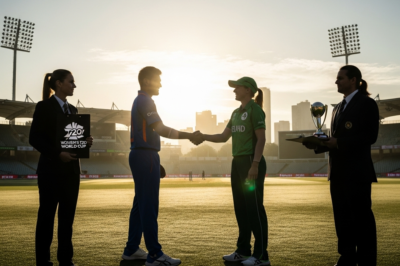
The Strategic Rescheduling of the India-Ireland T20I Series
In a move that signals a significant shift in the global cricketing landscape, the upcoming T20 International series between India and Ireland is set to feature revised start times. This decision, primarily driven by a desire to avoid a broadcast clash with the ICC Women’s T20 World Cup, underscores the growing commercial and social importance of women’s cricket. As the cricketing world becomes increasingly congested with franchise leagues, international bilateral series, and ICC marquee events, the logistics of scheduling have become a complex puzzle for administrators. The decision to start the India-Ireland matches earlier is not just a tactical adjustment for television viewers; it is a profound statement about the integrated nature of modern cricket. For fans in the Indian subcontinent, the adjustment means shifting their viewing habits, while for those in Dublin and the surrounding areas, it creates a unique atmosphere of morning or early afternoon international cricket at the picturesque Malahide Cricket Club Ground. This rescheduling reflects a collaborative effort between the Board of Control for Cricket in India (BCCI), Cricket Ireland, and global broadcasters to ensure that neither the high-stakes matches of the Women’s World Cup nor the popular India-Ireland fixtures lose out on viewership or engagement. Historically, men’s bilateral series often took precedence in the television window, but the current era demands a more balanced approach where global tournaments, regardless of gender, are given the breathing room they deserve to thrive in a competitive media market.
The Rising Prominence of the Women’s T20 World Cup
The primary catalyst for this scheduling shift is the ICC Women’s T20 World Cup, an event that has seen exponential growth in popularity over the last decade. From the record-breaking final at the MCG in 2020 to the high-octane clashes in South Africa and the UAE, women’s cricket is no longer a peripheral attraction; it is a central pillar of the sport’s economy. Broadcasters like Star Sports and various digital streaming platforms have recognized that the overlap of two major cricketing events can lead to fragmented audiences. By pushing the India-Ireland Men’s T20Is to an earlier slot, stakeholders are ensuring a seamless transition for fans, allowing them to witness the burgeoning talent of the Indian youngsters in Ireland before switching over to support their national heroes in the World Cup. This move is particularly important for the Indian market, where the appetite for cricket is insatiable but where prime-time slots are limited. The BCCI has been a vocal supporter of the women’s game, especially following the massive success of the Women’s Premier League (WPL), and this scheduling alignment is a practical extension of that support. It ensures that the Women’s T20 World Cup receives the undivided attention of the ‘Blue Army’ of fans during its most critical stages, fostering an environment where both formats can coexist and succeed financially and culturally.
Technical Implications: How Early Starts Affect Gameplay in Ireland
From a purely cricketing perspective, the decision to start matches earlier in the day in Ireland brings several technical variables into play. Ireland’s maritime climate is famously unpredictable, and morning starts often coincide with higher humidity and lingering moisture on the surface. For a T20 match, this can significantly alter the toss dynamics. In a standard evening game, captains might worry about dew in the second innings; however, in an early-morning or mid-morning start, the focus shifts to the ‘zip’ and movement available to the seamers in the first hour. Indian bowlers like Arshdeep Singh and Mohammed Siraj, who thrive on swing and seam, might find the early conditions at Malahide even more conducive than usual. Conversely, the Irish pace attack, led by the likes of Josh Little and Mark Adair, are well-versed in exploiting these conditions and will relish the opportunity to test the Indian top order before the sun has a chance to bake the pitch. Furthermore, the early start means that the pitch will likely hold its pace better throughout the forty overs, as opposed to potentially slowing down under lights. The lack of dew also brings spinners into the game more consistently, allowing them a better grip on the ball in both innings. This technical nuance adds a layer of intrigue for analysts and fans alike, as the strategy for a 10:30 AM or 12:00 PM start differs vastly from a 6:00 PM local time start.
Financial Synergy: Why Cricket Ireland and BCCI Co-operation Matters
The relationship between Cricket Ireland and the BCCI has blossomed over the last five years, largely due to the financial windfall that an Indian tour brings to the Irish board. Hosting India is a massive undertaking for a smaller board like Cricket Ireland, providing essential revenue through gate receipts, local sponsorships, and most importantly, global broadcast rights. By agreeing to an earlier start time that suits the Indian television market (where the matches will air in the late afternoon/early evening), Cricket Ireland ensures that the broadcast value remains at its peak. If the matches were to clash directly with a World Cup game involving India’s women’s team, the viewership numbers would inevitably suffer, potentially devaluing future media rights deals. This cooperation highlights the interdependence of cricket nations. For India, these tours are an opportunity to test their bench strength and give exposure to IPL stars on the international stage. For Ireland, it is about sustainability and growth. The revenue generated from these tours is often reinvested into grassroots programs and the development of the domestic Inter-Provincial Trophy, ensuring that Ireland remains a competitive force in the ICC rankings. The scheduling flexibility shown here is a testament to the mature diplomatic ties between the two boards, prioritizing the health of the sport over rigid traditionalism.
Player Perspectives: Adapting to the New Routine
For the players involved, an early start necessitates a complete change in their match-day routine. Instead of the typical late lunch and afternoon preparation for an evening game, players must now adjust to early morning warm-ups and a focus on high energy from the first ball. For young Indian stars who are used to the late-night intensity of the IPL, this shift requires mental discipline. Nutrition, sleep cycles, and physical activation drills must all be moved forward. Irish players, many of whom have experience in the English county circuit where daytime cricket is the norm, might find this transition easier. However, the intensity of an international fixture against India is a different beast altogether. Key players like Paul Stirling and Harry Tector will need to provide stability at the top of the order against a fresh Indian bowling attack in what could be chilly Dublin mornings. On the Indian side, the series serves as a critical audition for the next generation of T20 specialists. With the transition phase in Indian cricket in full swing, every match is a chance to secure a spot in the primary squad. The early start doesn’t just change the time on the clock; it tests the adaptability and professionalism of the modern athlete who must be ready to perform at their peak regardless of the conditions or the hour.
The Broader Impact on Global Cricket Scheduling
The decision to reschedule these T20Is to accommodate the Women’s T20 World Cup could set a precedent for future international tours. We are entering an era where the ‘Universal Cricket Calendar’ is no longer a dream but a necessity. As women’s sports continue to gain parity in viewership and commercial value, we will likely see more instances of ‘double-header’ scheduling or strategic gaps between men’s and women’s fixtures. This move minimizes the competition between formats and maximizes the total ‘eyes on screen’ for the sport as a whole. It also encourages a culture of inclusivity, where a male cricket fan is naturally led into watching the women’s game through clever scheduling and promotional crossovers. As the ICC looks toward the inclusion of cricket in the Olympics and the continued expansion of the T20 format globally, this kind of logistical agility will be crucial. It shows that cricket is capable of self-correcting and evolving to meet the demands of a modern, diverse audience. The India-Ireland series, while a small part of the overall calendar, serves as a laboratory for these changes, proving that with the right communication and common goals, the sport can overcome even the most complex scheduling conflicts.
Conclusion: A Win-Win for the Sport
Ultimately, the early start for the India-Ireland T20I series is a victory for common sense and strategic planning. It respects the prestige of the Women’s T20 World Cup, protects the commercial interests of the broadcasters, and provides fans with an uninterrupted feast of cricket. While the technical challenges of morning play will test the players, the resulting matches are likely to be as competitive and entertaining as ever. As we look forward to the first ball being bowled in Malahide, the focus will quickly shift from the timing of the game to the quality of the cricket on display. This episode serves as a reminder that in the modern era, the growth of one segment of the game—be it women’s cricket or associate nation development—does not have to come at the expense of another. Through cooperation and a forward-thinking approach, cricket can continue to expand its global footprint, ensuring that every match, regardless of the time it starts, finds its rightful audience and contributes to the rich tapestry of the sport’s history.







































Leave a Reply