
Introduction
The landscape of thoracic medicine is witnessing a transformative shift with the recent findings published in the European Medical Journal (EMJ), suggesting that Magnetic Resonance Imaging (MRI) could soon replace traditional computed tomography (CT) scans for monitoring pulmonary sarcoidosis. For decades, patients suffering from this multi-system inflammatory disease have been caught in a clinical dilemma: the necessity of frequent imaging to monitor the progression of lung granulomas versus the cumulative risks associated with ionizing radiation exposure. Pulmonary sarcoidosis, characterized by the growth of small clusters of inflammatory cells, requires rigorous long-term surveillance to prevent permanent lung scarring or fibrosis. However, the standard of care, High-Resolution Computed Tomography (HRCT), while highly detailed, exposes patients to significant radiation doses over their lifetime. The emerging evidence supporting MRI as a viable, radiation-free alternative marks a pivotal moment in respiratory health. This comprehensive analysis delves into the technical breakthroughs that have made lung MRI possible, the specific findings of the EMJ report, and the broader implications for patient safety and global healthcare systems. By eliminating the carcinogenic risks of repeated CT scans, MRI offers a safer pathway for the chronic management of sarcoidosis, potentially redefining the gold standard for thoracic diagnostic imaging in the 21st century.
The Nature of Pulmonary Sarcoidosis and Diagnostic Challenges
Pulmonary sarcoidosis is a complex condition where the immune system overreacts, leading to the formation of granulomas in the lung tissue. While the exact cause remains unknown, the impact on patients is profound, often leading to persistent coughing, shortness of breath, and in severe cases, pulmonary hypertension or respiratory failure. Because the disease follows an unpredictable course—ranging from spontaneous remission to chronic progression—frequent monitoring is essential. Historically, the lungs have been a difficult organ to image via MRI due to the low proton density of air-filled spaces and the constant motion from breathing and heartbeats, which typically results in significant image artifacts. Consequently, HRCT became the default diagnostic tool because of its ability to capture high-spatial-resolution images of the lung parenchyma. However, for a young patient diagnosed with sarcoidosis, the prospect of undergoing dozens of CT scans over several decades poses a quantifiable risk of radiation-induced malignancies. This risk has fueled a long-standing search for a ‘holy grail’ in respiratory imaging: a modality that provides the detail of a CT scan without the DNA-damaging effects of X-rays.
The Conventional Reliance on Computed Tomography and the Radiation Burden
To understand why the EMJ report is so significant, one must first appreciate the limitations of the current status quo. Computed Tomography works by rotating an X-ray source around the patient, taking multiple cross-sectional images that a computer then assembles. While effective, a single chest CT can deliver a radiation dose equivalent to 70 to 100 standard chest X-rays. For chronic sarcoidosis patients, who may require scans every six to twelve months, the cumulative dose can quickly reach levels that are concerning to oncologists and radiologists alike. The principle of ALARA (As Low As Reasonably Achievable) is a cornerstone of radiological safety, yet clinicians often find themselves forced to bypass this principle to ensure they are not missing the progression of interstitial lung disease. The psychological burden on patients is also notable; many express ‘scanxiety’ not just because of the results, but because of the known risks of the procedure itself. Therefore, the move toward MRI isn’t just a technical upgrade; it is a fundamental shift toward more ethical and patient-centered longitudinal care.
The EMJ Report: MRI as a Diagnostic Challenger
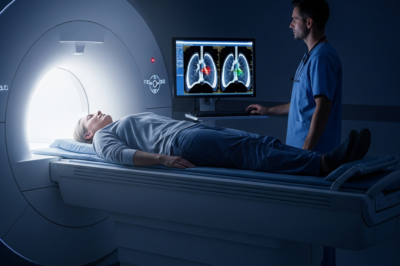
The recent publication in the EMJ provides a robust evidentiary framework for the efficacy of MRI in this niche. The research highlights that modern MRI sequences, such as T2-weighted imaging and Short Tau Inversion Recovery (STIR), are exceptionally sensitive to the water content within tissues. Since active sarcoidosis granulomas are inflammatory and often associated with edema (swelling), they appear as bright signals on these specific MRI sequences. The study indicates that MRI is not only capable of identifying these lesions but is also superior to CT in distinguishing between active inflammation and permanent, inactive scarring. This distinction is critical for clinicians when deciding whether to escalate immunosuppressive therapy, such as corticosteroids or methotrexate. If a CT scan shows a shadow, it may be unclear if that shadow represents a new threat or an old scar. MRI’s ability to provide functional and metabolic context through signal intensity allows for more precise treatment adjustments. Furthermore, the EMJ findings suggest a high correlation between MRI-detected changes and pulmonary function test (PFT) results, reinforcing MRI’s role as a reliable marker for disease activity.
Technological Advancements in Thoracic MRI
The transition from CT to MRI for lung imaging has been enabled by several key technological milestones. Innovations in Parallel Imaging and Ultra-short Echo Time (UTE) sequences have finally allowed radiologists to overcome the traditional hurdles of lung MRI. UTE sequences, in particular, are able to capture signals from tissues with very short transverse relaxation times—like the lung parenchyma—before the signal decays. Additionally, the development of sophisticated motion-correction algorithms has mitigated the blurring caused by respiratory and cardiac cycles. Some advanced centers are now using ‘silent’ MRI sequences that reduce the acoustic noise of the machine, improving the patient experience. Beyond the hardware, the use of diffusion-weighted imaging (DWI) provides insights into the cellularity of the lung tissue, helping to map the extent of granulomatous infiltration without the need for intravenous contrast agents. These technical strides ensure that the ‘promise’ mentioned in the EMJ report is backed by reproducible, high-quality diagnostic data that can be integrated into standard clinical workflows.
Clinical Benefits: Beyond Radiation Reduction
While the absence of radiation is the primary headline, the clinical benefits of MRI in sarcoidosis extend further. MRI provides superior soft-tissue contrast compared to CT, which is particularly useful in detecting extrapulmonary involvement. Sarcoidosis is a systemic disease; it can affect the heart, the lymph nodes in the mediastinum, and even the chest wall. A comprehensive chest MRI can evaluate the heart for cardiac sarcoidosis—a potentially fatal complication—during the same session used to monitor the lungs. This ‘one-stop-shop’ approach improves diagnostic efficiency and reduces the number of hospital visits for the patient. Moreover, the lack of ionizing radiation makes MRI the only safe choice for monitoring sarcoidosis in pregnant patients or pediatric populations, where the tissues are more sensitive to radiation damage. By providing a more holistic view of the thoracic cavity, MRI empowers pulmonologists to manage the disease with a level of nuance that was previously unattainable with conventional X-ray-based methods.
Challenges in Global Adoption and Future Outlook
Despite the optimistic findings in the EMJ, several hurdles remain before MRI becomes the universal standard for pulmonary sarcoidosis. The first is cost and accessibility. MRI machines are significantly more expensive to install and maintain than CT scanners, and the duration of a lung MRI protocol (typically 20 to 40 minutes) is much longer than the few seconds required for a CT scan. This leads to higher costs per scan and lower patient throughput, which can be a deterrent for overstretched public health systems. Secondly, there is a need for standardized imaging protocols. For MRI to be used in multi-center clinical trials or global monitoring, radiologists worldwide must agree on which sequences provide the most accurate data. Finally, patient-specific factors, such as the presence of metallic implants or severe claustrophobia, mean that MRI will not be suitable for everyone. However, as AI-driven image reconstruction continues to shorten scan times and as the long-term cost-savings of avoiding radiation-induced illnesses are factored in, the economic argument for MRI is becoming increasingly persuasive. The next decade will likely see the development of dedicated ‘Lung MRI’ packages that are faster and more affordable, specifically designed for chronic disease monitoring.
Conclusion
The evidence presented by the EMJ regarding the promise of MRI for radiation-free monitoring of pulmonary sarcoidosis is a beacon of hope for thousands of patients worldwide. It represents a shift from a ‘detect and treat’ model to a ‘monitor and protect’ philosophy. By leveraging the power of magnetic resonance, the medical community can finally offer a surveillance strategy that is as safe as it is effective. While challenges regarding cost and standardization persist, the clinical superiority of MRI in distinguishing active inflammation and its ability to provide a radiation-free lifetime monitoring solution cannot be ignored. As we move forward, it is imperative that healthcare providers, insurance companies, and researchers collaborate to make this technology more accessible. The goal is clear: to ensure that the tools we use to manage chronic illness do not inadvertently contribute to future health risks. The era of radiation-free thoracic monitoring has arrived, and it promises to significantly improve the quality of life and long-term outcomes for those living with pulmonary sarcoidosis.







































Leave a Reply