
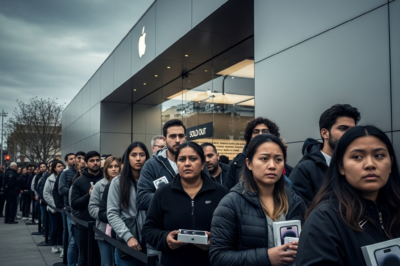
The global smartphone market is currently witnessing an unprecedented phenomenon that has sent shockwaves through both the tech industry and consumer circles. As reports from Communications Today indicate that iPhone 17 shortages are deepening across major retail channels, a palpable sense of urgency has gripped the market. This is not merely a standard cycle of high demand for a new product; rather, it is a calculated rush by savvy consumers and institutional buyers who are attempting to secure hardware before an anticipated and significant price hike. The confluence of supply chain bottlenecks, increased manufacturing costs, and the integration of next-generation artificial intelligence features has created a perfect storm. For Apple, this represents both a logistical nightmare and a testament to the enduring power of its brand. For the consumer, it is a race against time and inflation. The current landscape suggests that the days of predictable tech pricing are over, replaced by a volatile environment where component scarcity and geopolitical tensions dictate the MSRP of our most essential devices.
The Anatomy of a Tech Crisis: Understanding the Supply Chain Bottleneck
To understand why the iPhone 17 is facing such severe shortages even before its official peak cycle, one must look deep into the semiconductor industry. The primary driver of these shortages is the transition to more advanced process nodes. Apple’s primary chip manufacturer, TSMC, is reportedly facing yield challenges with the 2nm and enhanced 3nm processes intended for the A19 Pro chip. These chips are the brains of the iPhone 17 series, designed to handle the massive computational loads required by Apple Intelligence. When yield rates drop, the number of usable chips per silicon wafer decreases, leading to an immediate shortfall in finished units. Beyond the silicon, there are critical shortages in specialized components such as high-density camera modules and the ultra-thin display substrates required for the rumored ‘Slim’ or ‘Air’ variant of the iPhone 17. These components are sourced from a complex web of suppliers in Japan, South Korea, and Taiwan, all of whom are grappling with rising energy costs and labor shortages. The result is a production line that is operating at only 70% of its intended capacity, even as consumer interest reaches an all-time high.
The Economic Shift: Deciphering the Predicted Price Surge
Why are shoppers rushing to buy now? The answer lies in the looming specter of a major price adjustment. Financial analysts and industry insiders have been sounding the alarm that the iPhone 17 series could see a price increase ranging from $100 to $300 depending on the model. This is not a decision Apple takes lightly, but it is one forced by the rising cost of raw materials. The price of cobalt, lithium, and rare earth elements used in batteries and magnets has seen significant volatility. Furthermore, the cost of licensing advanced AI software and maintaining the infrastructure for cloud-based processing is being factored into the hardware price. Historically, Apple has absorbed some of these costs to maintain market share, but with margins being squeezed by global inflation, the company is expected to pass these costs onto the consumer in the next fiscal year. This has triggered a ‘buy now’ mentality among users who would typically wait for seasonal discounts, as they realize that the current entry price may be the lowest they will see for years to come.
Innovation vs. Accessibility: The Rise of the iPhone 17 Slim
One of the most talked-about aspects of the iPhone 17 lineup is the introduction of a completely new form factor, often referred to as the iPhone 17 Slim. This device is intended to be a design-forward masterpiece, thinner than any previous iPhone while maintaining high-end performance. However, the engineering required to achieve this—using new battery cooling technologies and a more rigid titanium alloy frame—has made it exceptionally difficult to mass-produce. Reports suggest that the failure rate during the assembly of these ultra-thin chassis is higher than expected. This specific model is seeing the most significant shortages, as collectors and tech enthusiasts view it as a milestone device. The scarcity of the Slim model has a halo effect, driving frustrated buyers toward the Pro and Pro Max models, which in turn depletes those stocks. It is a domino effect of demand that Apple’s inventory management systems are struggling to keep up with, leading to lead times that have stretched from days to months in certain European and Asian markets.
The Psychology of Panic Buying in the Premium Market
The current rush is as much a psychological phenomenon as it is an economic one. In the world of high-end electronics, perceived scarcity often drives demand higher than the product’s utility alone would suggest. As news of the shortages spread via social media and tech news outlets like Communications Today, the Fear of Missing Out (FOMO) became a dominant market force. This behavior is usually reserved for limited-edition luxury goods, but the iPhone has reached a status where it is viewed as a necessary luxury. Consumers are also treating these devices as a hedge against future inflation. In regions like India, Brazil, and parts of Southeast Asia, where currency fluctuations are common, owning a high-value asset like an iPhone is seen as a way to preserve purchasing power. This global trend has put immense pressure on localized stock, as international resellers often buy up units in more stable markets to flip them in high-demand zones, further exacerbating the shortage for the average shopper.
Strategic Implications for Apple and its Competitors
Apple finds itself in a delicate position. On one hand, the high demand proves that its move into AI and new form factors is resonating with the public. On the other hand, the inability to meet this demand risks alienating long-term customers. This situation provides a golden opportunity for competitors like Samsung and Google. Samsung, with its more diversified supply chain and in-house chip manufacturing capabilities, is reportedly preparing to launch aggressive marketing campaigns for the Galaxy S series, targeting those who are tired of waiting for iPhone availability. However, Apple’s ecosystem lock-in remains its strongest defense. Most users are willing to wait or pay a premium rather than switch to Android. This loyalty allows Apple to maintain high prices, but it also increases the stakes for the iPhone 17’s eventual full-scale launch. The company is reportedly working on diversifying its manufacturing base, shifting more production to India and Vietnam to mitigate the risks associated with its current reliance on a few key hubs, though these transitions take years to yield significant results.
Looking Ahead: Navigating the 2025 Smartphone Landscape
As we move closer to the 2025 retail season, the situation is unlikely to stabilize quickly. The tech industry is entering a new era where ‘Just-In-Time’ manufacturing is being replaced by ‘Just-In-Case’ stockpiling. For the consumer, the advice from experts is clear: if you are in the market for a new device, waiting for a better deal may be a losing strategy this year. The iPhone 17 shortages are a symptom of a larger shift in the global economy—one where high-tech components are becoming increasingly difficult and expensive to produce. We are likely to see a tiered market where ‘Standard’ models become the new ‘Mid-range,’ and ‘Pro’ or ‘Slim’ models move into a true luxury pricing tier. The current rush is merely the first wave of a broader market adjustment. In the long run, this may lead to longer upgrade cycles, as the high cost of entry makes a yearly or even biennial upgrade unsustainable for the average person. Ultimately, the iPhone 17 saga is a wake-up call for the industry, highlighting the fragility of global supply chains and the relentless pace of consumer expectation.





































Leave a Reply