
The Escalation of Conflict in West Asia
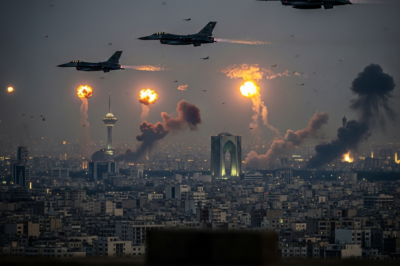
The geopolitical landscape of West Asia has reached a boiling point as the United States military launched its third consecutive night of targeted strikes against Iranian infrastructure and proxy-affiliated sites. This rapid escalation marks one of the most significant direct confrontations between Washington and Tehran in recent decades, threatening to destabilize an already volatile region. The strikes, which the Pentagon describes as ‘precision engagements,’ are aimed at neutralizing capabilities that have been used to threaten international shipping lanes and regional allies. However, the timing of these military actions is particularly striking given the simultaneous rhetoric emerging from the White House. While Tomahawk missiles and stealth bombers dominate the night skies over the Persian Gulf, President Donald Trump has maintained a bafflingly optimistic stance, suggesting that a comprehensive deal with the Iranian leadership remains ‘entirely possible.’ This dual-track approach—military coercion coupled with an open door for high-level diplomacy—has left international observers, allies, and adversaries alike scrambling to decipher the administration’s ultimate endgame in the Middle East.
Tactical Breakdown: The Third Night of Aerial Campaigns
According to reports from the Department of Defense, the third night of operations involved a coordinated effort between the U.S. Navy and the U.S. Air Force. Strategic assets, including B-2 Spirit bombers and carrier-based F/A-18 Super Hornets, targeted command-and-control centers, drone storage facilities, and ballistic missile launch sites deep within Iranian territory. Unlike the previous two nights, which focused on proxy locations in Iraq and Syria, the third wave saw strikes on the Iranian mainland, specifically targeting facilities in the coastal regions that overlook the Strait of Hormuz. Military analysts suggest that these strikes are intended to send a clear message regarding the ‘red lines’ established by the U.S. regarding the freedom of navigation. The Iranian state media, IRNA, has reported casualties among the Islamic Revolutionary Guard Corps (IRGC), though specific numbers remain unverified. The precision of the strikes suggests a high level of intelligence-gathering and a desire to minimize civilian collateral damage while maximizing the degradation of Iran’s kinetic capabilities. The use of long-range standoff weapons indicates that the U.S. is wary of Iran’s sophisticated surface-to-air missile defenses, opting instead for high-tech attrition tactics.
The Trump Paradox: Maximum Pressure Meets Personal Diplomacy
At the heart of this conflict lies the personal philosophy of President Donald Trump, who continues to favor a ‘Maximum Pressure’ campaign that includes both crippling economic sanctions and direct military action. Yet, even as the smoke clears from the latest bombings, Trump told reporters at the White House that he believes Iran is ‘ready to talk.’ This approach mirrors his previous engagements with North Korea, where high-stakes military threats were followed by historic summits. Analysts argue that Trump is attempting to leverage military might to force Tehran to the negotiating table on terms more favorable to the United States. The ‘deal’ Trump refers to would likely involve not only a permanent cessation of Iran’s nuclear enrichment programs but also a total halt to its ballistic missile development and an end to its support for regional proxies like Hezbollah in Lebanon and the Houthis in Yemen. However, critics argue that this strategy is fraught with risk; a single miscalculation could ignite a full-scale regional war that neither side truly desires but neither can easily avoid once the first shots are fired.
Regional Ripple Effects: Allies and Adversaries on Edge
The fallout from the U.S. strikes is being felt across the capitals of West Asia. In Jerusalem, the Israeli government has signaled its full support for the American actions, viewing the degradation of Iranian power as essential to its own national security. Prime Minister Benjamin Netanyahu has long advocated for a firmer stance against what he calls the ‘Iranian octopus,’ whose tentacles reach across the Levant. Conversely, in Baghdad and Beirut, there is a palpable sense of dread. The Iraqi government faces an internal crisis, caught between its security partnership with the U.S. and the powerful pro-Iran factions within its own borders. Meanwhile, the Gulf monarchies, led by Saudi Arabia and the United Arab Emirates, find themselves in a precarious position. While they welcome the containment of their regional rival, they are also the most vulnerable to Iranian retaliation, particularly through asymmetric warfare or strikes on their vital oil infrastructure. The memory of the 2019 attacks on the Abqaiq–Khurais processing facilities remains fresh, serving as a reminder that Iran possesses the capability to disrupt the global energy supply within hours.
The Economic Impact: Oil Markets and Global Volatility
The immediate consequence of the third night of strikes was a sharp spike in global oil prices. Brent Crude jumped by nearly 4% in early trading as markets reacted to the possibility of a closure or disruption of the Strait of Hormuz, through which approximately 20% of the world’s daily oil consumption passes. Financial analysts warn that a prolonged conflict could push oil prices past the $100 per barrel mark, triggering a wave of inflation that could dampen global economic growth. Shipping insurance rates for tankers operating in the Persian Gulf have already skyrocketed, with some maritime companies choosing to reroute vessels around the Cape of Good Hope, a costly and time-consuming alternative. This economic pressure is precisely what the Trump administration hopes will break the Iranian economy, but it also poses a risk to the U.S. economy and the President’s own political standing at home. If gas prices at the pump rise significantly during an election cycle, the domestic political cost of the ‘Maximum Pressure’ campaign could become a liability.
Iran’s Strategic Patience or Imminent Retaliation?
Inside Tehran, the leadership is faced with a grueling dilemma. Supreme Leader Ayatollah Ali Khamenei must balance the need to project strength and protect national sovereignty with the reality that a direct, all-out war with the United States would be catastrophic for the Islamic Republic. So far, the official response has been one of ‘strategic patience,’ characterized by defiant rhetoric and localized counter-strikes through proxies rather than a full-scale military mobilization. However, the domestic pressure on President Masoud Pezeshkian and the hardliners in the IRGC is mounting. There are growing calls within the Iranian parliament for a ‘crushing response’ to the violation of Iranian soil. If Iran decides to retaliate directly, it could involve cyberattacks on Western financial institutions, the use of sleeper cells abroad, or a coordinated swarm of ‘suicide drones’ targeting U.S. bases in the region. The next 48 to 72 hours are considered critical; if Iran chooses to absorb the strikes without a massive escalation, the window for Trump’s proposed ‘deal’ might actually open. If they strike back hard, the world could be looking at the largest conflict in West Asia since the 2003 invasion of Iraq.
The International Community’s Response and the Path to De-escalation
Global powers are watching the unfolding events with deep concern. The United Nations Security Council has called for an emergency session to discuss the crisis, with Secretary-General António Guterres urging ‘maximum restraint’ from all parties. China and Russia, both of which maintain close economic and strategic ties with Iran, have condemned the U.S. strikes as a violation of international law and sovereign rights. Beijing has called for a return to the 2015 nuclear deal (JCPOA) framework as the only viable path to peace, while Moscow has accused Washington of ‘reckless adventurism.’ On the other hand, the European Union remains divided, with some members supporting the need to curb Iranian aggression while others fear the humanitarian and refugee crisis that a regional war would inevitably trigger. The possibility of a diplomatic breakthrough remains slim but not non-existent. There are rumors of back-channel communications through Swiss and Omani intermediaries, where the specific parameters of a potential ‘Trump Deal’ are being quietly floated. For the world, the hope is that the ‘Art of the Deal’ can prevail over the ‘Art of War’ before the cycle of violence becomes irreversible.
Conclusion: A Region at the Crossroads
The situation in West Asia stands at a historic crossroads. The U.S. military strikes have successfully demonstrated American reach and resolve, but they have also brought the region to the precipice of a conflict that could reshape the 21st-century world order. President Trump’s insistence that a deal is possible suggests a belief in his own ability to transcend traditional diplomacy through sheer force of will and military leverage. Whether this leads to a new era of regional stability or a devastating conflagration depends on the calculations made in the coming days by a few key individuals in Washington and Tehran. As the third night of fire gives way to an uncertain dawn, the world waits with bated breath to see if the next chapter in West Asia will be written in ink or in blood.



































Leave a Reply