
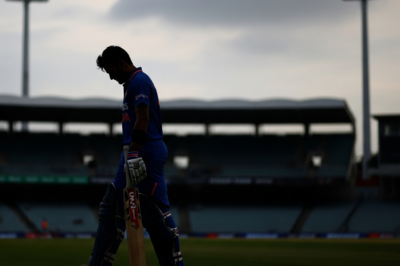
Indian cricket fans and the national team management were dealt a significant blow this week following the official confirmation that a vital top-order batter has been ruled out of the upcoming high-stakes Test series against Sri Lanka. As confirmed by the International Cricket Council (ICC), the injury, sustained during a rigorous training session or a domestic fixture, has necessitated a period of rest and rehabilitation, leaving the Indian selectors with the difficult task of restructuring the batting order just days before the first ball is bowled. This development is not merely a personnel change; it represents a fundamental shift in the tactical equilibrium of the side, particularly at a time when World Test Championship (WTC) points are at a premium. The absence of such a seasoned campaigner creates a vacuum at the top that the opposition will undoubtedly seek to exploit.
The Anatomy of the Injury and the Medical Verdict
The specifics of the injury point toward a musculoskeletal strain that requires at least four to six weeks of active recovery. Reports from the Board of Control for Cricket in India (BCCI) medical team suggest that the player felt a sharp pull while attempting a quick single or a defensive maneuver, which was later diagnosed as a Grade 2 muscle tear. While the player has been a model of fitness over the last few seasons, the grueling schedule of international cricket across formats has clearly taken its toll. The National Cricket Academy (NCA) in Bengaluru will now become the player’s temporary home as he undergoes a structured rehabilitation program designed to restore full mobility and strength. The ICC’s announcement underscores the severity of the situation, as it effectively removes one of the most statistically significant players from the Indian roster for the entire duration of the two-match series.
Statistical Vacuum: Quantifying the Loss
To understand the magnitude of this loss, one must look at the player’s recent trajectory in the longest format of the game. Over the last twenty-four months, the batter in question has averaged over 45 in subcontinent conditions, often serving as the anchor around which the more aggressive middle-order plays. His ability to neutralize the new ball and survive the initial burst from world-class seamers has been a cornerstone of India’s home dominance. Without this shield, the middle-order, featuring the likes of Virat Kohli and Rishabh Pant, may find themselves exposed to the brand-new red cherry much earlier than anticipated. Furthermore, his record against Sri Lankan spinners, particularly his proficiency in playing the sweep and using his feet, made him a tactical nightmare for the visiting captains. His absence means India loses not just runs, but a psychological edge over the Sri Lankan bowling unit.
Selection Dilemmas: Identifying the Replacement
The selectors now face a multi-pronged dilemma. Do they promote an existing middle-order player to the opening slot, or do they bring in a specialist from the domestic circuit who has been performing well in the Ranji Trophy? Names like Abhimanyu Easwaran, who has been a consistent performer in the domestic circuit, often come to the fore in such scenarios. Alternatively, the team might look at shuffling the current lineup, perhaps asking a versatile player like Shubman Gill to take on a more permanent role at the top of the order if he isn’t already there, or considering a fresh face who can handle the pressure of the international stage. The decision will likely hinge on the pitch conditions expected in the host cities. If the tracks are expected to turn from day one, a batter with superior footwork against spin will be prioritized. If there is green grass on the surface, a sound technique against the moving ball will be the primary requirement.
Tactical Shifts for Rohit Sharma and the Coaching Staff
Captain Rohit Sharma and the coaching staff, led by the tactical nuances of the head coach, must now rethink their approach to the first session of a Test match. Usually, the strategy involves the top three wearing down the opposition bowlers, allowing the middle order to capitalize on a tired attack. With a key pillar missing, the instruction might shift toward a more proactive or aggressive start to prevent the bowlers from settling into a rhythm. There is also the question of the ‘left-right’ combination, which is often used to disrupt the line and length of the bowlers. If the replacement changes the handedness of the opening pair, it could force the Sri Lankan bowlers to constantly adjust their sights, which might be a small silver lining in an otherwise gloomy situation.
The Sri Lankan Perspective: An Opportunity for the Lions
For the Sri Lankan camp, this news provides a massive boost to their morale. Sri Lanka has historically struggled to pick up twenty wickets on Indian soil, often finding themselves thwarted by the resilience of the Indian top order. With one of the most settled batters out of the equation, the Sri Lankan pace battery, led by veteran campaigners, will sense a vulnerability. They will likely employ a strategy of ‘sustained pressure,’ knowing that a new or less-experienced batter might be prone to lapses in concentration. The visiting spinners will also be breathing a sigh of relief, as they can now focus their energy on a reshuffled lineup that may not have the same level of chemistry as the original top three. This injury has effectively leveled the playing field to a degree, making the series far more competitive than previously predicted by analysts.
WTC Implications: Every Point Counts
The World Test Championship cycle is unforgiving. India is currently in a fierce battle to secure a spot in the final at Lord’s, and a clean sweep against Sri Lanka was seen as a mandatory requirement for their points tally. Any slip-up, even a single draw or a loss, could have catastrophic effects on their percentage points, especially with tough away tours on the horizon. The loss of a top-order batter increases the risk of a batting collapse, which in turn increases the risk of dropping points. The ICC standings are currently so tight that the margin for error is non-existent. Team India knows that they must adapt quickly and ensure that the replacement player is mentally prepared for the rigors of Test cricket, as the consequences of failure extend far beyond this single series.
Conclusion: Depth and Resilience in the Indian Setup
In conclusion, while the ruling out of a premier top-order batter is a setback of significant proportions, it also serves as a test of India’s bench strength. Over the last decade, Indian cricket has prided itself on its ‘next man up’ philosophy, where replacements have often stepped in to deliver match-winning performances. Whether it was the historic win at the Gabba or various home series victories with a depleted squad, the Indian team has shown a remarkable ability to thrive under pressure. The upcoming series against Sri Lanka will be no different. It is an opportunity for a new hero to emerge and for the team to demonstrate that their success is built on a collective system rather than individual brilliance. As the cricketing world watches, the focus shifts to the training nets where the replacement will be honing their skills, ready to uphold the legacy of Indian dominance on home soil.




































Leave a Reply