
The Immediate Aftermath of a National Catastrophe
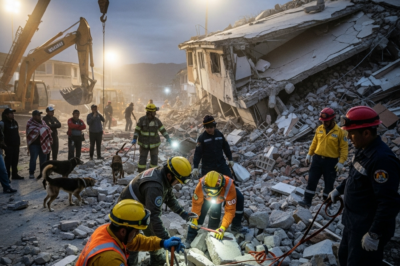
The Republic of Colombia is currently grappling with the devastating aftermath of a seismic event that has sent shockwaves through the heart of the Andean region. As the dust settles over crumbled neighborhoods and fractured highways, the sheer scale of the disaster is beginning to emerge. With over 2,700 individuals officially reported as missing, the nation is in a state of profound mourning and high-intensity emergency response. This earthquake, which struck with a violent intensity that caught many residents in the early morning hours, has not only destroyed physical structures but has also tested the very fabric of Colombia’s emergency management systems. Reports from Al Jazeera and local news outlets depict a scene of chaos and heroism, as ordinary citizens join forces with professional rescue teams to sift through the remains of what were once homes, schools, and businesses. The international community has turned its eyes toward Bogotá and the affected provinces, offering prayers and logistical support as the search for survivors enters its most critical phase. This event marks one of the most significant natural disasters in the region in recent history, highlighting the persistent vulnerability of nations situated along the volatile Pacific Ring of Fire.
The First 48 Hours: The Frantic Race Against the Golden Hour
In the world of search and rescue, the first 48 to 72 hours are colloquially known as the "Golden Hours." During this window, the probability of finding survivors trapped under rubble remains at its highest. In Colombia, this period has been defined by a frantic, non-stop effort. Search teams, equipped with specialized acoustic sensors and thermal imaging cameras, are working in shifts to locate signs of life beneath the concrete slabs. The 2,700 missing individuals represent a daunting challenge for the Unidad Nacional para la Gestión del Riesgo de Desastres (UNGRD). Every minute that passes without a discovery adds to the mounting anxiety of families waiting at the perimeter of the disaster zones. Local volunteers, often using nothing more than their bare hands and simple shovels, have been instrumental in the initial hours, pulling neighbors from the debris before the arrival of heavy machinery. The logistics of this operation are further complicated by the mountainous terrain of the region, where landslides triggered by the quake have blocked vital access roads, preventing the rapid deployment of ambulances and specialized equipment. The air is filled with the sound of sirens and the rhythmic thumping of helicopters as the military coordinates an airlift of the critically injured to hospitals in larger urban centers like Medellín and Cali.
Geological Context: Why Colombia Remains a High-Risk Zone
To understand the severity of this earthquake, one must look at the complex geological makeup of the South American continent. Colombia sits at a tectonic crossroads where the Nazca, South American, and Caribbean plates converge. This convergence creates a series of fault lines, most notably the Romeral fault system, which runs through some of the country’s most densely populated areas. The recent quake was a stark reminder of the 1999 Armenia earthquake, which left a lasting scar on the nation’s psyche. Seismologists at the Colombian Geological Service (SGC) have noted that while the magnitude was significant, it was the shallow depth of the epicenter that contributed to the extensive surface damage. Shallow earthquakes dissipate less energy before reaching the surface, resulting in more violent shaking of building foundations. The science behind this event is being closely studied to improve early warning systems, but the reality remains that for many residents, there was less than a minute between the first tremor and the collapse of their surroundings. This geological instability requires a constant state of readiness, something that is difficult to maintain in a developing economy where infrastructure projects often face budgetary constraints.
Infrastructural Vulnerability and the Quest for Safety
One of the most pressing questions emerging from this tragedy is why so many buildings failed to withstand the tremor. While Colombia has modernized its building codes (the NSR-10 standards) in recent years, a significant portion of the housing stock in rural and low-income urban areas remains "informal." These structures, built without professional engineering oversight or earthquake-resistant materials, are the first to fall during a seismic event. The 2,700 missing people are disproportionately from these vulnerable neighborhoods. Urban planners and engineers are now calling for a massive audit of existing structures and a more rigorous enforcement of building regulations. The cost of retrofitting older buildings is enormous, yet the human cost of negligence has proven to be far higher. In the wake of this disaster, there is a growing demand for a national housing policy that prioritizes seismic safety over rapid expansion. The destruction of public infrastructure, including bridges and water treatment plants, has further exacerbated the crisis, leaving thousands without clean water or a means to escape the affected zones.
The Humanitarian Crisis: Displaced Families and Psychological Trauma
Beyond the physical ruins lies a deepening humanitarian crisis. Thousands of families have been displaced, forced to sleep in makeshift tents or open-air stadiums as aftershocks continue to rattle the region. The psychological toll of the earthquake is immeasurable. Survivors speak of the terrifying sound of the earth "roaring" and the helplessness of watching their livelihoods vanish in seconds. For the families of the 2,700 missing, the trauma is suspended in a state of agonizing uncertainty. Mental health professionals are being deployed to the scene, but the scale of the need far outweighs the available resources. Children, in particular, are showing signs of severe distress, having lost their schools and their sense of security. Humanitarian agencies like the Red Cross and various UN bodies are working to provide basic necessities, but the challenge of distributing aid in a disaster-stricken landscape is immense. Food insecurity is a growing concern as local markets have been destroyed and supply chains severed. The government must now balance the immediate rescue efforts with the long-term necessity of providing for the basic human rights of its shell-shocked population.
Geopolitical Implications and the International Response
The earthquake has also triggered a significant international response, highlighting Colombia’s role in the global community. Neighboring countries such as Ecuador, Peru, and Brazil have dispatched specialized rescue units and medical supplies. The United States and the European Union have pledged financial aid and technical expertise. This influx of international support is crucial, as the Colombian government’s budget is already strained by other socio-political challenges. The disaster has forced a temporary suspension of various political debates within the country as the administration of President Gustavo Petro focuses entirely on the emergency. There is a sense of national unity that often emerges in the face of such tragedies, but critics are already questioning whether the government was sufficiently prepared for a disaster of this magnitude. The global response serves as a reminder that natural disasters do not respect borders, and the resilience of a nation often depends on the strength of its international partnerships. The coordination of this aid will be a major test for Colombia’s diplomatic and administrative capacities in the coming months.
Future Outlook: Reconstruction and Resilience
As the rescue phase eventually transitions into a recovery phase, Colombia faces a long and arduous road to reconstruction. Rebuilding the affected regions will require billions of dollars and years of sustained effort. The goal cannot simply be to restore what was lost; the focus must be on "building back better." This means integrating seismic resilience into every new brick laid and every road paved. It also means investing in better education for the public on disaster preparedness, ensuring that every citizen knows what to do when the ground begins to move. The tragedy of the 2,700 missing will forever be a part of Colombia’s history, but it can also serve as a catalyst for meaningful change. The resilience of the Colombian people is legendary, and even in the midst of such profound sorrow, there are stories of hope and survival that inspire the nation. The path forward is difficult, but with international support and a commitment to scientific and infrastructural integrity, Colombia can emerge from this crisis stronger and better prepared for the inevitable challenges of living on a restless planet. The memory of those lost must be honored through a dedication to a safer, more prepared future.





































Leave a Reply