
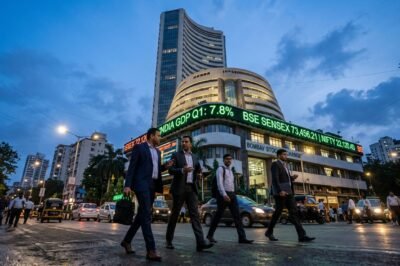
In an era of global economic uncertainty and tightening monetary policies across major Western economies, India has emerged as a beacon of growth and stability. The latest data released by the National Statistical Office reveals that India’s economy expanded by a robust 7.8 percent in the first quarter of the 2023-24 fiscal year. This impressive figure not only met the Reserve Bank of India’s forecasts but also exceeded several private analyst estimates, reinforcing India’s position as the fastest-growing major economy in the world. This growth comes at a critical juncture when the global landscape is grappling with the aftershocks of geopolitical tensions and persistent inflation. The 7.8 percent expansion, up from 6.1 percent in the previous quarter, signifies a strong internal momentum driven by domestic demand and a revitalized services sector. As we dissect the components of this growth, it becomes evident that India is successfully navigating the transition from a pandemic-recovery phase to a sustainable growth trajectory. This analysis explores the various catalysts behind this economic surge, the sectoral shifts occurring within the nation, and the potential challenges that lie ahead in the remaining quarters of the fiscal year. THE DRIVING FORCES BEHIND THE 7.8 PERCENT GROWTH SURGE. The primary engine behind this quarterly performance has been the resilient domestic demand which has cushioned the Indian economy against the slowdown in global exports. Unlike many of its peers, India’s growth is heavily predicated on internal consumption, which accounted for a significant portion of the GDP expansion this quarter. Private Final Consumption Expenditure, a proxy for household spending, showed a marked improvement, reflecting increased consumer confidence. This confidence is particularly visible in urban centers where the demand for premium goods and services has seen a sharp uptick. Furthermore, the low base effect from the previous year provided a technical tailwind, but the sequential growth remains fundamentally sound. The government’s strategic focus on capital expenditure has also played a pivotal role. By front-loading infrastructure projects and increasing budgetary allocations for roads, railways, and defense, the state has successfully crowded in private investment. This synergy between public spending and private enterprise is a hallmark of the current economic phase, ensuring that the growth is not merely consumption-led but also investment-driven, which bodes well for long-term productivity. THE SERVICES SECTOR AS THE CROWN JEWEL OF RECOVERY. A standout performer in the first quarter was the services sector, which recorded a stellar growth rate of 12.2 percent. This segment, comprising trade, hotels, transport, and communication, has finally shed the vestiges of the pandemic-induced slump. The ‘revenge tourism’ phenomenon, coupled with a full-scale return to office-based work, has revitalized the hospitality and real estate sectors. Financial, real estate, and professional services also grew by 12.1 percent, reflecting the deepening of India’s formal economy and the rising demand for sophisticated services. This surge in services is crucial as it is a major employer in urban areas, thereby creating a virtuous cycle of income generation and further consumption. The digital transformation of India, accelerated over the last few years, has allowed service providers to scale rapidly and reach a wider audience, contributing significantly to the Gross Value Added. However, while the services sector thrives, the manufacturing sector showed a more moderate growth of 4.7 percent. While this is an improvement over previous periods of stagnation, it highlights the ongoing need for structural reforms to make India a global manufacturing hub. GOVERNMENT CAPITAL EXPENDITURE AND THE INFRASTRUCTURE PUSH. The Indian government’s commitment to an investment-led growth model is clearly visible in the Q1 data. Capital expenditure by the central and state governments rose sharply, providing the necessary stimulus to the construction and core industries. The construction sector itself grew at 7.9 percent, supported by the government’s ambitious housing and infrastructure programs. By investing in physical assets, the government is not only creating immediate jobs but also reducing the long-term cost of doing business in India. This infrastructure push is essential for integrating rural markets with urban centers and for boosting the efficiency of supply chains. The Gross Fixed Capital Formation, which represents investment in the economy, remained steady at around 34.7 percent of GDP. This indicates that despite higher interest rates, businesses are still willing to commit capital to new projects, betting on the long-term potential of the Indian market. The challenge remains to sustain this investment momentum in the face of rising global borrowing costs and potential liquidity constraints. INFLATIONARY HEADWINDS AND THE RBI’S DELICATE BALANCING ACT. While the growth figures are celebratory, they are accompanied by a shadow of rising inflation. In the latter part of the first quarter and heading into the second, India witnessed a spike in food prices, particularly vegetables like tomatoes and staples like cereals. This led to the Consumer Price Index hitting a multi-month high, prompting the Reserve Bank of India to maintain a hawkish stance. The central bank faces the difficult task of taming inflation without choking off the very growth momentum that the Q1 data celebrates. High food inflation acts as a regressive tax on the poor, potentially dampening rural demand which has already been lagging behind urban consumption. The impact of an erratic monsoon, characterized by uneven rainfall distribution across the country, poses a significant risk to agricultural output. Agriculture grew by 3.5 percent in Q1, but the outlook for the rest of the year depends heavily on the tail-end of the monsoon season and the impact of the El Nino phenomenon. If food prices remain elevated, it could lead to higher interest rates for longer, which might eventually impact sensitive sectors like real estate and automobiles. GLOBAL CONTEXT AND INDIA’S STANDING IN THE WORLD ECONOMY. In comparison to its global peers, India’s 7.8 percent growth is nothing short of extraordinary. China, during the same period, reported a growth of 6.3 percent, which was largely attributed to a low base from the previous year’s lockdowns and has since shown signs of significant cooling. Major developed economies like the United States, Germany, and the United Kingdom are struggling with near-zero growth or technical recessions as they battle persistent inflation. India’s ability to maintain high growth while managing its external account deficit has earned it accolades from international agencies like the IMF and the World Bank. The ‘China Plus One’ strategy adopted by global corporations is increasingly favoring India as an alternative manufacturing and service destination. This geopolitical shift is bringing in foreign direct investment and integrating India more deeply into the global value chain. However, India must remain vigilant against external shocks, such as spikes in global crude oil prices, as it imports over 80 percent of its energy needs. Any significant increase in the global oil bill could widen the current account deficit and put pressure on the rupee. FUTURE IMPLICATIONS AND THE PATH TO THE FIVE TRILLION DOLLAR GOAL. Looking ahead, the 7.8 percent growth provides a solid foundation for the rest of the fiscal year. Most economists expect India to end the year with a growth rate between 6.3 and 6.5 percent, which would still be the highest among major nations. The path to becoming a 5 trillion dollar economy requires consistent growth of 7-8 percent over the next decade. To achieve this, the focus must shift toward increasing the share of manufacturing in the GDP and boosting rural incomes. The upcoming festive season is expected to provide a further boost to consumer spending, but much will depend on how inflation is managed in the interim. The government’s continued focus on digital public infrastructure, green energy transitions, and ease of doing business will be the long-term drivers of this journey. While risks from global slowdowns and climate-related disruptions persist, the Q1 data proves that India’s economic fundamentals are resilient and its growth engine is firing on most cylinders. As the nation prepares for the next phase of its economic evolution, the 7.8 percent print serves as both a milestone and a reminder of the potential that lies within its vast and diverse market.
India’s Economic Resurgence: A Comprehensive Analysis of the 7.8 Percent Q1 Growth Beat
Posted by
Stories





-

Mithila Palkar: The Relatable Queen of Indian Web Series and Her Meteoric Rise
-

Wamiqa Gabbi: The Meteoric Rise of Indian Web Series’ Most Versatile Leading Lady
-

Triptii Dimri Biography: The Evolution of India’s Newest Cinematic Sensation and Web Series Star
-

Wamiqa Gabbi: The Rise of India’s New Digital Icon and the Future of OTT Stardom
-

Mithila Palkar: The Unstoppable Evolution of India’s Digital Darling and Her Journey to the Silver Screen
-

Mithila Palkar: The Comprehensive Journey of India’s Web Series Sensation and Digital Pioneer
-

Mithila Palkar: The Relatable Queen of Indian Web Series and Her Inspiring Journey to Stardom
-

Sobhita Dhulipala Biography: The Meteoric Rise of India’s Most Versatile Web Series Star
-

Mithila Palkar: The Unstoppable Journey of India’s Digital Darling and Web Series Queen
-

Triptii Dimri: The Complete Biography of India’s Newest Cinematic Sensation and Web Series Icon
-

Wamiqa Gabbi: The Ethereal Rise of India’s Most Versatile Web Series Star
-

Sobhita Dhulipala: The Unstoppable Rise of India’s Most Versatile Web Series Icon
-

Wamiqa Gabbi: The Meteoric Rise of the New Queen of Indian Web Series and Her Unstoppable Journey to Stardom
-

Triptii Dimri: The Meteoric Rise of India’s New Cinema Sweetheart and Web Series Icon
-

Wamiqa Gabbi: The Versatile Queen of Indian OTT and Her Phenomenal Rise to Stardom
-

Tripti Dimri Biography: The Rise of India’s New National Crush and Her Journey from Laila Majnu to OTT Stardom
-

Wamiqa Gabbi Biography: The Meteoric Rise of India’s Newest OTT Sensation and Versatile Powerhouse
-

Wamiqa Gabbi Biography: The Meteoric Rise of the Digital Queen of Indian Web Series
-

The Rise of Wamiqa Gabbi: A Deep Dive into the Journey of India’s Most Versatile OTT Sensation
-

The Meteoric Rise of Triptii Dimri: Biography, Acting Prowess, and the Journey of India’s Newest Cinema Sensation
-

Wamiqa Gabbi Biography: The Meteoric Rise of the Digital Queen and Her Unmatched Acting Prowess

Launching Soon: The Future of News with Our E-Newspaper
In the ever-evolving landscape of media and technology, we are thrilled to announce the upcoming launch of our innovative e-newspaper, set to redefine the way news is consumed in the digital age. Embracing the convenience and accessibility that the digital world offers, our e-newspaper aims to deliver real-time news updates, insightful articles, and interactive features directly to your devices. With a commitment to journalistic integrity and a passion for storytelling, we are dedicated to keeping you informed, engaged, and connected, no matter where you are. Stay tuned for the launch of our e-newspaper, where the future of news awaits at your fingertips.
Recent News
- Breakthrough in Pain Management: How Cancer Medications are Repurposing for Chronic Nerve Pain Relief

- Revolutionizing Carbon Capture: How IIT Gandhinagar is Leveraging AI to Turn CO₂ into Clean Energy

- India’s Economic Resurgence: A Comprehensive Analysis of the 7.8 Percent Q1 Growth Beat

- Redefining Dermatological Markers: The Surprising Link Between Cherry Angiomas and Neurofibromatosis Type 1

- 150 Years of the Grand Canyon: From John Wesley Powell’s 1869 Discovery to Modern Geological Revaluations

- The Oncologist’s Manifesto: A Comprehensive Breakdown of Prostate Cancer Awareness and Modern Treatment

Politics
- India’s Economic Resurgence: A Comprehensive Analysis of the 7.8 Percent Q1 Growth Beat
- Beyond the Ballot: An In-Depth Analysis of the RSS-BJP Power Dynamic and Mohan Bhagwat’s Evolving Rhetoric

- India and Uzbekistan Elevate Relations to Comprehensive Strategic Partnership: A New Era of Central Asian Diplomacy

- The Great Cleansing: Xi Jinping’s Purge Reaches the Commanders of Doklam and Galwan

- Fed Chair Kevin Warsh at Jackson Hole: ‘We have work to do’ on inflation – A Turning Point for Markets

- India’s Strategic Shift: Decoding Ex-CDS Chauhan’s Insights on Skardu vs Sargodha Airbases

Categories
- Art & Culture 100
- Auto 85
- Beauty 15
- Blog 251
- Books 7
- Business 359
- Celebrities 217
- Crime Files 139
- Democracy 308
- Education 84
- Entertainment 154
- Environment 133
- epaper 1
- Fashion 37
- Food 58
- Gadgets 86
- Guide 150
- Handicrafts 10
- Health 263
- Healthy Living 107
- History 5
- incidents 156
- Lifestyle 31
- Music 5
- Photography 15
- Politics 425
- Science & Technology 160
- Sports 228
- Tech 123
- Television 2
- Travel 68
- Travel & Tourism 30
- Trends 40
- Weather 6
- Web Series 96
- Workout 4
- World 651
Leave a Reply