
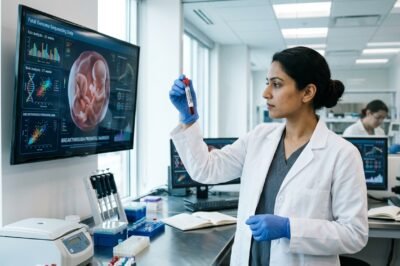
The miracle of life is often shadowed by the specter of unforeseen medical complications, and few conditions carry as much weight and historical trauma as preeclampsia. For decades, clinicians and expectant mothers have navigated the treacherous waters of the second and third trimesters with a sense of guarded optimism, knowing that this mysterious hypertensive disorder could strike without warning. Characterized by a sudden spike in blood pressure and potential multi-organ failure, preeclampsia has long been the ‘disease of theories,’ eluding a definitive cause or a reliable early-warning system. However, a groundbreaking discovery reported via Medical Xpress marks a seismic shift in our understanding of maternal health. This breakthrough does more than just offer a new diagnostic lens; it provides a roadmap for interventions that could prevent the onset of the condition entirely. By moving beyond reactive monitoring—where doctors wait for blood pressure to climb or protein to appear in urine—we are entering an era of proactive genomic and proteomic surveillance. This discovery promises to rewrite the narrative of high-risk pregnancies, transforming a period of high anxiety into one of managed, evidence-based care for millions of families globally. ## The Complex Pathophysiology of the Placenta and Maternal Health ## To understand the magnitude of this discovery, one must first appreciate the biological complexity of preeclampsia. At its core, the condition is believed to originate in the placenta, the vital organ that connects the developing fetus to the uterine wall. In a healthy pregnancy, the spiral arteries of the uterus undergo significant remodeling to ensure a steady, high-volume blood flow to the placenta. In pregnancies destined for preeclampsia, this remodeling is incomplete, leading to placental ischemia or a lack of oxygen. This stressed placenta then releases various factors into the maternal bloodstream, triggering systemic inflammation and endothelial dysfunction. The resulting damage affects the mother’s kidneys, liver, and brain, and can lead to the life-threatening seizures known as eclampsia. Historically, the medical community has focused on managing the symptoms rather than the source, largely because the exact molecular triggers remained elusive. This new research, however, dives deep into the cellular signals that precede the clinical manifestation of the disease, offering a glimpse into the very first moments of placental distress. ## Identifying the Molecular Breakthrough: A New Era of Biomarkers ## The discovery highlighted by Medical Xpress centers on the identification of specific biomarkers that appear in the maternal bloodstream much earlier than previously thought possible. By utilizing advanced proteomic and transcriptomic analysis, researchers have isolated specific proteins and RNA molecules that serve as early warning signs of placental dysfunction. These markers, such as the soluble fms-like tyrosine kinase-1 (sFlt-1) and placental growth factor (PlGF), have been studied before, but the new discovery identifies a more nuanced ‘fingerprint’ of markers that significantly increases diagnostic accuracy. This unique molecular signature allows for a highly specific risk profile for each patient. Unlike broad-spectrum tests that might yield false positives, this new approach hones in on the precise biological pathways that are failing. The ability to distinguish between mild gestational hypertension and true, progressive preeclampsia is a holy grail for obstetricians. This precision medicine approach ensures that high-risk patients receive intensive monitoring while those at lower risk are spared unnecessary medical interventions and the psychological stress that accompanies a high-risk label. ## Transforming Diagnostic Protocols and Early Screening Efficiency ## The implications for clinical practice are profound. Currently, the diagnosis of preeclampsia is often a race against time. Once a mother presents with high blood pressure and protein in her urine, the condition is already well underway, and the only ‘cure’ is the delivery of the baby and the placenta. This often leads to medically necessary preterm births, which carry their own set of risks for the infant, including respiratory distress and long-term developmental challenges. A new test based on these discovered biomarkers would allow for screening as early as the first or early second trimester. By identifying at-risk women weeks or even months before symptoms appear, healthcare providers can implement preventative measures. For instance, the use of low-dose aspirin has been shown to reduce the risk of preeclampsia if started early enough, but its effectiveness is highly dependent on timing. Early screening would ensure that this and other prophylactic treatments are administered precisely when they can do the most good, potentially delaying the onset of the disease and allowing the fetus more time to develop in utero. ## The Global Socioeconomic Impact of Maternal Health Statistics ## When we look at the statistics, the need for this discovery becomes even more urgent. Preeclampsia is a global crisis, responsible for approximately 76,000 maternal deaths and 500,000 infant deaths every year. In low-to-middle-income countries, the burden is even heavier, as access to emergency obstetric care and neonatal intensive care units is often limited. A simple, cost-effective blood test derived from this discovery could be a game-changer for global health equity. Beyond the mortality rates, the economic cost of preeclampsia is staggering. The long-term healthcare costs associated with preterm births, including NICU stays and ongoing support for children with disabilities, run into the billions of dollars annually. Furthermore, women who experience preeclampsia are at a significantly higher risk for cardiovascular disease, stroke, and chronic kidney disease later in life. By addressing the root cause and improving early detection, we are not just saving lives during pregnancy; we are improving the lifelong health trajectory of both mothers and their children, reducing the overall strain on global healthcare systems. ## Potential Pharmacological Interventions and Therapeutic Pathways ## Perhaps the most exciting aspect of this discovery is how it opens the door to new treatments. If we can identify the specific pathways that lead to placental stress, we can design targeted therapies to stabilize them. Researchers are already looking into various pharmacological interventions, ranging from existing drugs used for other conditions to entirely new classes of medications. For example, some studies are exploring the use of statins or proton pump inhibitors to mitigate the inflammatory response in the placenta. More ambitiously, the discovery of specific RNA markers paves the way for RNA-based therapies that could potentially silence the ‘distress signals’ coming from the placenta or promote healthier blood vessel growth. While these treatments are still in the experimental stages, the discovery of the underlying markers provides the essential target that was previously missing. We are moving toward a future where preeclampsia might be managed with a pill or an injection, rather than a premature delivery, fundamentally changing the landscape of maternal-fetal medicine. ## Future Directions and the Path to Regulatory Approval ## While the discovery is a landmark achievement, the journey from the laboratory to the labor and delivery ward is a complex one. The next steps involve large-scale clinical trials to validate the efficacy of these new tests and treatments across diverse populations. Regulatory bodies like the FDA and EMA will require rigorous data to ensure that these interventions are safe for both the mother and the developing fetus. There is also the challenge of integration into standard prenatal care. Training healthcare providers to interpret these new molecular tests and updating clinical guidelines will take time. However, the momentum is undeniable. This discovery has galvanized the research community and sparked a renewed focus on maternal health, which has historically been underfunded compared to other areas of medicine. As we look to the future, the goal is a world where no mother or child is lost to a preventable and predictable condition like preeclampsia. ## Conclusion: A New Horizon for Expectant Mothers ## In conclusion, the preeclampsia discovery reported by Medical Xpress represents one of the most significant advancements in obstetrics in recent memory. By unmasking the molecular secrets of this complex disorder, researchers have provided the tools necessary to move from a state of reactive crisis management to one of proactive, personalized care. The potential for new, highly accurate diagnostic tests and targeted therapies offers a beacon of hope for millions of expectant mothers worldwide. This breakthrough underscores the power of precision medicine to solve some of the most enduring mysteries of human health. As these discoveries transition into clinical reality, they promise to reduce maternal and infant mortality, alleviate the long-term health burdens associated with hypertensive disorders of pregnancy, and provide peace of mind to families everywhere. The future of maternal health is brighter than ever, and we are standing on the threshold of a new era where every pregnancy can be approached with the confidence that medical science has the tools to protect both mother and child.
Preeclampsia discovery could lead to new test and treatments for at-risk pregnancies – Medical Xpress
Posted by
Stories





-

Hunkkaar Teaser Analysis: Aneet Padda’s Gritty Transformation and the Evolving Landscape of Indian Thrillers
-

Mithila Palkar: The Relatable Queen of Indian Web Series and Her Meteoric Rise
-

Wamiqa Gabbi: The Meteoric Rise of Indian Web Series’ Most Versatile Leading Lady
-

Triptii Dimri Biography: The Evolution of India’s Newest Cinematic Sensation and Web Series Star
-

Wamiqa Gabbi: The Rise of India’s New Digital Icon and the Future of OTT Stardom
-

Mithila Palkar: The Unstoppable Evolution of India’s Digital Darling and Her Journey to the Silver Screen
-

Mithila Palkar: The Comprehensive Journey of India’s Web Series Sensation and Digital Pioneer
-

Mithila Palkar: The Relatable Queen of Indian Web Series and Her Inspiring Journey to Stardom
-

Sobhita Dhulipala Biography: The Meteoric Rise of India’s Most Versatile Web Series Star
-

Mithila Palkar: The Unstoppable Journey of India’s Digital Darling and Web Series Queen
-

Triptii Dimri: The Complete Biography of India’s Newest Cinematic Sensation and Web Series Icon
-

Wamiqa Gabbi: The Ethereal Rise of India’s Most Versatile Web Series Star
-

Sobhita Dhulipala: The Unstoppable Rise of India’s Most Versatile Web Series Icon
-

Wamiqa Gabbi: The Meteoric Rise of the New Queen of Indian Web Series and Her Unstoppable Journey to Stardom
-

Triptii Dimri: The Meteoric Rise of India’s New Cinema Sweetheart and Web Series Icon
-

Wamiqa Gabbi: The Versatile Queen of Indian OTT and Her Phenomenal Rise to Stardom
-

Tripti Dimri Biography: The Rise of India’s New National Crush and Her Journey from Laila Majnu to OTT Stardom
-

Wamiqa Gabbi Biography: The Meteoric Rise of India’s Newest OTT Sensation and Versatile Powerhouse
-

Wamiqa Gabbi Biography: The Meteoric Rise of the Digital Queen of Indian Web Series
-

The Rise of Wamiqa Gabbi: A Deep Dive into the Journey of India’s Most Versatile OTT Sensation
-

The Meteoric Rise of Triptii Dimri: Biography, Acting Prowess, and the Journey of India’s Newest Cinema Sensation

Launching Soon: The Future of News with Our E-Newspaper
In the ever-evolving landscape of media and technology, we are thrilled to announce the upcoming launch of our innovative e-newspaper, set to redefine the way news is consumed in the digital age. Embracing the convenience and accessibility that the digital world offers, our e-newspaper aims to deliver real-time news updates, insightful articles, and interactive features directly to your devices. With a commitment to journalistic integrity and a passion for storytelling, we are dedicated to keeping you informed, engaged, and connected, no matter where you are. Stay tuned for the launch of our e-newspaper, where the future of news awaits at your fingertips.
Recent News
- RBI to transfer record ₹2.11 lakh crore surplus to Indian government for FY24

- UK Prime Minister Rishi Sunak Calls for Surprise General Election on July 4: A Comprehensive Strategic Analysis

- Four Suspected ISIS Terrorists of Sri Lankan Nationality Arrested at Ahmedabad Airport: A Deep Dive into Regional Security Threats

- Nvidia Shares Skyrocket as Quarterly Revenue Triples Amid Insatiable Global Demand for AI Infrastructure

- Calcutta High Court Strikes Down OBC Status for 77 Communities in West Bengal: A Comprehensive Legal and Political Analysis

- Ireland, Spain and Norway announce formal recognition of Palestinian state

Politics
- UK Prime Minister Rishi Sunak Calls for Surprise General Election on July 4: A Comprehensive Strategic Analysis
- Calcutta High Court Strikes Down OBC Status for 77 Communities in West Bengal: A Comprehensive Legal and Political Analysis
- Ireland, Spain and Norway announce formal recognition of Palestinian state
- Calcutta High Court Strikes Down OBC Status of Several Classes in West Bengal: A Comprehensive Legal and Political Analysis

- Ireland, Norway, and Spain formally announce recognition of Palestinian statehood

- UK Prime Minister Rishi Sunak Calls for Snap General Election on July 4: A Strategic and High-Stakes Political Gamble

Categories
- Art & Culture 106
- Auto 85
- Beauty 15
- Blog 307
- Books 7
- Business 376
- Celebrities 217
- Crime Files 139
- Democracy 308
- Education 84
- Entertainment 154
- Environment 133
- epaper 1
- Fashion 37
- Food 59
- Gadgets 89
- Guide 150
- Handicrafts 14
- Health 281
- Healthy Living 108
- History 5
- incidents 172
- Lifestyle 41
- Music 7
- Photography 15
- Politics 469
- Science & Technology 160
- Sports 283
- Tech 142
- Television 4
- Travel 68
- Travel & Tourism 30
- Trends 57
- Weather 9
- Web Series 97
- Workout 4
- World 665
Leave a Reply