
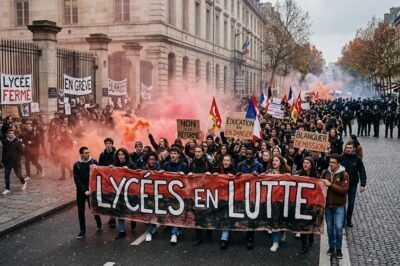
The streets of France have once again become a crucible of social unrest as a wave of student-led protests sweeps across the nation, resulting in the closure of hundreds of educational institutions. From the historic boulevards of Paris to the industrial hubs of Lyon and the coastal cities of Marseille, the youth are making their voices heard with an intensity that has caught both the government and the public by surprise. This is not merely a localized grievance but a systemic outpouring of frustration that touches upon the very core of the French social contract. As Al Jazeera reports, the disruption to the academic calendar is unprecedented, with hundreds of high schools and universities facing blockades, strikes, and full-scale shutdowns. The air is thick with the scent of burning flares and the rhythmic chants of a generation that feels sidelined by current policy directions. This movement represents a significant challenge for the administration, forcing a national conversation on the future of education, employment, and the democratic right to dissent in a rapidly changing world. As the standoff intensifies, the international community watches closely to see how the Fifth Republic manages the volatile energy of its youth, who have historically been the architects of significant political shifts in the country.
The Catalyst: Understanding the Core Grievances
The current wave of protests is not a sudden explosion of anger but rather the culmination of months, and perhaps years, of simmering discontent. At the heart of the matter are recent educational reforms that students argue will exacerbate social inequality and restrict access to higher education for those from underprivileged backgrounds. The implementation of new selection criteria and the perceived lack of resources in state-funded schools have become focal points for the demonstrators. Many students feel that the government is prioritizing economic austerity over the long-term well-being of the youth, leading to a sense of betrayal among those who will inherit the nation’s future challenges. Additionally, broader economic concerns, such as the rising cost of living and the precariousness of the job market for young graduates, have added fuel to the fire.
Furthermore, the students are protesting against what they perceive as an increasingly authoritarian approach to governance. The use of specific executive powers to bypass parliamentary debate on key social issues has alienated a significant portion of the younger population. In the eyes of many protesters, the education system is being transformed into a pipeline for the corporate sector rather than a space for intellectual growth and social mobility. This ideological clash between a technocratic government and a socially conscious youth movement has created a deadlock that shows no signs of immediate resolution. The rhetoric on both sides has hardened, with student unions calling for a total withdrawal of the reforms while the government maintains that the changes are necessary for France to remain competitive in a globalized economy.
The Geographic Reach and Scale of Disruption
The scale of the protests is truly national, with significant activity reported in almost every major French city. In Paris, the iconic Sorbonne University and several prestigious lycées have seen intense blockades, with students using trash bins, pallets, and metal fencing to prevent entry. According to Al Jazeera, the Ministry of Education has confirmed that hundreds of schools have been affected, with a significant percentage forced to close their doors entirely due to safety concerns or lack of staff. The disruption is not limited to the capital; in cities like Nantes, Bordeaux, and Toulouse, students have taken to the streets in massive numbers, often joined by teachers and labor union members who share their concerns about the direction of public services in France.
This widespread participation highlights the organizational capabilities of modern student movements. Utilizing encrypted messaging apps and social media platforms, activists have been able to coordinate nationwide days of action with remarkable efficiency. This digital mobilization has made it difficult for authorities to predict where the next major demonstration will occur, leading to a constant state of high alert for the police forces. The closures have also had a massive ripple effect on French society, as parents struggle to find childcare and the regular rhythm of academic life is completely upended. The economic cost of these closures, while difficult to quantify precisely, is mounting as exams are postponed and administrative processes are paralyzed across the educational sector.
Government Response and the Security Stance
The French government, led by President Emmanuel Macron, has maintained a firm stance against the blockades, emphasizing the importance of maintaining public order and the right of non-protesting students to attend classes. Interior Ministry officials have deployed significant numbers of CRS riot police to clear blockages and manage the large crowds. However, the presence of heavy security has often exacerbated tensions, leading to skirmishes between police and protesters. Images of tear gas being deployed in front of high schools have sparked a fresh wave of criticism from civil rights groups and opposition politicians, who argue that the state’s response has been disproportionately heavy-handed.
Politically, the administration finds itself in a precarious position. On one hand, it wishes to appear resolute and committed to its reform agenda; on the other, it risks further radicalizing a generation of voters. The Ministry of Education has attempted to open channels of dialogue with some student unions, but many of the more radical factions refuse to negotiate until their primary demands are met. This lack of a unified interlocutor makes the task of de-escalation incredibly difficult. The government’s strategy so far has been to wait out the protests, hoping that the movement will lose momentum as exams approach, but the continued closure of schools suggests that the student’s resolve remains firm. There is also a growing concern within the cabinet that the student protests could merge with other labor strikes, creating a generalized social explosion that would be much harder to contain.
The Role of Labor Unions and Broader Social Solidarity
One of the most significant aspects of the current protests is the high level of solidarity between students and established labor unions. Organizations such as the CGT and FO have publicly supported the student’s cause, recognizing that the grievances of the youth are linked to broader struggles over labor rights and the welfare state. This intergenerational alliance is a powerful force in French politics, as it combines the energy and digital savvy of the youth with the organizational muscle and institutional weight of the unions. Joint marches have seen tens of thousands of people from all walks of life walking through the streets of Paris, chanting slogans that target the government’s neoliberal policies.
Key points of the alliance include:
- Shared opposition to austerity: Both groups argue that public services are being intentionally underfunded to justify privatization.
- Labor market concerns: Students fear the same deregulation that unions are fighting against in the private sector.
- Democratic deficit: A common belief that the current administration is out of touch with the needs of ordinary citizens.
- Defense of the social model: A commitment to maintaining the French tradition of strong social protections.
This solidarity has given the student movement a level of legitimacy that it might otherwise lack if it were seen as merely a teenage rebellion. By framing their struggle as part of a larger fight for the soul of the French Republic, the protesters have managed to capture the sympathy of a significant portion of the public. Polls suggest that while many people are inconvenienced by the school closures, there is a widespread understanding of the reasons behind the anger, which complicates the government’s attempts to portray the protesters as a fringe minority of troublemakers.
Socio-Economic Impacts and the Education Gap
While the political drama unfolds on the streets, there are growing concerns about the long-term educational impact on the students themselves. The closure of hundreds of schools means that thousands of hours of instructional time are being lost, which could have serious consequences for students preparing for the Baccalauréat and other critical examinations. Educators have warned that the disruption is likely to hit the most vulnerable students the hardest, as they often lack the resources at home to compensate for missed classes. This irony is not lost on many, as the protests themselves are intended to fight for educational equality, yet the methods used may temporarily exacerbate the gap between the wealthy and the poor.
The Impact on National Exams
The Ministry of Education has had to consider contingency plans for national exams, including the possibility of pushing back dates or modifying the content of the tests. This has created a state of anxiety among the student body, with many unsure of their academic future. For those in their final year of high school, the stakes could not be higher, as their exam results determine their entry into university. The psychological toll on the youth should not be underestimated; they are navigating a period of intense social conflict while also carrying the weight of their own professional aspirations. The government is using this potential academic crisis as leverage to encourage students to return to class, but so far, the call for solidarity has outweighed the individual fear of failing.
Future Implications for the Macron Administration
The resolution of these protests will likely define the remainder of President Macron’s current term and his political legacy. If the government is forced to withdraw its reforms, it will be seen as a major defeat and a sign of weakness that could embolden other opposition groups. However, if it continues to use force to suppress the movement, it risks permanently alienating the next generation of French citizens. The “youth vote” is increasingly becoming a battleground, and the current unrest suggests that the center-right platform of the administration is failing to resonate with those under 25. The long-term implication is a potential shift toward more radical political movements, either on the far left or the far right, as young people seek alternatives to the status quo.
In conclusion, the student protests in France are a complex phenomenon that reflects deep-seated anxieties about the future of the nation. As hundreds of schools remain closed and the standoff continues, it is clear that this is more than just a passing phase of teenage angst. It is a fundamental challenge to the way France is governed and a demand for a more inclusive and equitable vision of the future. Whether the government can find a way to address these concerns without compromising its core policy goals remains to be seen, but the voices of the students have ensured that the issue can no longer be ignored. The next few weeks will be critical in determining whether France can find a path to social peace or if it is entering a period of prolonged and deepening instability.





































Leave a Reply