
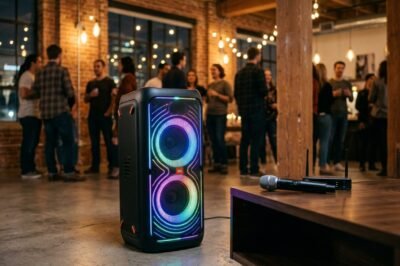
In the ever-evolving landscape of consumer electronics, few brands command the same level of respect and recognition as JBL, particularly when it relates to high-fidelity, high-energy audio solutions. The recent announcement of the JBL PartyBox 720, boasting a staggering 800W output, alongside a new suite of AI-integrated karaoke speakers, marks a significant milestone in the company’s trajectory. This is not merely an incremental update to a legacy product line; rather, it is a statement of intent that highlights how artificial intelligence is beginning to permeate even the most hardware-centric niches of the audio market. For enthusiasts, party planners, and home audio aficionados, this release represents the pinnacle of current engineering, blending raw acoustic power with sophisticated software processing. As we dive into this analysis, we will explore the intricate technical specifications, the implications of AI on vocal reproduction, and how these new devices are poised to redefine the social audio experience for years to come. The PartyBox 720 is more than just a speaker; it is a central hub for entertainment that bridges the gap between professional-grade concert sound and the accessibility of consumer hardware. By integrating advanced light shows and smart connectivity, JBL is ensuring that their latest offering is not just heard, but experienced in a multi-sensory fashion that was previously reserved for high-end club environments.
Unveiling the Raw Power of the JBL PartyBox 720
The centerpiece of JBL’s latest announcement is undoubtedly the JBL PartyBox 720. At the heart of this behemoth lies a massive 800W RMS power output, a figure that places it comfortably at the top of its class for portable party speakers. To achieve this level of sonic pressure without sacrificing clarity, JBL has utilized a specialized driver configuration. The unit features dual high-sensitivity woofers designed to deliver deep, resonant bass that can be felt as much as heard, complemented by dual 2.5-inch tweeters that ensure the high frequencies remain crisp even at maximum volume. This balance is critical because high-wattage speakers often suffer from muddy mid-ranges or piercing highs; however, JBL’s signature Pro Sound tuning aims to maintain a balanced acoustic profile across the entire frequency spectrum.
Beyond the internal components, the PartyBox 720 is engineered to handle the physical stresses of high-volume playback. The cabinet is constructed from high-density materials designed to minimize resonance and vibration, which are common culprits of audio distortion in large-format speakers. Furthermore, the 800W output is managed by a sophisticated internal amplifier that optimizes power distribution based on the content being played. Whether it is the rhythmic thumping of electronic dance music or the complex layers of a live rock recording, the PartyBox 720 adjusts its output to provide the most impactful experience possible. This level of power is not just about volume; it is about headroom—the ability of a speaker to handle sudden peaks in sound without clipping, ensuring that every beat remains clean and powerful.
The AI Revolution: Smart Karaoke Integration
While the raw power of the PartyBox 720 is impressive, the real innovation lies in the accompanying AI-driven karaoke speakers. JBL is pioneering the use of machine learning algorithms to enhance the vocal experience for users. Traditionally, karaoke setups rely on manual adjustments of echo, reverb, and gain. However, JBL’s new AI integration takes the guesswork out of the equation. The onboard AI processors analyze the vocal input in real-time, applying dynamic equalization to ensure the singer’s voice remains prominent above the background music. This is particularly beneficial for amateur singers who may struggle with microphone technique, as the AI can compensate for fluctuating distances from the mic and inconsistent vocal volumes.
Additionally, the AI features extend to noise suppression and feedback elimination. One of the most persistent issues in live karaoke is the high-pitched squeal of feedback when a microphone gets too close to the speaker. JBL’s AI system identifies the specific frequencies causing feedback and notch-filters them out instantly, before the human ear can even perceive the sound. This technology also works to suppress ambient background noise, ensuring that only the performer’s voice is amplified. By combining hardware excellence with these smart software features, JBL is transforming the karaoke experience from a simple hobby into a high-quality performance art that feels professional and polished for every user, regardless of their skill level.
Connectivity Evolution: Auracast and Ecosystem Integration
Connectivity has always been a cornerstone of the JBL PartyBox line, but the new models take it a step further with the inclusion of Bluetooth 5.4 and Auracast technology. Auracast is a game-changer for the industry, allowing a single source device to broadcast audio to an unlimited number of nearby receivers. In the context of the PartyBox 720, this means users can sync multiple units together to create a massive, synchronized soundstage that covers huge outdoor areas or multiple rooms in a large venue. Unlike previous generations of TWS (True Wireless Stereo) which often struggled with latency and pairing limits, Auracast provides a more stable, lower-latency connection that is much easier to manage via a dedicated smartphone app.
Furthermore, the integration with the JBL PartyBox App allows for granular control over every aspect of the speaker’s performance. Users can customize the RGB light show to match the tempo of the music, adjust the EQ settings, and even trigger sound effects like air horns or applause. This level of software integration ensures that the hardware remains versatile. The speaker also maintains traditional connectivity options, including dual mic and guitar inputs with dedicated volume knobs, a USB port for playback and charging external devices, and an auxiliary input. This hybrid approach—combining cutting-edge wireless technology with reliable physical inputs—ensures that the PartyBox 720 can serve as the primary audio solution for everything from a backyard BBQ to a professional presentation or a street performance.
Design Philosophy: Portability Meets Durability
Despite its massive size and power, JBL has not overlooked the importance of portability. The PartyBox 720 features a rugged design with built-in wheels and an easy-grip handle, allowing users to transport the 800W beast with relative ease. The aesthetics are equally considered, with a sleek, dark chassis that highlights the vibrant LED light rings surrounding the woofers. These lights are not just decorative; they are programmed to pulse, flash, and flow in synchronization with the audio signal, creating an immersive visual experience that complements the high-energy sound. The light show can be further customized through various presets, including a ‘starry night’ mode and dynamic ‘club’ patterns, making the speaker the focal point of any gathering.
Durability is another key pillar of the design. The PartyBox 720 comes with an IPX4 splash-proof rating, meaning it can withstand light rain or splashes from a poolside party without sustaining damage to its internal electronics. The ports on the back are protected by thick rubber flaps, and the front grille is made of reinforced metal to protect the drivers from accidental impacts. This focus on build quality ensures that the speaker is not just a high-tech gadget but a durable piece of equipment that can survive the rigors of frequent transport and outdoor use. JBL has clearly listened to customer feedback, creating a product that feels premium yet tough enough for the real world, bridging the gap between delicate home audio and rugged industrial gear.
Market Positioning: JBL’s Dominance in Social Audio
The launch of the PartyBox 720 and the AI karaoke speakers solidifies JBL’s position as the market leader in the “party speaker” category. While competitors like Sony and Soundcore offer similar products, JBL has managed to cultivate a brand identity that is synonymous with deep bass and high durability. By pushing the power envelope to 800W, they are effectively moving into a territory that was previously dominated by professional PA (Public Address) systems. However, unlike professional gear which often requires complex mixers and external amplifiers, the PartyBox series offers a plug-and-play solution that anyone can use. This accessibility is the secret to their success, as it appeals to a broad demographic ranging from teenagers to professional event organizers.
The addition of AI features also serves as a strategic moat against lower-cost competitors. While smaller brands can replicate high wattage, developing sophisticated AI algorithms for real-time audio processing requires significant R&D investment. By moving the goalposts from “who can be loudest” to “who can be smartest,” JBL is ensuring its long-term relevance in an increasingly crowded market. This release also reflects a broader trend in the audio industry where the value proposition is shifting from hardware specs alone to the software-enabled experiences those specs can provide. As consumer expectations rise, JBL’s focus on the “experience”—combining sound, light, and AI-assisted performance—sets a high bar for the rest of the industry to follow.
The Future of Large-Format Home Audio
Looking ahead, the implications of the JBL PartyBox 720 and its AI-driven counterparts are profound. We are likely entering an era where audio devices are no longer passive reproducers of sound but active participants in the acoustic environment. In the future, we can expect AI to perform even more complex tasks, such as automatically adjusting the sound signature based on the room’s acoustics or using spatial audio techniques to create a 360-degree soundfield from a single cabinet. The success of the PartyBox line suggests that there is a significant appetite for high-power, high-quality audio in residential settings, challenging the notion that “bigger is better” has been replaced by the desire for small, discreet smart speakers.
Ultimately, the JBL PartyBox 720 is a testament to the enduring appeal of physical sound pressure and the excitement of live entertainment. By embracing AI and modern connectivity standards like Auracast, JBL has modernized the traditional loudspeaker for a new generation of users. Whether it is used for a large-scale outdoor event or a high-stakes karaoke night, the PartyBox 720 provides the tools necessary to create an unforgettable atmosphere. As technology continues to advance, the line between consumer electronics and professional stage equipment will continue to blur, and JBL is leading that charge with products that are powerful, intelligent, and undeniably fun. This release is not just a win for the brand, but a win for anyone who believes that music should be felt, shared, and celebrated with the highest possible fidelity.




































Leave a Reply