
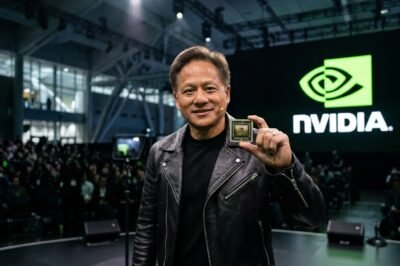
In the high-stakes theater of Silicon Valley, few figures command as much reverence and market-moving power as Jensen Huang. As the co-founder and current Chief Executive Officer of Nvidia, Huang has become synonymous with the artificial intelligence revolution, transforming a niche graphics card manufacturer into a multi-trillion-dollar titan of global industry. Recent discussions, spurred by a series of high-profile reports including those from the Wall Street Journal, have ignited a conceptual ‘campaign’ among investors, tech enthusiasts, and internal stakeholders to ensure that Huang’s leadership remains the bedrock of the company’s future. This movement isn’t about returning a deposed leader to power, but rather a collective effort to solidify his legacy and strategic direction amidst unprecedented global demand for computational power. The sheer gravity of Nvidia’s market cap, which has seen meteoric rises, places Huang in a unique position where his every move is scrutinized for long-term stability. As the world transitions into a new era of generative AI, the question isn’t just about who leads Nvidia, but how Huang’s specific brand of visionary grit can be sustained to navigate the complex geopolitical and technological landscape of the 2020s.
The Genesis of a Technological Visionary
To understand why there is such a fervent drive to maintain Jensen Huang at the helm of Nvidia, one must look at the historical trajectory he set for the company in 1993. Unlike many of his contemporaries, Huang saw the potential for parallel processing long before the term ‘Artificial Intelligence’ became a household phrase. By focusing on the Graphics Processing Unit (GPU), he provided the hardware foundation that would eventually train the world’s most sophisticated large language models. His tenure has been marked by a relentless pursuit of innovation, often betting the entire company on unproven technologies that later became industry standards. This foresight is why the investment community views his presence not just as a corporate asset, but as an insurance policy against obsolescence.
The narrative of ‘bringing back’ his influence refers to a return to the aggressive, founder-led intensity that defined Nvidia’s early years. As the company scales into a global behemoth, there are natural fears of corporate stagnation or bureaucratic slowdown. However, Huang has consistently defied these trends, maintaining a flat organizational structure that allows for rapid decision-making. His ability to pivot the company from gaming to data centers and now to autonomous systems and healthcare shows a level of agility that few CEOs can replicate. This strategic flexibility is the core reason why institutional investors are so vocal about his continued, direct involvement in the day-to-day operations and long-term visioning of the firm.
Analyzing the Wall Street Journal Report: The Sentiment Shift
The recent Wall Street Journal coverage highlighted a peculiar phenomenon: despite his current active status, there is a vocal segment of the market calling for a ‘revival’ of the classic Jensen Huang management style. This sentiment stems from the pressures of maintaining a three-trillion-dollar valuation. The report suggests that the campaign to ‘bring back’ this focused leadership is actually a response to the growing competition from rivals like AMD, Intel, and even custom silicon projects from Big Tech giants like Google and Amazon. Investors want the version of Huang that acted like an underdog, even when he is the king of the mountain.
Furthermore, the WSJ analysis touches upon the cultural impact Huang has on his employees. Known for his signature leather jacket and candid communication style, he represents a bridge between the old guard of Silicon Valley and the new age of AI developers. The ‘campaign’ is essentially a call for a double-down on the culture of ‘intellectual honesty’ and ‘speed of light’ execution that Huang champions. By emphasizing these traits, Nvidia aims to ward off the complacency that often plagues market leaders. The public discourse serves as a reminder that in the tech sector, the founder’s spirit is often the only thing preventing a giant from becoming a dinosaur.
Market Implications of Leadership Stability
From a financial perspective, the stability of Nvidia’s leadership is directly correlated with its stock volatility. Market analysts have noted that a significant portion of Nvidia’s premium valuation is tied to ‘The Jensen Premium.’ This is the added value that investors place on the company because of Huang’s proven track record of delivering consistent growth and technological breakthroughs. If there were any hint of a leadership transition, the shockwaves through the S&P 500 would be substantial, given Nvidia’s weight in modern indices. The campaign to keep him at the forefront is, therefore, a campaign for market stability.
Statistically, Nvidia has outperformed almost every major tech stock over the last decade, with returns reaching astronomical percentages. This performance has made it a favorite for both institutional hedge funds and retail investors. The collective voice of these stakeholders is clear: they view any dilution of Huang’s control as a risk factor. The analysis of quarterly earnings shows that Nvidia’s margins remain some of the highest in the semiconductor industry, a feat achieved through the premium pricing enabled by the CUDA software ecosystem, which Huang pioneered. Keeping this ecosystem proprietary and dominant requires the kind of strategic iron will that Huang has demonstrated throughout his career.
The AI Arms Race and Strategic Prowess
Nvidia is currently at the center of a global AI arms race. Nations and corporations are scrambling to secure H100 and Blackwell chips, which are essentially the ‘oil’ of the 21st century. In this environment, the CEO must be more than a business manager; they must be a diplomat and a technologist. Huang has excelled in these roles, traveling globally to meet with heads of state and tech leaders to discuss ‘Sovereign AI’ and the importance of localized data processing. This level of engagement is what supporters mean when they push for his continued dominance in the company’s narrative.
Technically, the roadmap for Nvidia’s future hardware is more ambitious than ever. With the introduction of the Blackwell architecture, Nvidia is moving toward full-stack solutions that integrate hardware, software, and networking. This integration is a direct result of Huang’s philosophy that ‘the data center is the new unit of computing.’ Forcing the industry to rethink computing at this scale requires a leader who can convince the world to spend hundreds of billions of dollars on new infrastructure. Huang’s charisma and technical depth make him the only individual currently capable of leading this transition without losing the confidence of the global market.
Challenges and Internal Pressures
Despite the glowing successes, the campaign to maintain Huang’s leadership also highlights the immense pressure he faces. Scaling a company from a few thousand employees to a global workforce of over 30,000 while maintaining a startup mentality is nearly impossible. There are internal reports of high burnout and intense work environments, which are often the byproduct of Huang’s high-standard culture. Addressing these human capital challenges while maintaining the pace of innovation is the next big hurdle. The ‘campaign’ to keep him in power must also account for the need to build a robust succession plan that doesn’t rely solely on his individual persona.
Moreover, the supply chain constraints and the geopolitical tensions between the US and China over chip exports represent a minefield that Huang must navigate. The ‘Bring Back Jensen’ sentiment reflects a desire for the same tactical brilliance he used during the early years of trade restrictions. His ability to design ‘export-compliant’ chips on short notice has shown a pragmatic side to his visionary leadership. However, as trade wars escalate, the reliance on a single leader for such high-stakes negotiations becomes a point of both strength and vulnerability for Nvidia.
Global Semiconductor Geopolitics
The semiconductor industry is no longer just about consumer electronics; it is a matter of national security. Jensen Huang’s role has expanded into the realm of geopolitics, where Nvidia’s technology determines the speed of military AI, pharmaceutical research, and energy optimization. The campaign to ensure his continued leadership is partly driven by the need for a stable hand during these turbulent times. Governments around the world look to Nvidia as a bellwether for the technological future, and Huang’s clear, consistent messaging helps to align global expectations.
As we look at the competition, specifically from China’s domestic chip efforts, Huang’s leadership becomes even more critical. He has consistently advocated for a proactive approach, pushing Nvidia to innovate faster than any rival can copy. This ‘running while others are walking’ mentality is what has kept Nvidia ahead of the curve. The market recognizes that without this specific type of leadership, the Western lead in AI hardware could quickly erode. Thus, the campaign for Huang is as much about national and economic security as it is about corporate profits.
Conclusion: Future Implications of the Jensen Era
The discourse surrounding the ‘campaign’ to keep Jensen Huang as the face and force of Nvidia highlights a broader truth about the modern tech landscape: individuals still matter. Even in the age of algorithms and AI, the human element of leadership remains the most critical factor in a company’s success. As Nvidia continues to push the boundaries of what is possible with silicon and software, Huang’s vision will be the guiding light. The future implications of his continued tenure suggest a world where AI becomes more integrated into every facet of life, driven by a company that refuses to slow down.
Ultimately, the campaign is a testament to what Huang has built. It is a rare moment in business history when the market, the media, and the workforce align in their desire for a founder to remain at the helm indefinitely. Whether Nvidia can maintain its current trajectory remains to be seen, but with Jensen Huang in his leather jacket, leading the charge, the odds remain heavily in the company’s favor. The transition from a graphics company to an AI sovereign state is nearly complete, and the world is watching to see what this visionary leader will do next.





































Leave a Reply