

The Convergence of Artificial Intelligence and Wearable Hardware
In the rapidly evolving landscape of consumer electronics, Apple Inc. is reportedly preparing to double down on a project that could define its legacy for the next decade. According to a comprehensive report from Bloomberg, the Cupertino-based giant is shifting its focus toward smart glasses that rely heavily on a revamped Siri, powered by the latest breakthroughs in Apple Intelligence. For years, the industry has speculated about Apple’s answer to the growing trend of lightweight wearable tech, and it appears the company has found its answer not in immersive virtual reality, but in an AI-driven interface that lives within traditional-looking frames. This strategic pivot is more than just a hardware update; it represents a fundamental change in how users interact with the digital world. By positioning Siri as the primary gateway to a suite of AI-driven applications, Apple aims to bridge the gap between the iPhone and the environment around us, creating a seamless ‘spatial’ experience without the bulk of a traditional headset like the Vision Pro. This move is timed perfectly with the global surge in generative AI, allowing Apple to leverage its massive ecosystem to provide a level of utility that competitors are currently struggling to match. The market’s reaction has been one of cautious optimism, as analysts weigh the potential for a new revenue stream against the engineering hurdles that come with miniaturizing such advanced technology.
The Strategic Pivot: Moving Beyond the Vision Pro
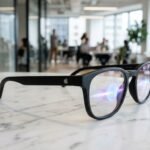
Apple’s recent launch of the Vision Pro was a masterclass in engineering, but its high price point and bulky form factor relegated it to a niche market of enthusiasts and developers. The Bloomberg report suggests that Apple has recognized the limitations of high-end spatial computing for the average consumer. Instead of asking users to strap a computer to their face, Apple is betting on ‘smart glasses’ that feel as natural as a pair of Wayfarers. This transition marks a critical moment for the company’s hardware division. While the Vision Pro focuses on ‘immersion,’ the upcoming smart glasses are focused on ‘augmentation.’ This distinction is vital because it addresses the core consumer need for portability and social acceptability.
By stripping away the heavy external displays and complex battery packs found in the Vision Pro, Apple is prioritizing a design that people are willing to wear all day. However, removing hardware features creates a functional void that must be filled. This is where Siri and Apple Intelligence come into play. The intelligence of the device is being moved from the physical hardware to the software layer, allowing the glasses to remain light while still performing complex tasks through cloud-based and on-device AI processing. This strategy reflects Apple’s historical ability to take a complicated technology and simplify it for mass consumption, much like they did with the iPod and the iPhone.
Siri as the Core Interface: The Evolution of Voice Computing
For years, Siri has been criticized for lagging behind competitors like Google Assistant or Amazon Alexa. However, the integration of Large Language Models (LLMs) and Apple Intelligence is set to transform Siri from a basic voice command tool into a sophisticated AI agent. In the context of smart glasses, Siri becomes the primary operating system. Without a touch screen, the user must rely on voice, subtle gestures, and visual recognition. Bloomberg indicates that Apple is developing dedicated ‘AI Apps’ specifically for these glasses, which will allow Siri to interpret the world through the lenses. For example, a user could look at a landmark and ask Siri for its history, or look at a restaurant menu and have Siri translate it or provide nutritional information in real-time.
This ‘visual intelligence’ is the true value proposition of Apple’s smart glasses. By combining the camera’s input with Siri’s processing power, Apple creates a context-aware assistant that knows where you are, what you are looking at, and what you might need. This level of integration requires a massive amount of data processing and a highly responsive AI. Apple’s investment in its own silicon, specifically the M-series and A-series chips, provides the necessary computational foundation to handle these AI tasks with minimal latency. The goal is to make the interaction feel instantaneous, creating a sense of ‘magic’ that has long been a hallmark of Apple’s brand identity.
Analyzing the Competitive Landscape: Meta, Google, and Beyond
Apple is not entering this market in a vacuum. Meta has already seen significant success with its Ray-Ban Meta smart glasses, which feature a camera and integrated AI. Mark Zuckerberg’s strategy has been to get the hardware onto faces as quickly as possible, even if the AI capabilities are still maturing. Google is also rumored to be revisiting its ‘Glass’ project under the guise of Project Astra. For Apple, the challenge is to enter the market late but with a superior product. The Bloomberg report suggests that Apple’s advantage lies in its ecosystem. While Meta glasses are a peripheral to a smartphone, Apple’s glasses will be an extension of the Apple ecosystem, syncing perfectly with iCloud, Apple Music, and the App Store.
Furthermore, Apple’s stance on privacy gives it a unique edge in the wearable camera market. One of the biggest hurdles for smart glasses has always been the ‘creep factor’ of integrated cameras. Apple’s ‘Privacy-First’ marketing could alleviate consumer concerns about being recorded. By processing as much data as possible on-device and using encrypted channels for cloud tasks, Apple can position its smart glasses as the only responsible choice for privacy-conscious consumers. This competitive positioning is essential as the market shifts from early adopters to the mainstream public, where trust in big tech companies is often a deciding factor in purchasing decisions.
Financial Implications and the Future of Apple’s Services Revenue
From a financial perspective, the shift toward AI-powered glasses is a move to protect and expand Apple’s Services revenue. While hardware sales provide the initial influx of cash, the long-term value lies in the ‘AI Apps’ and subscriptions that will live on the glasses. Analysts suggest that Apple could introduce a new tier of ‘Apple Intelligence+’ specifically for wearable devices, offering advanced features for a monthly fee. This recurring revenue model is what Wall Street wants to see, as it provides a predictable income stream that is less dependent on annual hardware upgrade cycles. The Bloomberg analysis highlights that Apple’s stock price often moves in tandem with its ability to prove that its ecosystem is sticky.
Moreover, the manufacturing of smart glasses involves high margins once the supply chain is optimized. Unlike the Vision Pro, which uses expensive Sony-made micro-OLED displays, smart glasses can utilize more affordable heads-up display (HUD) technologies or even simple audio-based feedback systems in their first iterations. This allows Apple to scale production more rapidly and target a wider demographic. If Apple can capture even a fraction of the 2 billion iPhone users with a $499 or $599 pair of smart glasses, the impact on the bottom line would be monumental. It also rejuvenates the ‘Wearables, Home and Accessories’ category, which has seen slower growth since the initial boom of the Apple Watch and AirPods.
Technical Challenges: Battery Life, Heat, and Aesthetics
Despite the excitement, the road to successful smart glasses is paved with technical difficulties. The Bloomberg report notes that Apple engineers are still grappling with the ‘thermal envelope’ of the device. Packing a high-performance AI chip and a battery into a pair of glasses leads to heat buildup, which is uncomfortable for the wearer. Additionally, battery life remains a significant hurdle. For a device to be truly useful, it needs to last a full day, yet the current battery technology capable of fitting into a glass frame often lasts only a few hours of active use. Apple’s focus on Siri-driven apps is a clever way to mitigate this; by using voice instead of constant visual overlays, the power draw is significantly reduced.
Aesthetics are the final hurdle. Apple is famously perfectionist about design, and Jony Ive’s legacy of ‘thin and light’ still permeates the company. To succeed, these glasses cannot look like a gadget; they must look like a fashion accessory. This requires a level of precision in engineering that few companies can achieve. The use of premium materials like titanium or high-grade acetates, combined with the miniaturization of internal components, will determine whether the public embraces the product or views it as another ‘Google Glass’ failure. Bloomberg suggests that Apple is exploring various styles and potentially partnering with traditional eyewear brands to ensure the product has broad appeal across different demographics.
Conclusion: The Dawn of a New Computing Paradigm
Apple’s reported bet on Siri-powered AI smart glasses represents a pivotal moment in the history of personal computing. By moving away from the screen-centric world of the iPhone and into the world of ambient, AI-driven assistance, Apple is defining the ‘post-smartphone’ era. The success of this endeavor will depend on whether Siri can truly deliver on the promise of being a helpful, intelligent companion that understands the physical world. If Apple succeeds, it will not only solidify its dominance in the tech industry but also change the way humans interact with technology forever. We are moving toward a future where the internet is not something we look at on a screen, but something we experience through our senses, guided by an intelligence that is always there when we need it. As Bloomberg concludes, the stakes couldn’t be higher, but for a company with Apple’s resources and vision, the potential rewards are limitless.





































Leave a Reply