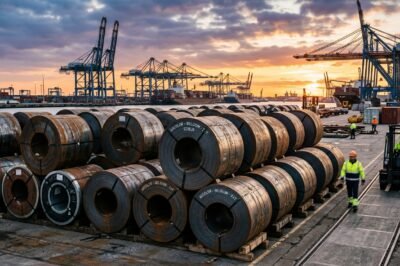
The global trade landscape has been jolted by a significant regulatory move from the European Commission, marking a definitive shift in the EU’s approach to industrial protectionism. This is not merely a minor policy adjustment; it is a high-stakes defensive maneuver in a global economic battle over the future of heavy industry. By slapping anti-dumping duties on steel imports from India and four other key nations, the European Union is drawing a line in the sand against what it perceives as predatory pricing strategies that threaten the domestic European steel sector. This decision comes at a critical juncture as the European steel industry grapples with skyrocketing energy costs, rigorous decarbonization mandates, and intense competition from low-cost producers abroad. For India, which has positioned itself as a rising global steel powerhouse with massive export ambitions, this move presents a formidable hurdle. This detailed analysis explores the economic justifications behind the decision, the specific impact on major Indian manufacturers, and the broader ripples this will send through international commodity markets. As protectionism gains ground under the guise of fair trade, the global supply chain for steel—one of the world’s most essential industrial materials—is poised for a period of intense volatility and structural realignment.
The Rationale Behind the European Commission’s Decision
The European Commission’s decision to implement anti-dumping duties is the culmination of an exhaustive investigation into the pricing practices of exporters from India, Egypt, Japan, South Africa, and Vietnam. The core of the EU’s argument lies in the concept of ‘dumping’—the practice where foreign manufacturers sell goods in an export market at prices lower than they charge in their home markets, or lower than the cost of production. According to the Commission, these pricing strategies have resulted in significant price suppression within the Eurozone, preventing domestic producers like ArcelorMittal and ThyssenKrupp from competing on a level playing field. The investigation found that the surge of low-priced imports has led to a decline in market share for EU-based mills, threatening the financial viability of an industry that is vital for the region’s automotive and construction sectors.
Furthermore, the EU argues that these measures are essential to safeguard the massive investments being made in ‘green steel’ technologies. As European producers are forced to comply with the world’s most stringent environmental regulations, their cost of production naturally rises. If they are forced to compete with imported steel that is not only cheaper but often produced with a significantly higher carbon footprint, the EU’s environmental goals could be undermined by a phenomenon known as ‘carbon leakage.’ By imposing these duties, the EU aims to bridge the price gap and ensure that its transition to a sustainable economy does not come at the cost of its industrial backbone.
Consequences for Indian Steel Giants: A Detailed Outlook
India’s steel sector, led by titans such as JSW Steel, Tata Steel, and ArcelorMittal Nippon Steel India, faces a complex challenge following this announcement. India has traditionally viewed the European Union as a high-value destination for its hot-rolled flat products and other steel variants. The imposition of duties, which vary depending on the specific manufacturer and the degree of dumping identified, will inevitably make Indian steel more expensive for European buyers. This price hike is expected to erode the competitive edge that Indian exporters have enjoyed over the past several years, potentially leading to a sharp decline in export volumes to the Eurozone in the short to medium term.
However, the impact is not uniform across all players. Companies with more diversified global portfolios or those that have already begun investing in lower-carbon production methods may find ways to mitigate the blow. Indian manufacturers are now being forced to re-evaluate their export strategies, potentially shifting their focus toward emerging markets in Southeast Asia, the Middle East, and Africa. There is also the possibility of legal challenges through the World Trade Organization (WTO), as the Indian government and industry bodies have often argued that EU trade defense instruments are overly aggressive and lack sufficient transparency in their calculation of ‘fair value.’
The Role of the Carbon Border Adjustment Mechanism (CBAM)
While the anti-dumping duties are the immediate focus, they must be viewed in the context of the EU’s broader trade strategy, particularly the Carbon Border Adjustment Mechanism (CBAM). The CBAM is a landmark policy designed to put a carbon price on certain goods imported into the EU, ensuring that foreign producers pay the same price for their carbon emissions as domestic ones. Steel is one of the primary sectors targeted by this mechanism. The combination of anti-dumping duties and the upcoming full implementation of CBAM creates a ‘double whammy’ for exporters who rely on traditional, coal-heavy blast furnace production.
For India, this represents a structural challenge. Much of India’s steel production is still reliant on coal, which results in a high carbon intensity per ton of steel produced. As the EU tightens both trade and environmental regulations, Indian mills will need to accelerate their adoption of hydrogen-based direct reduced iron (DRI) or electric arc furnace (EAF) technologies to remain viable in the European market. The current anti-dumping duties serve as a precursor to a future where access to the EU market will be dictated as much by a product’s carbon footprint as by its price tag.
Supply Chain Disruptions and the Price of Protectionism
The imposition of these duties does not occur in a vacuum; it has significant implications for European consumers of steel, including the automotive, white goods, and infrastructure industries. By making imported steel more expensive, the EU is effectively raising the input costs for its own manufacturing base. While this protects the steel mills, it may hurt the competitiveness of European carmakers and construction firms who must now pay more for their raw materials. This creates a delicate balancing act for EU policymakers who must weigh the health of the primary steel industry against the inflationary pressures felt by downstream sectors.
Furthermore, these trade barriers could lead to a fragmentation of the global steel supply chain. As exporters from the five targeted countries seek alternative markets, we may see a surplus of supply in other regions, leading to price wars elsewhere. This ‘trade diversion’ could disrupt established trade flows and create new winners and losers in the global economy. Supply chain managers are now being forced to build more resilience into their procurement strategies, looking for alternative sources that are not subject to these tariffs, which could lead to a reshuffling of trade partnerships across the globe.
Assessing the Competitive Landscape in a Post-Duty Market
In the wake of these duties, other steel-producing nations that were not included in this specific investigation may find an opportunity to increase their market share in Europe. Countries like South Korea or certain South American producers might step in to fill the void left by India and Japan, provided they can maintain competitive pricing and meet the EU’s quality and environmental standards. However, the European Commission has shown a willingness to broaden its investigations if it detects new surges in imports from other regions, suggesting that the era of unfettered access to the EU steel market may be coming to an end for many global exporters.
Domestic European producers are likely to see a temporary boost in their order books as imports become less attractive. This could provide the necessary capital for these firms to invest in the green transition. However, there is also the risk that reduced competition could lead to inefficiencies or a lack of innovation within the European sector. The long-term success of these protectionist measures will depend on whether the European industry uses this ‘breathing room’ to modernize and become globally competitive on a technological basis, rather than relying solely on trade barriers.
Future Trajectory of Euro-Asian Trade Relations
The decision to target India, Japan, and Vietnam—all key economic partners—carries significant geopolitical weight. These measures could strain trade relations and lead to retaliatory actions. India, in particular, has been vocal about its displeasure with the EU’s trade policies and has the capacity to impose its own duties on European products, ranging from luxury goods to machinery. As both regions engage in negotiations for a Comprehensive Free Trade Agreement (FTA), these trade disputes serve as a major point of friction that could delay or complicate any final deal.
The global trend is increasingly moving toward ‘strategic autonomy’ and ‘friend-shoring.’ The EU’s actions reflect a desire to reduce dependence on foreign industrial inputs, particularly those that are perceived to be subsidized or unfairly priced. As the world moves away from the neoliberal consensus of the late 20th century, we are likely to see more of these targeted trade interventions. The future of Euro-Asian trade will be defined by a complex negotiation between the need for economic cooperation and the drive for industrial sovereignty.
Conclusion: Navigating the New Era of Trade Protectionism
The European Union’s imposition of anti-dumping duties on steel imports from India and four other nations is a watershed moment for the global commodities market. It signals a robust commitment to protecting domestic industry at any cost, even if it risks trade tensions and higher internal prices. For the targeted countries, particularly India, this is a call to action. Indian steel producers must now pivot their strategies, focusing on market diversification and, more importantly, the rapid decarbonization of their production processes to meet the evolving standards of the global market.
Ultimately, the global steel industry is entering an era where price is no longer the sole determinant of market success. Regulatory compliance, carbon intensity, and geopolitical alignment are becoming equally important factors. Stakeholders across the supply chain—from miners to manufacturers to end consumers—must prepare for a more fragmented and regulated trading environment. The success of these measures in the EU will be judged by whether they lead to a more sustainable and resilient European industry, or if they simply trigger a new wave of global trade wars that stifle economic growth.





































Leave a Reply