
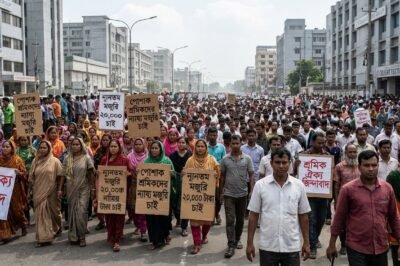
After weeks of volatile demonstrations that brought the industrial heartlands of Bangladesh to a standstill, a landmark agreement has finally been reached. The garment workers of the world’s second-largest apparel exporter have secured a substantial 36% increase in their minimum monthly wage. This hard-won victory comes against a backdrop of soaring inflation and systemic economic pressure that had left millions of laborers struggling to afford basic necessities. For the global fashion industry, which relies heavily on the ‘Made in Bangladesh’ tag, this development is more than just a local labor dispute; it is a seismic shift in the manufacturing landscape. The protests, which saw clashes between workers and security forces, highlighted a growing impatience with the status quo of low-cost manufacturing. This wage adjustment represents a critical pivot point for the nation’s economy, balancing the need to maintain global competitiveness with the fundamental right to a living wage. As international brands watch closely, the implementation of this new pay structure will test the resilience of the supply chain and the sincerity of corporate social responsibility commitments in the high-stakes world of fast fashion.
The Catalyst of Change: A Detailed Breakdown of the 36% Wage Hike
The recent announcement of a 36% pay rise for garment workers in Bangladesh marks a significant milestone in the country’s industrial history. Following intense negotiations between labor representatives, factory owners, and government officials, the new wage structure is designed to mitigate the effects of a crippling economic crisis. For years, the minimum wage in the Readymade Garment (RMG) sector had remained stagnant while the costs of food, energy, and housing skyrocketed. This imbalance created a pressure cooker environment that eventually boiled over into the streets of Gazipur and Ashulia.
Under the new agreement, the minimum monthly pay will rise significantly, providing a much-needed cushion for the approximately four million workers employed in the sector. While labor unions initially demanded a more substantial increase to match the rising cost of living, the 36% compromise is seen as a pragmatic step forward. This increase is not just about the numbers; it represents a formal recognition of the worker as a stakeholder in the nation’s burgeoning export economy. The RMG sector accounts for nearly 85% of Bangladesh’s $55 billion in annual exports, making the stability of this workforce essential for national financial health.
Economic Pressures and the Cost-of-Living Crisis in South Asia
The protests were not born in a vacuum but were the direct result of a deteriorating macroeconomic environment in South Asia. Bangladesh has been grappling with high inflation rates, which have severely eroded the purchasing power of the average citizen. The prices of essential commodities like rice, lentils, and cooking oil have surged, leaving many garment workers in a cycle of debt. The global rise in fuel prices further exacerbated the situation, increasing transportation costs and the price of electricity, which are vital for both households and industrial operations.
Key economic factors driving the unrest included:
- Double-digit inflation in food prices over the last eighteen months.
- A depletion of foreign currency reserves, leading to a devalued local Taka.
- Increased utility costs following the removal of energy subsidies.
- The lingering economic effects of the global pandemic on household savings.
By securing this wage hike, workers are hoping to regain some of their lost financial stability. However, analysts point out that if inflation remains unchecked, the benefits of a 36% raise could be short-lived. The government now faces the double challenge of managing wage expectations while cooling down an overheated economy that is sensitive to global market fluctuations.
Global Supply Chain Impacts and International Brand Responsibility
Bangladesh serves as a manufacturing hub for some of the world’s most recognizable fashion labels, including H&M, Zara, Walmart, and Gap. The disruption caused by weeks of protests sent ripples through the global supply chain, leading to shipping delays and concerns over holiday season inventories. International brands find themselves in a precarious position; while they demand ethical labor practices and fair wages in their public-facing corporate social responsibility (CSR) reports, their procurement strategies often prioritize the lowest possible production costs.
During the protests, a coalition of international brands urged the Bangladeshi government to ensure a fair wage and protect the rights of workers to protest peacefully. However, factory owners have often argued that they cannot afford significant wage hikes unless the brands themselves agree to pay more for the garments they order. This ‘race to the bottom’ has long been a criticism of the fast fashion model. The 36% pay rise will inevitably lead to higher production costs, and the industry is now watching to see if global retailers will absorb these costs or pass them on to consumers in Europe and North America.
The Human Cost of the Protests: A Struggle for Basic Rights
The road to this wage agreement was paved with significant human sacrifice. The protests were characterized by intense confrontations, with workers facing tear gas, rubber bullets, and water cannons. Tragically, several lives were lost during the unrest, and many more workers were injured. These incidents have drawn condemnation from human rights organizations and labor advocates worldwide, who argue that the right to demand a living wage should not be met with state-sponsored violence.
Beyond the physical danger, the protests highlighted the psychological toll of working in an industry that has historically marginalized its labor force. Many workers reported long hours, unsafe conditions, and a lack of collective bargaining power. The success of the 36% pay rise is therefore seen as a moral victory as much as a financial one. It validates the collective power of the workers and underscores the need for more robust institutional frameworks that allow for regular, peaceful wage reviews rather than forcing workers into desperate street actions to be heard.
Market Implications for the Global Apparel Industry
The 36% increase in wages will have immediate and long-term implications for the market competitiveness of Bangladesh’s RMG sector. For decades, Bangladesh’s primary competitive advantage has been its low labor costs. With wages rising, some industry experts worry that global buyers might shift their orders to other low-cost destinations like Vietnam, Cambodia, or Ethiopia. However, others argue that Bangladesh’s established infrastructure, skilled workforce, and massive capacity make it difficult to replace overnight.
Technological Adaptation and Productivity
To offset the increased labor costs, many factory owners are likely to invest more heavily in automation and advanced manufacturing technologies. This transition could lead to higher productivity per worker, but it also raises concerns about potential job losses in the future as machines take over repetitive tasks. The challenge for the industry will be to upskill workers so they can operate in a more technologically advanced environment, ensuring that the 36% raise is sustainable in a more efficient manufacturing ecosystem.
Shift in Retail Pricing
Consumers in the West may soon see a slight uptick in the price of basic apparel items. While the labor cost is only a small fraction of the final retail price of a garment, the cumulative effect of wage increases across the supply chain, combined with higher shipping costs, will likely lead to adjustments in retail pricing. This presents a test for the ‘fast fashion’ consumer: are they willing to pay a few cents more to ensure the person who made their clothes can afford to eat?
Future Outlook: Navigating the Path to Sustainable Industrial Relations
Looking ahead, the 36% wage hike must be viewed as a starting point rather than a final destination. To ensure long-term stability in the garment sector, Bangladesh needs to move toward a more transparent and regular wage-setting mechanism. Relying on five-year intervals for wage reviews is no longer viable in a rapidly changing global economy. Implementing an annual cost-of-living adjustment could prevent the kind of social unrest seen in recent weeks and provide predictability for both workers and factory owners.
Furthermore, the relationship between the government, factory owners, and labor unions must evolve from one of confrontation to one of cooperation. Strengthening labor laws, ensuring the right to unionize without fear of retribution, and improving workplace safety are essential components of a sustainable industry. The 36% pay rise is a victory for the workers of Bangladesh, but it also serves as a wake-up call for the entire global fashion industry. It is a reminder that the true cost of a garment is not just the price on the tag, but the well-being of the hands that stitched it together. As the nation moves forward, the success of this agreement will depend on the commitment of all parties to honor their promises and work toward a more equitable future for the millions who power Bangladesh’s economic engine.




































Leave a Reply