
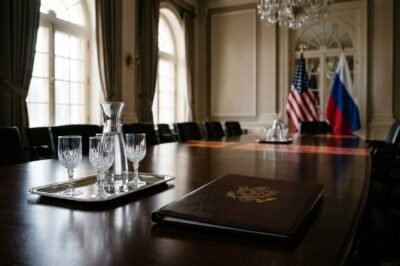
The global geopolitical landscape stands at a critical juncture as reports surface regarding the Trump administration’s decision to shelve proposed business deals intended to nudge Russia toward a resolution in the Ukraine conflict. This strategic pivot marks a departure from the traditional transactional diplomacy that has often defined Donald Trump’s approach to international relations. By withholding the ‘economic carrot’ that many expected to be the centerpiece of a peace negotiation, the administration is effectively recalibrating its leverage against the Kremlin. This move comes at a time when the war in Ukraine has entered its third year, leaving global markets, energy sectors, and security alliances in a state of flux. The decision to pause these commercial incentives suggests a hardening of the American negotiating position, or perhaps a realization that the complexities of the Eastern European theater require a more multifaceted approach than mere financial enticement. As the world watches, the implications of this shift extend far beyond the immediate borders of Ukraine, signaling a new chapter in U.S.-Russia relations that prioritizes long-term stability over short-term economic concessions. The following analysis explores why these deals were tabled and what it means for the future of global security and finance.
The Pivot from Economic Incentives to Hard Power Diplomacy
For months, political analysts and economic strategists speculated that a second Trump term would lean heavily on the president’s background as a dealmaker to resolve the Ukraine crisis. The core of this strategy was rumored to involve significant business concessions, including the lifting of certain sanctions and the facilitation of large-scale infrastructure projects involving Russian and American firms. However, recent reports from sources close to the administration indicate that these proposals have been shelved. This shift represents a tactical pause, acknowledging that the current Russian leadership may not be as easily swayed by economic prosperity as previously thought. By removing these deals from the immediate negotiating table, the U.S. is signaling that peace cannot be simply ‘bought’ without addressing the fundamental security concerns of Ukraine and its Western allies.
Furthermore, the decision to shelf these business proposals serves as a defensive mechanism against domestic critics who have long accused the administration of being too lenient on Moscow. By taking a firmer stance on economic cooperation, the administration aims to build a broader domestic consensus for its peace plan. This strategy also reflects a deeper understanding of the Russian economy’s resilience. Despite heavy sanctions, the Kremlin has managed to maintain a level of stability through alternative trade routes and internal resource management, meaning that the promise of U.S. business deals may not have the same coercive weight it once did. Consequently, the administration is now forced to look toward more traditional forms of diplomatic pressure and military deterrence to bring the conflict to a close.
Analyzing the Kremlin’s Likely Response to Shelved Proposals
The Kremlin’s reaction to this news is expected to be one of calculated indifference, at least publicly. For Vladimir Putin, the war in Ukraine is not merely a financial endeavor but a quest for regional hegemony and historical legacy. The shelving of business deals by the Trump administration may be viewed in Moscow as a sign of American inconsistency rather than a show of strength. Russian officials have frequently stated that their primary objectives are security guarantees and the neutrality of Ukraine, objectives that are not easily reconciled with the transactional nature of business contracts. If the U.S. continues to withhold these economic incentives, Russia may double down on its current military strategy, betting that it can outlast Western resolve through a war of attrition.
However, beneath the surface, the loss of potential business deals could create friction within the Russian elite. The oligarchic class, which has seen its international holdings frozen and its access to Western markets severed, was likely hoping for a ‘Trump deal’ that would restore their status and wealth. By removing these options from the table, the Trump administration is effectively maintaining the pressure on the inner circle of the Russian power structure. This creates a dual-track strategy: engaging the Kremlin on security while simultaneously denying the economic relief that the Russian business class desperately seeks. Whether this internal pressure will be enough to force a change in Putin’s calculus remains one of the most significant unknowns in contemporary geopolitics.
Impacts on Global Energy and Commodity Markets
The decision to halt business deal proposals has immediate and profound implications for global energy markets. Many of the proposed deals involved cooperation in the oil and gas sectors, which are vital to the Russian economy and central to Europe’s energy security. Without the prospect of normalized energy relations with the U.S., volatility in the Brent and WTI crude markets is likely to persist. Investors who had priced in a ‘peace dividend’ based on the normalization of Russian energy exports are now forced to re-evaluate their positions. This uncertainty is exacerbated by the ongoing sanctions regime, which continues to restrict the flow of Russian hydrocarbons to the West, forcing a permanent shift in global supply chains toward the Middle East and North America.
Beyond energy, the shelving of these deals affects the global agricultural and metals markets. Ukraine and Russia are among the world’s largest exporters of wheat, corn, and fertilizer. The hope that a business-led peace deal would restore full production and export capabilities has been dampened.
- Increased volatility in grain futures on the Chicago Board of Trade.
- Supply chain disruptions for industrial metals like palladium and neon gas.
- Higher costs for European manufacturers dependent on cheap Russian raw materials.
These economic realities underscore the fact that the Ukraine conflict is not just a localized war but a global economic event. The administration’s choice to prioritize diplomatic leverage over immediate market stabilization suggests a willingness to endure short-term economic pain for the sake of a more sustainable long-term security arrangement.
The Role of Congressional Oversight and Sanctions
One cannot overlook the significant role that the U.S. Congress plays in shaping the administration’s policy toward Russia. Even if the Trump administration were eager to move forward with business deals, they would face substantial legislative hurdles. The Countering America’s Adversaries Through Sanctions Act (CAATSA) and other related laws provide Congress with the power to review and potentially block the lifting of sanctions. By shelving these proposals now, the administration may be attempting to avoid a bruising confrontation with both Republican and Democratic lawmakers who remain skeptical of any deal that could be seen as rewarding Russian aggression. This preemptive move allows the executive branch to maintain control over the narrative of the negotiations without being boxed in by legislative mandates.
Moreover, the institutional memory within the State Department and the Pentagon remains wary of transactional diplomacy when dealing with a peer competitor like Russia. Career diplomats and military officials often argue that economic deals should be the result of a peace process, not the catalyst for it. The shelving of these deals likely reflects a compromise between the president’s deal-making instincts and the more traditional approach favored by the national security establishment. This internal dynamic is crucial for understanding the administration’s long-term strategy, as it balances the need for a quick resolution with the necessity of maintaining America’s global standing and the integrity of its alliance systems.
Future Implications for Transatlantic Relations
The shelving of these business proposals will also resonate deeply across the Atlantic, particularly in Brussels and Berlin. European leaders have been divided on how to approach the Russia-Ukraine conflict, with some favoring a more conciliatory stance to protect their economies and others demanding a hard line against Moscow. The Trump administration’s decision to pull back on business incentives may actually provide a moment of clarity for NATO allies. It signals that the U.S. is not willing to go it alone on a transactional peace that might undermine European security interests. This could lead to a more unified Western front, provided that the U.S. and its allies can agree on a shared roadmap for the eventual reconstruction of Ukraine and the future of the European security architecture.
However, there is also the risk that this move could be seen as a sign of American withdrawal or lack of a clear plan. If the U.S. is not offering business deals and is not increasing military support, European nations may feel compelled to take matters into their own hands, potentially leading to a fragmented response. The challenge for the Trump administration will be to fill the vacuum left by the shelved business deals with a robust diplomatic framework that addresses the concerns of all stakeholders. This requires a level of multilateral cooperation that has not always been the hallmark of ‘America First’ policy, but which may be essential for achieving a lasting peace in the 21st century.
Conclusion: The Path to a Durable Peace in 2025 and Beyond
In conclusion, the report that the Trump administration has shelved business deal proposals intended to end the Ukraine war represents a significant recalibration of American foreign policy. While the ‘Art of the Deal’ remains a central philosophy, the administration appears to have recognized that the stakes in Eastern Europe are too high for a purely transactional resolution. By prioritizing geopolitical leverage over commercial incentives, the U.S. is positioning itself for a more complex and potentially more sustainable negotiation process. The road to peace remains fraught with challenges, from the stubbornness of the Kremlin to the economic anxieties of the global market. However, by removing the ‘easy’ but potentially destabilizing options from the table, the administration may be paving the way for a more serious and enduring settlement that addresses the core issues of sovereignty, security, and international law. The world will be watching closely as these dynamics unfold in the coming months, determining the future of European stability and the global order.





































Leave a Reply