
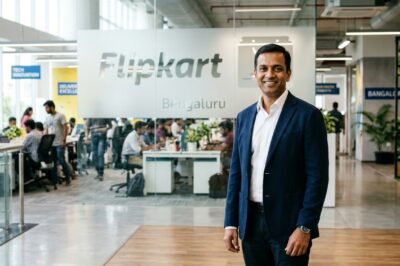
The landscape of Indian e-commerce is on the brink of its most significant leadership transition in a decade. Kalyan Krishnamurthy, the man who steered Flipkart through its most tumultuous yet transformative years, is set to conclude his ten-year tenure as the Chief Executive Officer of the Walmart-owned retail giant. This announcement marks more than just a change at the top; it signifies the conclusion of a chapter where Flipkart evolved from a domestic challenger into a global heavyweight under the umbrella of the world’s largest retailer. Krishnamurthy’s journey with Flipkart, which began as a representative of the early investor Tiger Global, eventually saw him take the reins during a period of intense competition with Amazon. His departure raises profound questions about the future trajectory of the company as it navigates the rise of quick commerce and the long-anticipated pursuit of an initial public offering. In this detailed analysis, we explore the legacy of a leader who redefined online shopping in India and examine what his exit means for the broader digital economy.
The Architect of Aggressive Growth and Market Consolidation
Kalyan Krishnamurthy’s arrival at Flipkart was not that of a traditional corporate executive but that of a strategic operator sent to protect a massive investment. Initially joining from Tiger Global, he was known for his sharp focus on numbers, operational efficiency, and a relentless drive for market share. Under his leadership, Flipkart transitioned from a burn-heavy startup to a more disciplined entity that could withstand the onslaught of Amazon’s deep pockets. He was instrumental in the high-stakes battle for dominance in the smartphone and electronics categories, which remain the backbone of Indian e-commerce sales today.
During his tenure, Krishnamurthy oversaw several critical acquisitions that fortified Flipkart’s ecosystem. The acquisition of Myntra had already set the stage, but it was under his guidance that Flipkart successfully integrated various business units to create a formidable front. He focused on the ‘Big Billion Day’ sales, turning them into a national phenomenon that dictated the festive season spending of millions of Indians. His strategy was simple yet effective: dominate the high-value categories, build a robust logistics network through Ekart, and leverage data to understand the unique preferences of the Indian consumer. This approach not only kept Flipkart ahead of its global rival but also made it an attractive target for Walmart.
The Landmark Walmart Acquisition and Post-Merger Stability
The defining moment of Krishnamurthy’s career came in 2018 when Walmart acquired a 77 percent stake in Flipkart for roughly 16 billion dollars. While the founders, Sachin and Binny Bansal, eventually exited the company, Krishnamurthy was the constant factor that ensured continuity. Walmart trusted him to lead the integration, a task fraught with cultural and operational complexities. Moving from a founder-led startup culture to the structured environment of a Fortune 1 company was no small feat, yet Krishnamurthy managed to maintain Flipkart’s entrepreneurial spirit while adopting corporate rigors.
Under the Walmart era, Flipkart’s valuation continued to climb, reaching nearly 38 billion dollars in subsequent funding rounds. Krishnamurthy was pivotal in convincing the Bentonville-based parent company of the long-term potential of the Indian market, despite the lack of immediate profitability. He successfully navigated the regulatory hurdles imposed by the Indian government regarding Foreign Direct Investment (FDI) in e-commerce, ensuring that Flipkart remained compliant while continuing its expansion into new categories like grocery and wholesale. His ability to balance the demands of a global retail giant with the ground realities of the Indian marketplace is perhaps his greatest professional achievement.
Diversification into a Multi-Vertical Ecosystem
Krishnamurthy recognized early on that being just an online marketplace was not enough to win in the long run. He spearheaded the company’s move into the ‘Super App’ territory, though with a more focused approach than some of his competitors. The spin-off of PhonePe, which has now become a decacorn in its own right, was a masterstroke that allowed the payments platform to raise independent capital while maintaining a symbiotic relationship with Flipkart. This move unlocked massive value for shareholders and demonstrated Krishnamurthy’s foresight in the fintech space.
Furthermore, the launch of Shopsy aimed at capturing the value-conscious segment in tier-2 and tier-3 cities showed a commitment to democratizing e-commerce. Under his watch, Flipkart also made significant inroads into the travel sector with the acquisition of Cleartrip and entered the healthcare space through Flipkart Health+. By diversifying the revenue streams, he ensured that Flipkart was not overly dependent on any single category. This ecosystem-building was essential in creating a ‘moat’ around the business, making it harder for new entrants to displace them.
The Challenge of Quick Commerce and Shifting Consumer Behavior
As Krishnamurthy prepares to exit, the e-commerce landscape is undergoing another radical shift. The rise of quick commerce players like Blinkit, Zepto, and Swiggy Instamart has disrupted the traditional delivery models that Flipkart spent a decade perfecting. While Flipkart has launched its own 10-to-15-minute delivery service, ‘Flipkart Minutes,’ it enters a crowded and capital-intensive market. This transition in consumer preference from ‘next-day delivery’ to ‘instant gratification’ represents one of the most significant challenges for the next leadership team.
Market analysts suggest that Krishnamurthy’s departure might be timed with a strategic pivot at the company. While he was the master of the ‘big-box’ e-commerce model, the new era requires a different set of skills involving hyperlocal logistics and high-frequency, low-ticket transactions. The competitive pressure from Reliance Industries’ JioMart also continues to loom large, as the conglomerate leverages its massive physical retail footprint to challenge Flipkart’s digital dominance. The next CEO will need to reconcile these two worlds to maintain Flipkart’s leadership position.
The Road to IPO and Future Implications
The most anticipated milestone for Flipkart has long been its Initial Public Offering (IPO). For years, speculation has swirled about a listing on a US exchange or a domestic debut. Krishnamurthy has been the primary architect in preparing the company’s balance sheet for this event, focusing on reducing losses and improving the path to profitability. His exit raises questions about the timeline of this IPO. Typically, a change in leadership can delay a public offering as the new CEO needs time to establish credibility with investors and articulate their own vision for the future.
Walmart, however, remains deeply committed to India. The parent company has often cited Flipkart as a key driver of its international growth. The transition in leadership is likely to be a planned, phased process rather than an abrupt departure, ensuring that the institutional knowledge Krishnamurthy holds is transferred effectively. The hunt for his successor will be one of the most closely watched executive searches in the global tech industry, with both internal candidates and external heavyweights likely being considered. The successor will inherit a company that is vastly different from the one Krishnamurthy took over—a mature, complex, and dominant player in one of the world’s fastest-growing economies.
Legacy of a Titan: What Lies Ahead for Flipkart
Kalyan Krishnamurthy’s legacy will be defined by his ability to turn a startup into an institution. He was the ‘growth hacker’ who became a corporate statesman, proving that Indian e-commerce companies could achieve scale and attract global capital. His tenure saw the creation of thousands of jobs, the digitisation of millions of small businesses, and the transformation of how the Indian middle class consumes goods. He leaves behind a company that is not just a marketplace but a vital part of India’s economic infrastructure.
As Flipkart enters this new era, it will need to balance its legacy operations with the need for constant innovation. The foundation laid by Krishnamurthy—a robust supply chain, a data-driven culture, and a diversified ecosystem—provides a strong starting point for whoever takes the mantle. However, the external environment is more competitive than ever. The next decade will not be about just selling products online; it will be about mastering the art of the ‘omnichannel’ experience and winning the battle for the consumer’s doorstep in under ten minutes. While the man may be leaving, the impact of his ten-year run will be felt for decades to come in the aisles of India’s digital supermarkets.






































Leave a Reply