
The Dawn of a New Visual Era in Artificial Intelligence
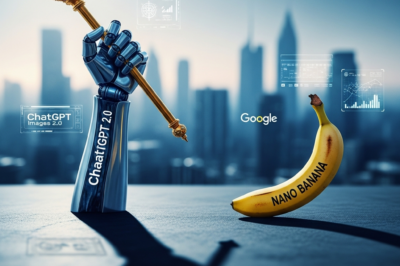
In the rapidly evolving landscape of generative artificial intelligence, the pendulum of dominance often swings with dizzying speed. Just weeks after the industry was captivated by the surprising efficiency and specialized prowess of Google’s Nano Banana—a compact, high-performance model designed for edge computing and rapid visual synthesis—OpenAI has delivered a monumental counter-strike. The release of ChatGPT Images 2.0 marks a significant pivot in the ongoing “AI arms race,” signaling a move away from mere iterative updates toward a fundamental overhaul of how machines perceive and generate visual data. This update is not merely about higher resolution or faster rendering; it represents a deep integration of visual reasoning and semantic understanding that aims to rectify the shortcomings found in previous versions of DALL-E and its competitors. For months, tech analysts suggested that OpenAI might be losing its edge to more nimble competitors like Google and Midjourney, but the introduction of Images 2.0 suggests that the pioneers of the large language model (LLM) era are far from finished. The stakes have never been higher, as these technologies begin to permeate every aspect of digital life, from professional graphic design and marketing to personal communication and education.
Understanding the Threat: The Rise of Google’s Nano Banana
To appreciate the magnitude of ChatGPT’s latest comeback, one must first understand the disruption caused by Google’s Nano Banana. Emerging from the DeepMind laboratories, Nano Banana was hailed as a “distilled powerhouse.” Unlike massive models that require significant cloud infrastructure, Nano Banana was optimized for “nano-scale” environments, allowing for incredibly fast image generation with minimal latency. It leveraged a unique architectural breakthrough known as “Banana-Curvature Latent Mapping,” which prioritized the most salient features of a prompt to deliver coherent visuals in milliseconds. This efficiency allowed Google to integrate high-quality visual AI into mobile devices and browser extensions more effectively than OpenAI’s resource-heavy DALL-E 3. For a period, it seemed that the market was shifting toward these smaller, more efficient “nano” models. Users flocked to Google’s ecosystem because it provided a level of accessibility and speed that OpenAI couldn’t match. This created a narrative of OpenAI being the “slow giant” while Google became the “agile innovator.” The Nano Banana’s success was a wake-up call, proving that raw size wasn’t everything; efficiency, speed, and integration were the new metrics of success in the consumer AI space.
Unpacking ChatGPT Images 2.0: A Technical Leap Forward
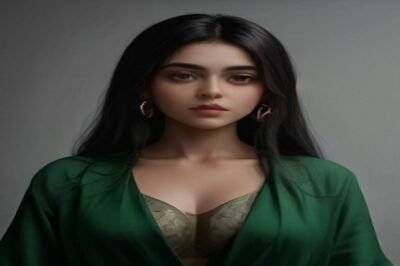
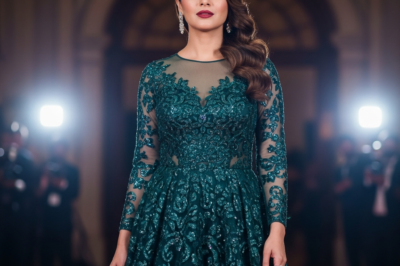
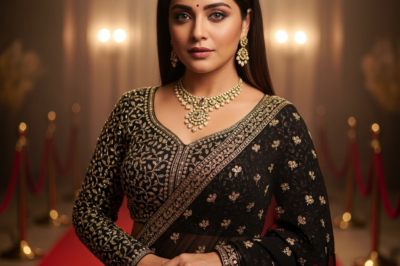
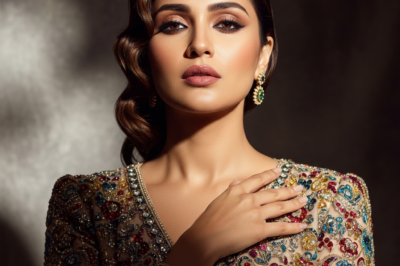
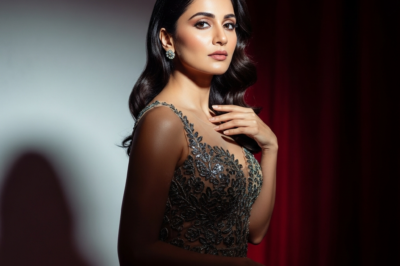
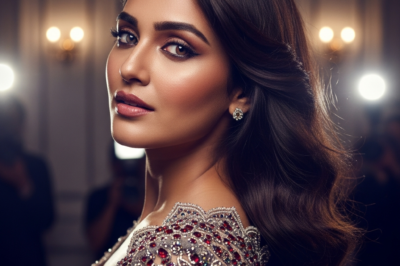
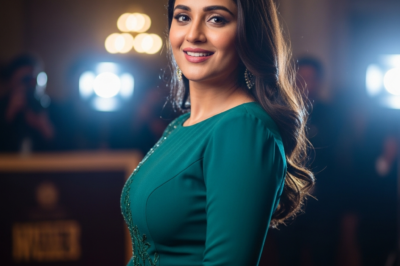
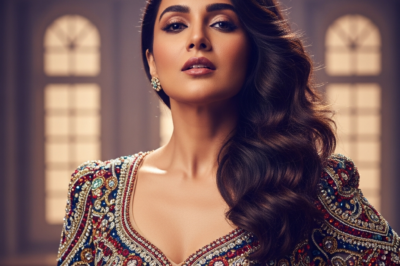
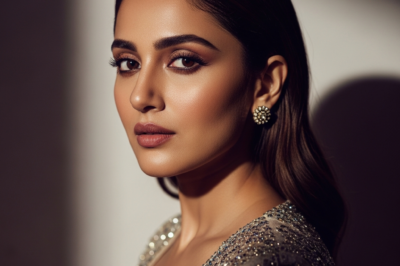
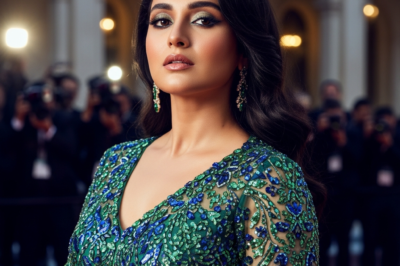
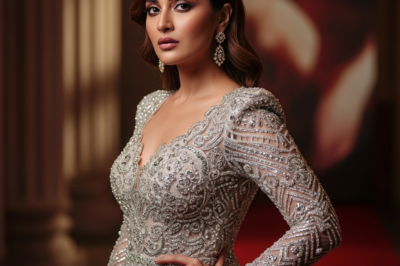
ChatGPT Images 2.0 is OpenAI’s definitive answer to the efficiency of Google and the aesthetic superiority of niche models. At its core, Images 2.0 utilizes a brand-new hybrid architecture that combines traditional diffusion techniques with a transformer-based spatial reasoning engine. This allows the model to “understand” the physics and geometry of the scenes it creates before it even begins the pixel-rendering process. One of the most glaring issues with previous AI image generators was their inability to handle complex spatial relationships—think of the “extra finger” problem or the inability to place objects “behind” or “under” others correctly. Images 2.0 addresses this through a proprietary “Contextual Depth Layer,” which maps out a 3D-aware wireframe of the requested scene. Furthermore, the model boasts a massive improvement in text rendering. Where earlier models struggled to spell even simple words correctly within an image, Images 2.0 can generate coherent paragraphs, signs, and labels with perfect typography. This is a game-changer for professional users who previously had to manually edit text into AI-generated graphics. The model also introduces “Temporal Consistency” for sequential image generation, allowing users to maintain the same character or setting across multiple prompts, a feature that has been the “holy grail” for storytellers and brand managers.
The Competitive Landscape: OpenAI vs. Google DeepMind
The rivalry between OpenAI and Google has moved beyond simple chatbots. We are now witnessing a battle for the “Multimodal Desktop.” While Google’s Nano Banana focused on the mobile experience and speed, ChatGPT Images 2.0 is designed to be a comprehensive creative suite. The competition is no longer just about who has the best model, but who has the best ecosystem. Google has the advantage of integration with Android and Workspace, but OpenAI has captured the “mindshare” of the developer community. By releasing Images 2.0 within the ChatGPT interface, OpenAI is leveraging its massive user base to gather real-time feedback and refine its output. The data moat OpenAI has built—consisting of millions of human-corrected prompts—is a formidable barrier for Google to overcome. However, Google’s hardware advantage cannot be ignored. With their custom TPU (Tensor Processing Units), Google can scale their Nano models at a lower cost than OpenAI can scale their high-fidelity Image 2.0 models. This sets up a fascinating dynamic for 2024 and 2025: OpenAI is betting on quality and deep reasoning, while Google is betting on ubiquity and speed. The “Nano vs. Mega” debate will likely define the strategic decisions of every major tech firm in the coming years.
Enhanced Visual Reasoning and Diffusion Models
The brilliance of Images 2.0 lies in its refined diffusion process. In traditional diffusion models, an image is created by starting with a field of noise and gradually “denoising” it until a picture emerges based on a prompt. OpenAI has upgraded this by introducing “Semantic Guidance Gates.” These gates act as filters during the denoising process, ensuring that the model adheres strictly to the semantic meaning of the prompt. If a user asks for “a futuristic city where the buildings are made of glass but have a Victorian aesthetic,” the model no longer gets confused by the conflicting “futuristic” and “Victorian” tokens. Instead, it balances them through a weighted attention mechanism that analyzes historical architecture alongside sci-fi concepts. This level of visual reasoning is what separates Images 2.0 from the Nano Banana. While the Nano Banana might produce a generic futuristic city quickly, Images 2.0 produces a curated, conceptually accurate piece of art. This “high-intent” generation is crucial for architectural visualization, concept art, and detailed storyboard creation. The model also features an improved “Style Transfer” engine, allowing it to mimic specific artistic movements with unprecedented accuracy, from the brushwork of the Dutch Masters to the clean lines of modern Swiss design.
The Impact on Creators, Marketing, and the Gig Economy
The implications for the creative industry are profound. With Images 2.0, the barrier to entry for high-quality visual production has been lowered yet again. Graphic designers are now shifting from “creators” to “curators” and “editors.” A process that once took a team of designers a week—such as developing a full visual identity for a startup—can now be prototyped in an afternoon using ChatGPT. This doesn’t necessarily mean the end of design jobs, but it does mean a radical shift in the required skillset. Prompt engineering is becoming less about knowing specific “magic words” and more about understanding the principles of design, composition, and lighting. In the realm of marketing, Images 2.0 allows for hyper-personalized advertising. Brands can generate thousands of unique variations of an ad, each tailored to the specific visual preferences of different demographic groups, in real-time. This level of scale was previously impossible. However, the gig economy, particularly sites like Fiverr and Upwork, may see a significant disruption as “entry-level” illustration and photo editing tasks become automated. The value is moving toward those who can manage the AI to produce consistent, high-concept results that align with a broader brand strategy.
Ethical Safeguards and the Future of Synthetic Media
As the power of image generation grows, so too do the concerns regarding deepfakes, misinformation, and intellectual property. OpenAI has been proactive—though critics say not enough—in implementing safeguards within Images 2.0. The model includes a more robust safety framework that prevents the generation of public figures in compromising or misleading situations. Furthermore, OpenAI has integrated “Provenance Watermarking” directly into the metadata and the pixel structure of every image generated. This invisible digital signature allows social media platforms and browsers to identify the image as AI-generated, helping to combat the spread of visual misinformation. However, the ethical debate continues over the training data. Like its predecessors, Images 2.0 was trained on a vast corpus of internet data, which includes the copyrighted works of artists who did not consent to their work being used. While OpenAI has introduced “Opt-Out” mechanisms for artists, the fundamental tension between AI development and intellectual property rights remains unresolved. Looking forward, the next frontier will be “Images 3.0” and beyond, where we can expect full video integration and interactive 3D environments, further blurring the line between reality and simulation.
Conclusion: The Resilience of Innovation
The “comeback” of ChatGPT with Images 2.0 is a testament to the resilient nature of innovation in the Silicon Valley era. While Google’s Nano Banana represented a significant challenge by prioritizing efficiency and accessibility, OpenAI has doubled down on the idea that quality, depth, and reasoning are the ultimate goals of artificial intelligence. This back-and-forth between the tech giants is ultimately a win for the user. We now have access to tools that were the stuff of science fiction a mere five years ago. As we move forward, the focus will likely shift from which model is “better” to how these models can be used responsibly to enhance human creativity rather than replace it. The release of Images 2.0 isn’t just a technical update; it’s a statement of intent. OpenAI is signaling that they are willing to evolve, adapt, and compete in a market that moves faster than any other in human history. Whether Google responds with a “Nano Banana Pro” or an entirely new architecture remains to be seen, but for now, the crown of visual AI has returned to the house of GPT.






















Leave a Reply