
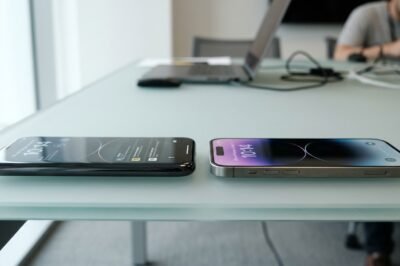
As the tech industry pivots toward a milestone that once seemed distant, Apple is reportedly deep in the developmental trenches for what could be its most significant hardware release since the original iPhone. Rumors surfacing from supply chain insiders and financial analysts suggest that the Cupertino giant is currently testing two radically different design prototypes for its 20th-anniversary iPhone. This celebratory device, likely destined for a 2027 launch, represents more than just a seasonal upgrade; it is a manifestation of two decades of mobile dominance. The internal competition between a futuristic four-sided curved glass aesthetic and a refined, ultra-premium flat-edged version highlights Apple’s internal debate over whether to prioritize ergonomic revolution or the structural reliability that has defined the brand’s recent success. For investors and enthusiasts alike, the stakes could not be higher, as this decision will dictate the visual language of the smartphone industry for the next decade.
The Engineering Duel: Four-Sided Curved Glass vs. Traditional Flat Aesthetic
The first and most ambitious design under consideration is a four-sided curved glass chassis. This concept, often referred to in the industry as a ‘waterfall’ or ‘all-around’ display, would effectively eliminate visible bezels on every side of the device. Such an engineering feat would require a complete rethinking of how internal components are anchored. For years, Apple has utilized a structural mid-frame to house batteries, logic boards, and camera modules. Transitioning to a design where glass curves into the frame from all four corners suggests a reliance on sophisticated adhesive technologies and perhaps a new type of reinforced glass developed in partnership with Corning. This design would provide a seamless, pebble-like feel in the hand, fulfilling a long-held vision of Jony Ive and the original design team of a ‘single slab of glass.’
Conversely, the parallel testing of a flat version suggests that Apple is hedging its bets against manufacturing yields and durability concerns. The flat-edge design, reintroduced with the iPhone 12 series and refined through the iPhone 15 Pro’s titanium edges, has become a hallmark of Apple’s current hardware identity. A 20th-anniversary flat version would likely push the boundaries of materials science, potentially utilizing high-grade ceramic or liquid metal alloys to distinguish it from the standard Pro models. By testing both, Apple ensures that if the radical curved glass fails to meet the company’s rigorous drop-test standards or faces insurmountable mass-production hurdles, a perfected version of the current industrial design is ready to step into the spotlight.
Supply Chain Dynamics and the Cost of Innovation
The financial implications of these two design paths are staggering. Sources indicate that Apple’s display partners, primarily Samsung Display and LG Display, are already working on specialized OLED panels capable of bending at extreme angles on all four sides. Producing these panels is significantly more expensive than traditional flat or dual-edge curved screens. The yield rate—the percentage of usable units from a production batch—is expected to be low in the early stages, which could drive the retail price of the 20th-anniversary model well beyond the current $1,199 entry point for the Pro Max series. Financial analysts at BigGo Finance suggest that this move is a calculated risk to increase the Average Selling Price (ASP) and revitalize growth in the premium segment.
Furthermore, the four-sided curved glass design would likely necessitate a ‘portless’ approach. With no room for a traditional USB-C port or physical buttons on the curved edges, Apple would have to rely entirely on MagSafe for charging and capacitive touch surfaces for volume and power controls. This shift would force a massive secondary market boom in wireless accessories but could alienate users who prefer the tactile reliability of mechanical buttons. The flat-edged prototype, on the other hand, maintains compatibility with existing manufacturing pipelines, allowing Apple to maintain higher margins while focusing internal R&D on under-display camera technology and improved battery density.
Historical Significance: Following the Footsteps of the iPhone X
To understand the weight of this development, one must look back at 2017, the year of the iPhone X. That device broke the ten-year mold by removing the home button and introducing FaceID, setting a standard that remains to this day. The 20th-anniversary iPhone is expected to perform a similar ‘reset.’ Industry insiders believe that Apple sees this anniversary as the perfect opportunity to transition away from the ‘Dynamic Island’ toward a completely uninterrupted display. Whether they achieve this through the curved glass ‘pebble’ design or a bezel-less flat frame, the goal remains the same: a device that looks and feels like a piece of the future.
Market analysts note that Apple’s product cycles often follow a tick-tock-tock pattern, but the 20th anniversary demands a ‘Super Cycle.’ By testing two designs, Apple is effectively auditioning the next era of mobile computing. The four-sided glass version is viewed as the ‘moonshot’—a high-risk, high-reward endeavor that could solidify Apple’s status as the world’s leading innovator. The flat version represents the ‘refined masterpiece,’ a culmination of everything Apple has learned about industrial design since 2007. Both versions are rumored to feature a specialized ‘Anniversary Edition’ OS skin, harkening back to the skeuomorphic roots of iOS while maintaining modern functionality.
Financial Analysis: Market Reaction and Investor Expectations
From a financial perspective, the news of parallel testing has provided a boost to investor confidence. It signals that Apple is not resting on its laurels but is actively investing in radical R&D. According to data from BigGo Finance, Apple’s stock typically sees a 15-20% uptick in the eighteen months leading up to a major redesign cycle. The 20th-anniversary model is expected to trigger the largest upgrade cycle in a decade, as users holding onto iPhone 12 and 13 models will likely see this as the definitive time to trade up. The dual-design strategy also mitigates the risk of a total product delay; if one design path hits a dead end, the other serves as a robust fallback.
The impact on the global supply chain cannot be overstated. If Apple chooses the curved glass design, it will trigger a massive wave of investment in glass-molding technologies and haptic feedback motors. Companies specializing in ‘solid-state’ buttons and wireless power will see their valuations skyrocket. Conversely, a flat-edged anniversary model would likely focus on exotic materials, benefiting titanium and ceramic suppliers. In either scenario, Apple is positioning itself to capture the lion’s share of the global luxury smartphone market, further distancing itself from competitors like Samsung and Huawei who have pivoted toward foldables.
Technological Hurdles: Durability and User Experience
One of the primary reasons for testing two designs is the inherent fragility of all-glass designs. A phone curved on all four sides essentially becomes a ‘glass sandwich’ with very little exposed metal to absorb the impact of a drop. Apple’s ‘Ceramic Shield’ technology will need to evolve significantly to make a four-sided curved phone practical for daily use. There are also concerns regarding ‘accidental touch’ palm rejection. Software engineers are reportedly working on advanced AI-driven algorithms that can distinguish between a user holding the phone and a user intentionally interacting with the edge of the display.
The flat version faces its own set of challenges, primarily in the realm of differentiation. How does Apple make a flat-edged phone feel ‘special’ enough for a 20th anniversary? Rumors suggest the use of a ‘hidden’ camera system where the lens is invisible when not in use, or perhaps a chassis made of a single piece of sapphire crystal. By running these two projects in parallel, Apple is essentially conducting a ‘survival of the fittest’ competition within its own design labs, ensuring that the final product is both technologically feasible and aesthetically groundbreaking.
Future Implications: The Roadmap to 2027 and Beyond
The conclusion of this design duel will mark a turning point for the consumer electronics industry. If Apple successfully launches a four-sided curved glass iPhone, it will likely signal the end of the traditional smartphone form factor and the beginning of the ‘seamless’ era. This would pave the way for future innovations such as holographic displays or integrated augmented reality features that require a more immersive physical interface. It would also cement Apple’s transition into a brand that sells high-fashion luxury items as much as it sells utility-driven gadgets.
Regardless of which design ultimately wins, the 20th-anniversary iPhone is poised to be a landmark release. It will serve as a testament to Apple’s legacy and a blueprint for its future. For the consumer, this means an unprecedented level of choice and innovation is on the horizon. For the financial markets, it represents a massive opportunity for growth and a stabilization of Apple’s hardware revenue. As we move closer to 2027, the tech world will be watching Cupertino with bated breath, waiting to see which vision of the future Apple chooses to bring to life.






































Leave a Reply