
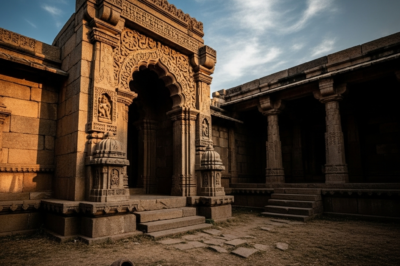
In a landmark judgment that is set to redefine the religious and historical landscape of Madhya Pradesh, the Indore Bench of the High Court has declared the Bhojshala-Kamal Maula complex in Dhar as a temple. This significant ruling comes after years of legal battles and follows a detailed scientific survey conducted by the Archaeological Survey of India (ASI), marking a pivotal moment in the state’s socio-political history and addressing a dispute that has lasted for decades.
The Scientific Foundation of the High Court Verdict
The decision by the Madhya Pradesh High Court was heavily influenced by the comprehensive findings of the ASI survey report. The survey, which utilized advanced ground-penetrating radar and detailed excavation techniques, provided extensive evidence suggesting that the original structure was a temple dedicated to Goddess Saraswati. The court noted that the architectural elements, recovered idols, and Sanskrit inscriptions found within the complex align with historical Hindu temple designs. This scientific evidence played a crucial role in the court’s final determination, essentially moving past the previous 2003 arrangement where both communities shared the site on designated days of the week.
Impact on Social Harmony and Legal Precedents
The declaration of the complex as a temple has sparked widespread discussions across the nation regarding the status of shared heritage sites. Legal experts suggest that this ruling could serve as a significant precedent for other similar disputes currently under judicial review in various parts of India. While the Hindu community has welcomed the decision as a restoration of historical truth, representatives of the Muslim community are currently reviewing the legal options available, including a potential appeal to the Supreme Court to contest the findings. The local administration in Dhar has proactively increased security measures to ensure peace and stability in the region following the announcement.
As the legal community and the public digest this historic verdict, the focus remains on the implementation of the court’s orders. The decision not only addresses a long-standing grievance but also highlights the increasing role of scientific archeology in resolving complex religious and historical disputes. Moving forward, the Bhojshala-Kamal Maula complex will be recognized as a temple, standing as a testament to the intricate intersection of law, history, and faith in modern India.



































Leave a Reply