
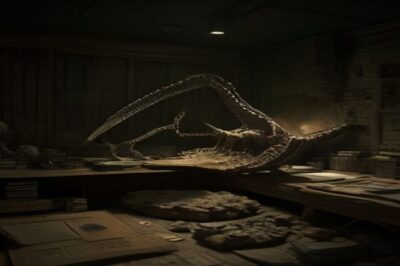
The boundary between the prehistoric world and our modern ecosystem has long been blurred by the feathers of our avian companions. For decades, the scientific community has debated the nuances of how theropod dinosaurs transitioned into the birds we see today. However, a groundbreaking study focusing on gastrolith wear patterns has provided a definitive and fascinating look into this evolutionary journey. Gastroliths, or ‘stomach stones,’ are more than just rocks swallowed by ancient creatures; they are time capsules of dietary habits, digestive mechanics, and environmental adaptation. By analyzing the microscopic wear on these stones, researchers have unlocked secrets that prove birds are not just related to dinosaurs—they are living dinosaurs, carrying the legacy of the Mesozoic era in their very anatomy. This discovery shifts our understanding of evolutionary biology, suggesting that the survival of the avian lineage was not a matter of chance but a result of highly specialized digestive adaptations that allowed them to thrive when their larger cousins perished. The implications of this research extend beyond paleontology, offering insights into how modern species might adapt to current climate shifts by looking back at the resilient strategies of their ancestors.
The Ancestral Legacy: Bridging the Gap Between Scales and Feathers
The theory that birds descended from small, feathered theropods is no longer a fringe idea but a cornerstone of modern biology. The transition from the massive, ground-shaking predators like Tyrannosaurus rex to the delicate hummingbird is a story of extreme miniaturization and specialized evolution. One of the most compelling pieces of evidence in this narrative is the presence of gastroliths. Many herbivorous and even some carnivorous dinosaurs lacked the complex molars seen in mammals. To compensate, they swallowed stones to act as a biological ‘grinding mill’ in their muscular gizzards. This exact mechanism is mirrored in modern birds, particularly ostriches, emus, and even domestic poultry. The continuity of this trait across 66 million years provides a physical link that is hard to ignore. When we look at a chicken today, we are looking at the refined, scaled-down version of a creature that once dominated the planet. The study of these stones allows scientists to map out the dietary shifts that occurred as these creatures moved from being terrestrial predators to airborne survivors. It is a testament to the efficiency of the dinosaurian body plan that such a primitive method of digestion remains effective in the modern world.
The Mechanics of Digestion: Why Gastroliths Matter
To understand why gastroliths are so significant, one must understand the sheer physics of dinosaur digestion. Without the ability to chew food thoroughly, large quantities of tough vegetation or fibrous material would remain unprocessed, leading to nutritional deficiencies. By swallowing stones, dinosaurs created an internal environment where mechanical force could break down cell walls and tough fibers. The wear patterns on these stones—scratches, pits, and polished surfaces—are unique to the type of material being ground. A dinosaur eating soft ferns would leave different marks on a gastrolith than one consuming tough gymnosperms or small bones. Modern researchers use scanning electron microscopy to compare these ancient wear patterns with those found in modern birds. The results are staggering: the microscopic ‘signatures’ on gastroliths found in avian-like dinosaurs from the Cretaceous period are nearly identical to those found in modern flightless birds. This suggests that the internal environment of a dinosaur’s stomach was biologically similar to that of a modern bird, reinforcing the idea that their internal organs and metabolic processes were already ‘bird-like’ long before they took to the skies.
Decoding the Micro-Wear: A New Window into Prehistoric Diets
The recent study highlighted by finance.biggo.com dives deep into the statistical analysis of surface textures. Researchers utilized a method called ‘texture analysis,’ which is more commonly used in engineering to measure the smoothness of metal parts. By applying this to fossils, they identified specific ‘wear clusters’ that correlate with specific food types. For instance, stones that show a high degree of polishing with minimal deep scratching suggest a diet of seeds and soft fruits—a diet very common among modern birds. Conversely, stones with deep, jagged gouges indicate a diet of tough, woody plants, typical of larger, more ‘traditional’ dinosaurs. This data allows paleontologists to reconstruct the ancient food web with unprecedented accuracy. We can now see exactly when certain dinosaur lineages began shifting toward the ‘avian’ diet, which likely favored high-energy foods that could support the metabolic demands of flight. This shift in diet preceded the physical changes in the skeleton, meaning the ‘software’ of bird-like behavior was being written into the dinosaur lineage well before the ‘hardware’ of wings and beaks was fully developed.
Evolutionary Resilience: How Gastroliths Facilitated Survival
The end-Cretaceous mass extinction was an event that wiped out roughly 75% of all species on Earth. Why did the avian dinosaurs survive while the giants like Triceratops and T-Rex vanished? Part of the answer lies in their digestive flexibility. The ability to process a wide variety of food sources using gastroliths meant that even when the lush forests of the Mesozoic were destroyed, the ancestors of birds could survive on seeds, hardy tubers, and other detritus that remained. Their ‘grinding mills’ were adaptable tools. Furthermore, the efficiency of this system allowed for smaller body sizes. In an environment where resources are scarce, being small and energy-efficient is a massive survival advantage. The gastrolith wear patterns show a clear trend toward the processing of smaller, more nutrient-dense food items leading up to the extinction event. This pre-adaptation meant that when the world changed, the avian ancestors were already equipped with the digestive technology needed to endure the nuclear winter that followed the asteroid impact. It is a masterclass in evolutionary foresight, though driven by the blind forces of natural selection.
Modern Comparisons: From the Jurassic to the Farmyard
Comparing a prehistoric fossil to a modern chicken might seem like a stretch, but the biological parallels are undeniable. In modern poultry science, gastroliths (often provided as grit) are essential for health. Farmers know that without these stones, birds cannot extract the necessary nutrients from grain. In the wild, birds are often seen picking at specific types of pebbles, instinctively knowing which ones have the right hardness and shape to serve as tools. This behavior is a direct inheritance from their dinosaurian ancestors. The recent research has even looked at the chemical composition of the stones. Dinosaurs would often travel long distances to find specific types of quartz or basalt that were more durable. Modern birds exhibit similar selectivity. By tracing the origin of these stones, scientists can even map the migratory patterns of ancient dinosaurs, showing that they moved across vast landscapes just as modern birds do today. This behavioral link, backed by the physical evidence of wear patterns, creates a holistic picture of a lineage that has successfully navigated the most extreme changes in Earth’s history.
Technological Advancements in Paleobiology
The study of gastrolith wear patterns would not be possible without the latest advancements in imaging and computational modeling. 3D surface scanning allows researchers to create digital twins of fossilized stones, which can then be analyzed by AI algorithms trained to recognize patterns of erosion. This takes the guesswork out of paleontology, moving the field from subjective observation to quantitative science. As we move forward, these same technologies are being applied to other aspects of dinosaur biology, such as the wear on teeth and the structure of bone marrow. The consensus is clear: the more we look, the more ‘bird’ we find in ‘dinosaur.’ Future research is expected to focus on the gut microbiome of these ancient creatures, using proteomic analysis to see if the chemical environment of the dinosaur gizzard also mirrored the acidic, enzyme-rich environment of modern birds. We are on the cusp of a new era where we can practically ‘see’ the internal workings of creatures that have been dead for millions of years.
Conclusion: A New Chapter in Evolutionary History
The revelation that birds are living dinosaurs, confirmed by the humble gastrolith, is a profound reminder of the continuity of life. It challenges our perception of extinction, showing that while the giants are gone, their spirit and biology live on in every chirp and flutter we hear today. The study of wear patterns has provided the ‘smoking gun’ for a transition that took millions of years to complete, proving that the most mundane aspects of biology—like how a creature digests its food—can be the key to unlocking the greatest mysteries of our planet’s past. As we look at the birds in our gardens, we are not just looking at animals; we are looking at survivors, innovators, and the last standing legacy of the age of reptiles. The secrets revealed by gastroliths ensure that the story of the dinosaurs is not one of a sudden end, but of a brilliant, soaring continuation.







































Leave a Reply