
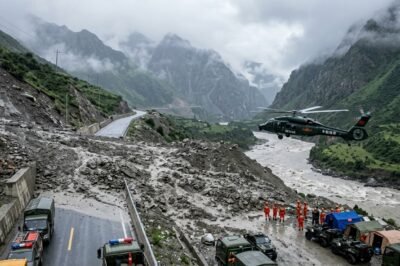
The Himalayas, often referred to as the ‘Third Pole,’ have long been a site of awe and reverence, but recently, they became the epicenter of a harrowing natural disaster that has captured global attention. As torrential monsoon rains battered the rugged landscapes of the Tibet Autonomous Region and northern Nepal, the resulting flash floods and landslides have left a trail of destruction that is as much a human tragedy as it is a logistical and political challenge. The news that 261 foreign nationals were reported missing in the wake of these floods has sent ripples through the international community, sparking frantic search efforts and highlighting the vulnerabilities of travelers in this high-altitude frontier. Beyond the immediate rescue operations, a secondary conflict has emerged: a fierce battle over the narrative of the disaster. Chinese authorities have moved swiftly to suppress online rumors and misinformation, underscoring the sensitive nature of the region and the state’s desire to control the flow of information during times of crisis. This event serves as a stark reminder of the intersection between climate volatility, regional security, and the digital information landscape in the 21st century. ## The Geographic Catalyst: Monsoon Fury in the Himalayas. The current crisis is rooted in an exceptionally intense monsoon season that has seen rainfall levels far exceeding historical averages for the region. The geography of the China-Nepal border is characterized by steep, unstable slopes and narrow river valleys, which act as funnels for rainwater. When the clouds burst, the water has nowhere to go but down, picking up debris, rocks, and soil to create massive landslides that can bury entire sections of highway in seconds. The Friendship Highway, a critical artery connecting Lhasa with Kathmandu, has seen multiple blockages, isolating remote communities and trapping tourists. Experts point out that the warming climate is making these monsoon events more unpredictable and violent. As the atmosphere warms, it holds more moisture, leading to more frequent ‘cloudbursts.’ In the high-altitude environment of Tibet, where the soil is often thin and vegetation sparse, the lack of natural anchors makes the terrain particularly susceptible to erosion and sudden collapse. This environmental baseline sets the stage for the logistical nightmare currently unfolding on the ground. ## A Humanitarian Crisis: Tracking the 261 Foreign Nationals. The report of 261 foreigners missing has complicated the disaster response significantly. These individuals are believed to be a mix of trekkers, pilgrims, and business travelers who were in the region to visit sacred sites or navigate the trade routes between China and Nepal. Tracking people in Tibet is notoriously difficult due to the vast distances and the intermittent nature of cellular service in the deep valleys. The Chinese government has deployed specialized mountain rescue units, supported by military helicopters, to scour the known tourist circuits and remote villages. However, the search is hampered by the same conditions that caused the disaster: low visibility, persistent rain, and the constant threat of secondary landslides. For the families of those missing, the wait is agonizing. International consulates are working closely with Chinese officials to verify the identities and last known locations of their citizens. This aspect of the disaster highlights the growing popularity of the Tibet-Nepal corridor as a global travel destination, but also the inherent risks of high-altitude travel in an era of climate instability. ## The Information War: Countering Online Rumors and State Narrative. As the physical rescue continues, a digital cleanup is also underway. The Chinese government is particularly sensitive to how disasters in Tibet are portrayed, both domestically and internationally. In the immediate aftermath of the floods, various reports and ‘eyewitness’ accounts began circulating on platforms like Weibo and WeChat, some suggesting that the death toll was much higher than officially reported or that the government’s response was inadequate. In response, authorities have launched a crackdown on what they term ‘online rumors.’ This involves the deletion of posts, the suspension of accounts, and the issuance of stern warnings about spreading unverified information. For Beijing, maintaining social stability in Tibet is a top priority, and any narrative that suggests state failure is quickly countered with reports of heroic rescue efforts and efficient government intervention. This tension between citizen-led information sharing and state-controlled narratives is a recurring theme in Chinese disaster management, but the strategic sensitivity of Tibet adds an extra layer of complexity. ## Logistical Nightmares: Rescue Operations in Treacherous Terrain. The rescue operation is a feat of engineering and endurance. Heavy machinery has been moved to the front lines to clear thousands of tons of debris from the roads, but the task is like trying to empty an hourglass while it is still running. Each time a section of the road is cleared, new rains threaten to bring down more of the mountainside. The high altitude also poses a physical challenge to the rescuers themselves; oxygen levels are low, and the cold is biting, even in the summer months. Helicopters are the only way to reach some of the most isolated pockets, but they can only fly when the weather clears, which has been a rare occurrence in recent weeks. Furthermore, the communication infrastructure has been severely damaged. Fiber optic cables buried along the roads have been severed, leaving many areas in a total communications blackout. Rescuers are relying on satellite phones and temporary radio towers to coordinate their movements, but the scale of the disaster area makes total coverage nearly impossible. ## Diplomatic Strains and Cross-Border Coordination. The floods do not respect national borders, and neither can the response. The relationship between China and Nepal is crucial in managing the fallout of this disaster. Much of the water flowing into the flooded valleys eventually moves south into Nepal, threatening downstream communities. There is a need for real-time data sharing regarding river levels and dam safety to prevent even greater catastrophes. Diplomatically, the situation is delicate. China has been a major investor in Nepal’s infrastructure, including the very roads and tunnels that are now under threat. The disappearance of foreign nationals also brings other world powers into the fold, as they seek information and access for their own consular teams. The coordination required to manage a multi-national search and rescue operation in a restricted zone like Tibet tests the limits of international cooperation and highlights the geopolitical stakes of the region. ## Infrastructure and Climate Change: A Precarious Future. Looking ahead, this disaster serves as a wake-up call for the need for climate-resilient infrastructure in the Himalayas. The current roads and bridges were built for a climate that no longer exists. As the glaciers melt and the monsoon patterns shift, the ‘normal’ parameters for engineering are being rewritten. There is an urgent need for better early warning systems, including satellite monitoring of glacial lakes and more weather stations in remote areas. However, building such systems in Tibet is not just a technical challenge but a political one, involving issues of data sovereignty and regional security. The economic cost of this disaster, from lost tourism revenue to the massive expense of road reconstruction, will be felt for years. It raises the question of whether certain parts of the high Himalayas are becoming too dangerous for large-scale tourism and whether the current model of development is sustainable in the face of an accelerating climate crisis. ## Conclusion: Navigating a New Reality. The China-Nepal floods are more than just a seasonal mishap; they are a manifestation of the complex challenges facing the modern world. The 261 missing foreigners represent the human face of a global phenomenon where climate change and human movement intersect in unpredictable ways. The crackdown on rumors highlights the ongoing struggle for information control in the digital age, while the rescue efforts demonstrate the limits of human technology against the power of nature. As the waters eventually recede and the roads are rebuilt, the lessons learned from this crisis must be integrated into future planning. The Himalayas will continue to be a site of beauty and spiritual significance, but they are also a laboratory for understanding how we will survive in a more volatile world. Ensuring the safety of both locals and visitors in this region will require a new level of international transparency, environmental stewardship, and technological innovation.
Stories





-

Hunkkaar Teaser Analysis: Aneet Padda’s Gritty Transformation and the Evolving Landscape of Indian Thrillers
-

Mithila Palkar: The Relatable Queen of Indian Web Series and Her Meteoric Rise
-

Wamiqa Gabbi: The Meteoric Rise of Indian Web Series’ Most Versatile Leading Lady
-

Triptii Dimri Biography: The Evolution of India’s Newest Cinematic Sensation and Web Series Star
-

Wamiqa Gabbi: The Rise of India’s New Digital Icon and the Future of OTT Stardom
-

Mithila Palkar: The Unstoppable Evolution of India’s Digital Darling and Her Journey to the Silver Screen
-

Mithila Palkar: The Comprehensive Journey of India’s Web Series Sensation and Digital Pioneer
-

Mithila Palkar: The Relatable Queen of Indian Web Series and Her Inspiring Journey to Stardom
-

Sobhita Dhulipala Biography: The Meteoric Rise of India’s Most Versatile Web Series Star
-

Mithila Palkar: The Unstoppable Journey of India’s Digital Darling and Web Series Queen
-

Triptii Dimri: The Complete Biography of India’s Newest Cinematic Sensation and Web Series Icon
-

Wamiqa Gabbi: The Ethereal Rise of India’s Most Versatile Web Series Star
-

Sobhita Dhulipala: The Unstoppable Rise of India’s Most Versatile Web Series Icon
-

Wamiqa Gabbi: The Meteoric Rise of the New Queen of Indian Web Series and Her Unstoppable Journey to Stardom
-

Triptii Dimri: The Meteoric Rise of India’s New Cinema Sweetheart and Web Series Icon
-

Wamiqa Gabbi: The Versatile Queen of Indian OTT and Her Phenomenal Rise to Stardom
-

Tripti Dimri Biography: The Rise of India’s New National Crush and Her Journey from Laila Majnu to OTT Stardom
-

Wamiqa Gabbi Biography: The Meteoric Rise of India’s Newest OTT Sensation and Versatile Powerhouse
-

Wamiqa Gabbi Biography: The Meteoric Rise of the Digital Queen of Indian Web Series
-

The Rise of Wamiqa Gabbi: A Deep Dive into the Journey of India’s Most Versatile OTT Sensation
-

The Meteoric Rise of Triptii Dimri: Biography, Acting Prowess, and the Journey of India’s Newest Cinema Sensation

Launching Soon: The Future of News with Our E-Newspaper
In the ever-evolving landscape of media and technology, we are thrilled to announce the upcoming launch of our innovative e-newspaper, set to redefine the way news is consumed in the digital age. Embracing the convenience and accessibility that the digital world offers, our e-newspaper aims to deliver real-time news updates, insightful articles, and interactive features directly to your devices. With a commitment to journalistic integrity and a passion for storytelling, we are dedicated to keeping you informed, engaged, and connected, no matter where you are. Stay tuned for the launch of our e-newspaper, where the future of news awaits at your fingertips.
Recent News
- RBI to transfer record ₹2.11 lakh crore surplus to Indian government for FY24

- UK Prime Minister Rishi Sunak Calls for Surprise General Election on July 4: A Comprehensive Strategic Analysis

- Four Suspected ISIS Terrorists of Sri Lankan Nationality Arrested at Ahmedabad Airport: A Deep Dive into Regional Security Threats

- Nvidia Shares Skyrocket as Quarterly Revenue Triples Amid Insatiable Global Demand for AI Infrastructure

- Calcutta High Court Strikes Down OBC Status for 77 Communities in West Bengal: A Comprehensive Legal and Political Analysis

- Ireland, Spain and Norway announce formal recognition of Palestinian state

Politics
- UK Prime Minister Rishi Sunak Calls for Surprise General Election on July 4: A Comprehensive Strategic Analysis
- Calcutta High Court Strikes Down OBC Status for 77 Communities in West Bengal: A Comprehensive Legal and Political Analysis
- Ireland, Spain and Norway announce formal recognition of Palestinian state
- Calcutta High Court Strikes Down OBC Status of Several Classes in West Bengal: A Comprehensive Legal and Political Analysis

- Ireland, Norway, and Spain formally announce recognition of Palestinian statehood

- UK Prime Minister Rishi Sunak Calls for Snap General Election on July 4: A Strategic and High-Stakes Political Gamble

Categories
- Art & Culture 106
- Auto 85
- Beauty 15
- Blog 307
- Books 7
- Business 376
- Celebrities 217
- Crime Files 139
- Democracy 308
- Education 84
- Entertainment 154
- Environment 133
- epaper 1
- Fashion 37
- Food 59
- Gadgets 89
- Guide 150
- Handicrafts 14
- Health 281
- Healthy Living 108
- History 5
- incidents 172
- Lifestyle 41
- Music 7
- Photography 15
- Politics 469
- Science & Technology 160
- Sports 283
- Tech 142
- Television 4
- Travel 68
- Travel & Tourism 30
- Trends 57
- Weather 9
- Web Series 97
- Workout 4
- World 665
Leave a Reply