
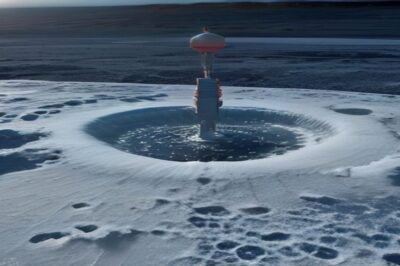
The New Frontier of Lunar Exploration
The lunar landscape is no longer just a distant celestial body for observation but has become the primary theater for a new era of space exploration and resource competition. China’s upcoming Chang’e-7 mission represents a pivotal moment in this journey, as the China National Space Administration (CNSA) sets its sights on the Moon’s South Pole. This region, characterized by its rugged terrain and permanently shadowed craters, is believed to harbor significant deposits of water ice. For decades, the presence of water on the Moon was a matter of scientific speculation, but recent orbital data from various international missions have confirmed that H2O molecules are indeed trapped in the frigid, sunless depths of polar craters. The Chang’e-7 mission is not merely a scientific endeavor; it is a complex, multi-layered expedition designed to provide the physical proof and chemical analysis required to turn lunar water into a viable resource for future human habitation. As the global space community looks on, China is positioning itself as a leader in deep-space logistics, aiming to establish the groundwork for a permanent presence on the lunar surface by the end of this decade.
The Architectural Complexity of Chang’e-7
Unlike previous missions that relied on a single lander or rover, Chang’e-7 is an unprecedented assembly of spacecraft components designed to work in synergy. The mission architecture includes an orbiter, a lander, a rover, and a specialized ‘flying detector’ or mini-shuttle. This flying detector is perhaps the most innovative aspect of the mission; it is designed to hop into permanently shadowed regions (PSRs) where traditional solar-powered rovers cannot survive. These shadowed areas are colder than the surface of Pluto, and the flying detector will use its own propulsion system to navigate the darkness, seeking out water molecules in the lunar soil. The orbiter will remain in a high-inclination orbit, providing high-resolution mapping and acting as a vital communication relay between the lunar surface and Earth. Meanwhile, the lander will carry a suite of instruments to the lunar surface, and the rover will traverse the terrain to conduct close-range analysis of minerals and isotopes. This multi-vehicle approach ensures that even if one component faces technical difficulties, the broader scientific objectives of the mission can still be achieved.
The Strategic Importance of Lunar Water Ice
The search for water is not just about quenching the thirst of future astronauts; it is primarily about the chemistry of rocket fuel. Water can be electrolyzed into hydrogen and oxygen, which serve as the primary components of liquid rocket propellant. By harvesting water at the Moon’s South Pole, space agencies could effectively create a ‘gas station’ in orbit. This would drastically reduce the cost of deep-space missions, as spacecraft would no longer need to carry all their fuel from Earth—a process that is incredibly expensive due to Earth’s strong gravitational pull. Furthermore, oxygen extracted from lunar water is essential for life support systems, and the hydrogen can be used as a clean energy source for lunar bases. The Chang’e-7 mission aims to determine the abundance, distribution, and depth of this ice. Is it mixed with the regolith like frost, or does it exist in large, concentrated slabs? The answer to this question will dictate the design of future mining equipment and the overall feasibility of the International Lunar Research Station (ILRS), a project co-led by China and Russia.
Technological Marvels and Scientific Instrumentation
The scientific payload of Chang’e-7 is a testament to the rapid advancement of Chinese aerospace engineering. It includes ground-penetrating radars to map the sub-surface structure of the Moon, laser altimeters for precise landing, and mass spectrometers to analyze the chemical composition of the lunar ‘soil’ or regolith. One of the key instruments is a lunar soil volatile analyzer, which will specifically look for water and other volatile compounds like methane and ammonia. Additionally, the mission will carry cameras with unprecedented resolution to document the topography of the South Pole-Aitken Basin. This region is of particular interest because it is the largest, deepest, and oldest impact basin on the Moon, potentially exposing materials from the lunar mantle. By studying this area, scientists hope to gain insights into the early history of the Solar System and the formation of the Earth-Moon system. The mission also incorporates international cooperation, with payloads from several other nations, reflecting a growing trend of global participation in China’s lunar program despite geopolitical tensions.
Geopolitics of the South Pole: A New Space Race
The race to the lunar South Pole is intensifying, with the United States, India, and Russia all vying for a foothold in the same strategic territory. NASA’s Artemis program also targets the South Pole, aiming to return humans to the lunar surface in the coming years. India’s Chandrayaan-3 successfully landed in the vicinity of the South Pole in 2023, making it the first nation to achieve a soft landing so close to the polar region. This competition is driven by the ‘first-mover advantage.’ Those who first identify and secure access to water-rich craters will likely hold significant influence over future lunar governance and resource rights. While the 1967 Outer Space Treaty states that no nation can claim sovereignty over celestial bodies, the practical reality of ‘safety zones’ and operational footprints around resource-rich sites creates a complex legal landscape. China’s Chang’e-7 mission is a clear signal that Beijing intends to be a primary stakeholder in these discussions, backed by tangible physical presence and superior technological data.
Challenges of the Polar Environment
Operating at the lunar South Pole presents extreme engineering challenges that the Chang’e-7 mission must overcome. The sun stays very low on the horizon, casting long, permanent shadows and creating ‘peaks of eternal light’ alongside ‘craters of eternal darkness.’ This lighting environment makes power management incredibly difficult. The Chang’e-7 lander and rover must precisely navigate to areas that receive enough sunlight to charge their batteries while still being close enough to the shadowed regions to conduct water research. Furthermore, the extreme temperature fluctuations—ranging from over 100 degrees Celsius in the sun to nearly -240 degrees Celsius in the shadows—can cause mechanical parts to become brittle and fail. Communication is another hurdle; because the South Pole is not always in direct line-of-sight with Earth, the mission relies heavily on the Queqiao-2 relay satellite, which was launched earlier to support lunar far-side and polar communications. The success of Chang’e-7 depends on the seamless integration of these orbital and surface assets under some of the harshest conditions in the known universe.
Conclusion: Paving the Way for Humanity’s Multi-Planetary Future
As the Chang’e-7 mission prepares for its launch, it carries with it the aspirations of a nation and the curiosity of the global scientific community. The data gathered from this mission will likely serve as the definitive map for the next fifty years of lunar exploration. If significant water ice is found and successfully analyzed, the Moon will transition from a barren wasteland to a vital stepping stone for humanity’s journey to Mars and beyond. China’s systematic approach—moving from orbiters to landers, and now to a comprehensive polar survey fleet—demonstrates a long-term vision for space dominance and resource utilization. The Chang’e-7 mission is more than a search for water; it is a mission to prove that human technology can adapt to and thrive in the most inhospitable environments, eventually turning the Moon into a bustling hub of scientific research and industrial activity. The success of this mission will undoubtedly mark the beginning of a new chapter in the human story, one where the Earth is no longer our only home.






































Leave a Reply