
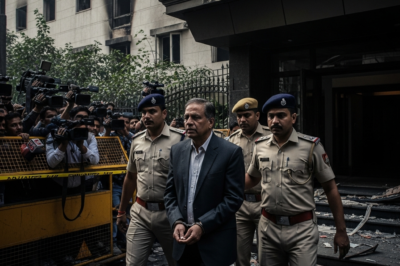
The national capital was once again jolted by a horrific fire incident that has claimed lives and raised serious questions about urban safety and regulatory compliance. In the early hours of the morning, a massive blaze ripped through a prominent hotel building in one of Delhi’s busiest commercial hubs, leading to chaos, devastation, and a swift response from emergency services. As the smoke clears, the focus has shifted from rescue operations to legal accountability. In a significant development, the Delhi Police have officially arrested the owner of the hotel building, signaling a stern stance against the perceived negligence that allowed such a disaster to occur. This incident is not merely a local tragedy but a stark reminder of the systemic failures that plague metropolitan infrastructure in India. The arrest comes after a preliminary probe suggested that the building was operating with gross violations of fire safety norms, including blocked exit routes and the absence of functional fire extinguishing systems. This comprehensive report delves into the details of the arrest, the history of fire safety in the region, and the broader implications for the hospitality industry.
The Initial Outbreak: A Nightmare in the Heart of Delhi
The fire reportedly began around 4:00 AM, a time when most guests were deep in sleep, making the situation particularly perilous. Witnesses describe a scene of absolute terror as thick, black smoke filled the narrow corridors of the multi-story building. The fire, which is suspected to have started due to a short circuit in the basement or the ground floor reception area, quickly spread upwards through the internal staircase, which acted as a chimney for the flames. Firefighters arrived within minutes of the first emergency call, but their efforts were severely hampered by the congested lanes surrounding the hotel. In many parts of Delhi, particularly in areas like Karol Bagh or Paharganj, the urban sprawl has resulted in streets so narrow that standard fire tenders struggle to navigate them. Despite these challenges, over two dozen fire engines were deployed to the site. Rescuers used hydraulic platforms to reach guests trapped on the upper floors, some of whom were seen waving white cloths and mobile phone lights to signal for help. The intensity of the heat was so great that window panes shattered, raining glass onto the streets below. By the time the blaze was contained, several rooms were completely gutted, and the structural integrity of the building was called into question.
Swift Legal Action: The Arrest of the Hotel Owner
Following the immediate rescue of survivors, the Delhi Police launched a high-level investigation into the cause of the fire and the hotel’s compliance with safety regulations. Within hours, the building owner was taken into custody. The arrest was made under various sections of the Indian Penal Code (now transitioning to the Bharatiya Nyaya Sanhita), specifically those pertaining to culpable homicide not amounting to murder and endangering the lives and personal safety of others. According to police sources, the owner had been previously warned about certain structural irregularities but had failed to rectify them. The investigation revealed that the hotel was operating beyond its permitted capacity, with additional rooms constructed on the rooftop using combustible materials like wood and plastic. The arrest is being seen as a move to placate public anger and to send a message to other property owners who bypass safety laws for profit. Legal experts suggest that the prosecution will focus on the ‘willful negligence’ aspect, arguing that the owner was aware of the risks but chose to ignore them to maximize rental income. This case is expected to set a precedent for how fire-related tragedies are handled in the future, moving away from simple fines to serious criminal charges for those at the top of the management chain.
Structural Deficiencies and Fire Safety Lapses
A detailed audit conducted by the Delhi Fire Service (DFS) in the wake of the incident has highlighted a laundry list of safety lapses. Perhaps the most damning finding was the state of the emergency exits. In many hotels of this category, emergency exits are often found locked to prevent unauthorized entry or exit of guests, or they are used as storage spaces for extra linens and cleaning supplies. In this specific case, the fire escape was reportedly obstructed by heavy furniture, rendering it useless during the crisis. Furthermore, the building lacked a centralized smoke alarm system that could have alerted guests in the early stages of the fire. While the hotel had fire extinguishers mounted on the walls, many were found to be past their expiry dates or lacked the necessary pressure to function. The use of highly flammable interior decor, including synthetic carpets and wooden paneling, further accelerated the spread of the fire. The rooftop cafe, which was an unauthorized addition, became a death trap as it was covered with a flammable canopy. These structural deficiencies are not isolated to this single hotel; they are symptomatic of a wider trend in urban development where aesthetic appeal and space maximization are prioritized over life-saving infrastructure.
The Human Cost: Identifying the Victims and Survivors
The tragedy has left families devastated and a community in mourning. The victims include both domestic tourists and international travelers who had come to the capital for business and leisure. Survivors have shared harrowing accounts of jumping onto neighboring balconies or tying bedsheets together to lower themselves from windows. The medical teams at local hospitals reported that the majority of deaths were not caused by direct burns but by smoke inhalation (asphyxiation). When a fire occurs in an enclosed space with limited ventilation, the oxygen is rapidly consumed, and toxic gases like carbon monoxide and hydrogen cyanide are released from burning plastics and fabrics. For many guests, the lack of clear signage toward exits meant they were lost in the dark, smoky hallways. The government has announced ex-gratia compensation for the families of the deceased and the injured, but the sentiment among the public is that no amount of money can compensate for lives lost due to avoidable negligence. Social workers and trauma counselors have been deployed to assist the survivors, many of whom are dealing with severe post-traumatic stress disorder (PTSD) after witnessing the horror firsthand.
Systemic Failures in Urban Planning and Regulation
The arrest of the owner, while necessary, brings to light the deeper systemic failures of the municipal and regulatory bodies. For a hotel to operate, it requires a No Objection Certificate (NOC) from the fire department, a license from the municipal corporation, and clearance from the police. The fact that a building with such blatant violations was allowed to operate suggests a significant breakdown in the inspection process. Critics point toward a culture of corruption where safety clearances are often obtained through bribes rather than rigorous inspections. Furthermore, the ‘regularization’ of illegal constructions has encouraged property owners to build first and seek legal cover later. The Delhi Fire Service is also reportedly understaffed and lacks the modern equipment needed to tackle fires in the city’s increasingly complex urban landscape. This incident has prompted calls for a complete overhaul of the licensing system, suggesting a third-party audit mechanism that is independent of local government influence to ensure transparency and accountability.
Looking Ahead: Stricter Norms for the Hospitality Sector
In response to the tragedy and the subsequent arrest, the Delhi government has ordered a fresh safety audit of all budget hotels and guesthouses across the city. This move aims to identify buildings that pose a high risk to occupants and to shut them down if they do not comply with the National Building Code of India. The hospitality industry is now under immense pressure to self-regulate and upgrade its safety protocols. Experts suggest that mandatory fire safety training for all hotel staff should be enforced, as they are the first responders in any emergency. Additionally, the integration of smart technology, such as IoT-based smoke sensors and automated sprinkler systems, should be made a standard requirement for all commercial buildings. The arrest of the hotel owner serves as a grim warning: the cost of negligence is no longer just a financial penalty but the loss of freedom and reputation. As Delhi continues to grow, the balance between commercial expansion and public safety must be recalibrated to ensure that such a tragedy never repeats itself. The legal proceedings in this case will be closely watched by activists, industry leaders, and the public alike, as it represents a pivotal moment in India’s journey toward urban safety and corporate responsibility.




































Leave a Reply