
In Shorts
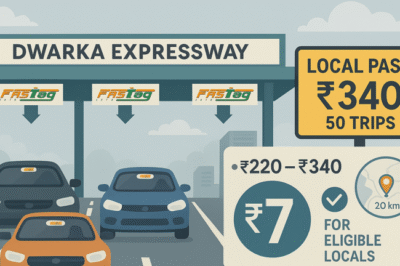
- Massive Savings: Eligible commuters on the Dwarka Expressway pay only Rs 7 per trip, compared to the standard Rs 340 fee for other users.
- Local Resident Focus: The discount is primarily for residents of 23 pre-defined local villages and regular commuters within a specific radius of the toll plaza.
- FASTag Mandatory: The heavily discounted toll rate is exclusively available to users with a valid, linked FASTag for seamless digital transactions.
DELHI NCR: In what seems like a tale of two commutes, the newly operational Dwarka Expressway is making headlines for a reason that directly impacts the wallets of daily travelers. While the standard toll charge for a one-way trip on this state-of-the-art corridor is set at a hefty Rs 340, a select group of commuters is crossing the very same plaza for an astonishingly low fee of just Rs 7.
This isn’t a promotional glitch or a temporary offer, but a structured policy designed to ease the financial burden on the local communities most affected by the highway’s development. The massive disparity in toll rates has left many long-distance travelers surprised, while opening up significant savings for those who qualify.
So, who is eligible for this 98% discount?
The scheme is targeted squarely at local residents. According to the authorities, individuals residing in 23 specific villages that were directly impacted by the expressway’s construction are the primary beneficiaries. Furthermore, the discount is often extended to regular commuters whose travel endpoints are within a short distance on either side of the Kherki Daula toll plaza, ensuring that local daily travel remains affordable.
However, there is a crucial catch for those hoping to avail of the Rs 7 toll. The discounted rate is not available for cash payments. Commuters must possess a functional and active FASTag—India’s electronic toll collection system. The system automatically identifies eligible vehicles linked to registered local addresses or specific commuter passes as they zip through the dedicated FASTag lanes, deducting the minimal amount without the need to stop.
For the average inter-city traveler or someone using the expressway for a longer journey, the full Rs 340 toll remains applicable. This dual-pricing model highlights a growing trend in infrastructure projects, aiming to balance national connectivity with local accessibility. If your daily route involves the Dwarka Expressway, it’s imperative to check your eligibility—a simple step could turn a Rs 340 expense into a mere Rs 7 transaction.





































Leave a Reply