
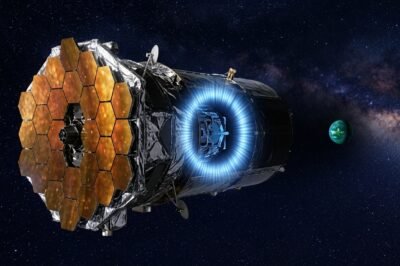
For decades, the search for exoplanets—worlds orbiting stars beyond our own sun—has been a game of shadows and mathematical inferences. Astronomers have relied primarily on the transit method, observing the slight dimming of a star as a planet passes in front of it, or the radial velocity method, which measures the subtle gravitational tug a planet exerts on its host star. While these techniques have helped us identify over 5,000 exoplanets, they rarely allow us to see the planets themselves. However, NASA is on the precipice of a technological revolution with the upcoming Nancy Grace Roman Space Telescope. This mission represents a monumental shift in our observational capabilities, moving beyond detection toward the direct imaging of distant worlds. By employing cutting-edge coronagraph technology, the Roman Space Telescope aims to suppress the blinding light of distant stars, allowing the faint glow of orbiting planets to emerge from the darkness. This analysis explores how this engineering marvel will redefine our place in the universe and provide the first clear glimpses of planets that may resemble our own.
The Paradigm Shift: From Indirect Detection to Direct Imaging
Since the discovery of the first exoplanets in the early 1990s, the field of astrobiology has grown exponentially. Yet, the vast majority of these planets remain invisible to our eyes. Current telescopes, like Hubble and James Webb, are powerful, but they struggle to separate the light of a planet from the overwhelming glare of its parent star. A star is typically billions of times brighter than the planet orbiting it, making direct photography nearly impossible with existing technology. The Nancy Grace Roman Space Telescope is designed to tackle this specific challenge head-on.
Direct imaging is the ‘holy grail’ of exoplanet science because it allows researchers to analyze the light reflected from a planet’s surface or emitted from its atmosphere. Instead of guessing a planet’s composition based on its mass and radius, scientists can use spectroscopy to look for specific chemical signatures. This shift from indirect evidence to direct observation marks a new era where we no longer just know that these worlds exist; we can begin to see what they are actually like, identifying colors, weather patterns, and potentially, signs of habitability.
The Coronagraph: A Technological Masterpiece
The heart of the Roman Space Telescope’s planetary photography mission is its Coronagraph Instrument (CGI). A coronagraph is essentially a sophisticated internal mask that blocks the light of a star while allowing the much fainter light of surrounding objects to pass through. While coronagraphs have been used for decades to study the sun’s corona and some bright stars, the Roman CGI is a leap forward in precision. It is designed to be 100 to 1,000 times more sensitive than any previous coronagraph, capable of detecting a planet that is one-billionth as bright as its host star.
This level of precision requires extraordinary engineering. The instrument uses a series of deformable mirrors that can be adjusted with picometer-scale accuracy—fractions of the width of a single atom. These mirrors compensate for the tiny imperfections in the telescope’s optics and the subtle vibrations caused by the spacecraft’s movement. By creating a ‘dark hole’ in the starlight, the CGI enables the telescope to capture the faint photons reflecting off a planet’s atmosphere, turning what was once a blur of light into a distinct point of data.
Searching for Earth 2.0: The Quest for Biosignatures
One of the most exciting prospects of photographing other worlds is the ability to search for biosignatures—gases in a planet’s atmosphere that might indicate the presence of life. When the Roman Space Telescope captures the light from an exoplanet, that light carries a fingerprint of the chemicals it has interacted with. By passing this light through a spectrograph, astronomers can identify the presence of water vapor, oxygen, methane, and carbon dioxide.
The combination of these gases can serve as a powerful indicator of biological activity. For example, the simultaneous presence of oxygen and methane in Earth’s atmosphere is a direct result of life; without constant replenishment by biological processes, these gases would react and disappear. While Roman will primarily focus on gas giants and ‘Super-Earths’ to test the technology, it paves the visual and technical path for future missions, such as the Habitable Worlds Observatory, which will specifically target Earth-like planets in the habitable zones of sun-like stars.
The Wide-Field View: Surveying the Galactic Neighborhood
While the coronagraph is a surgical tool for zooming in on specific planets, the Roman Space Telescope also boasts a Wide Field Instrument that provides a massive perspective. It has a field of view 100 times larger than that of the Hubble Space Telescope, allowing it to capture vast swathes of the sky in a single exposure. This dual capability is what makes Roman so unique: it can find the ‘needles in the haystack’ across large areas of the galaxy and then use its high-contrast imaging to study them in detail.
This wide-field capability will allow for a massive census of planets through a technique called gravitational microlensing. By observing how the gravity of a foreground star and its planets warps the light of a more distant star, Roman will find planets that are thousands of light-years away, including ‘rogue planets’ that drift through space without a host star. This statistical survey will complement the direct imaging mission, providing a comprehensive map of where planets form and how common planetary systems like our own actually are.
Overcoming the Challenges of Space-Based Photography
Photographing a planet across the vacuum of space is fraught with technical hurdles. Beyond the brightness of the star, the telescope must deal with thermal stability. Even the slightest change in temperature can cause the telescope’s structure to expand or contract, misaligning the sensitive optics of the coronagraph. The Roman Space Telescope is designed to operate in the cold environment of the second Lagrange point (L2), roughly 1.5 million kilometers from Earth, where it can maintain a stable temperature and a clear view of the cosmos.
Furthermore, the data processing required to extract a planet’s image from the remaining ‘speckle’ of starlight is immense. Advanced algorithms are being developed to filter out noise and artifacts created by the telescope itself. This synergy between hardware precision and software intelligence is what allows NASA to push the boundaries of what is physically possible. The lessons learned from Roman’s CGI will be foundational for every high-contrast imaging mission for the next fifty years.
Conclusion: The Future of Interstellar Discovery
The Nancy Grace Roman Space Telescope is more than just a replacement for Hubble or a companion to James Webb; it is a bridge to a future where we may finally answer the question, ‘Are we alone?’ By proving that we can directly photograph planets orbiting other stars, NASA is setting the stage for a new century of discovery. As the images from Roman begin to stream back to Earth in the late 2020s, we will see worlds that were once the stuff of science fiction. These photographs will not just be scientific data; they will be cultural milestones that expand our perspective of the universe. The ability to see another world, to gaze upon its light and wonder what lies on its surface, is the next great leap in the human story. Through the lens of this new telescope, the distant points of light in our night sky are about to become real, tangible places.




































Leave a Reply