
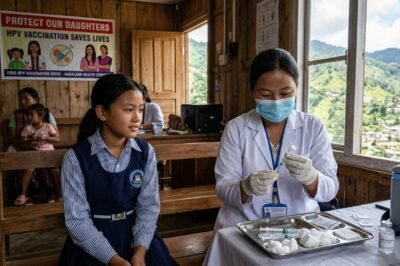
In the verdant hills of Zunheboto, a silent but powerful revolution is taking root, one that promises to shield the next generation of women from one of the most preventable yet deadly diseases: cervical cancer. The recent launch of the Human Papillomavirus (HPV) vaccination campaign, as highlighted by the Nagaland Tribune, marks a watershed moment in the state’s public health history. For years, the North Eastern region of India has grappled with high incidences of various cancers, often exacerbated by geographical isolation, limited healthcare infrastructure, and a lack of awareness. However, the systematic rollout of the HPV vaccine in Zunheboto signifies a proactive shift from curative to preventive medicine. This campaign is not merely a medical procedure; it is a profound commitment to the health, dignity, and future of young girls across the district. As the first needles find their mark, they carry with them the hopes of families and the strategic vision of a health department determined to close the gap in healthcare equity. The significance of this initiative cannot be overstated, as it targets the very root of cervical cancer before it can ever take hold, providing a literal lifeline to thousands of children between the ages of 9 and 14. This analysis delves deep into the multifaceted layers of the campaign, exploring its scientific foundation, logistical execution, and the socio-cultural transformation it is catalyzing in the heart of Nagaland. ## Understanding the HPV Crisis and the Scientific Mandate for Vaccination. Cervical cancer is the second most common cancer among women in India, and the Human Papillomavirus (HPV) is responsible for over 95 percent of these cases. In a state like Nagaland, where specialized oncological care is often concentrated in urban centers like Kohima or Dimapur, the burden on rural districts like Zunheboto is particularly heavy. The HPV vaccine is a marvel of modern biotechnology, designed to trigger an immune response that prevents the virus from infecting cells. By vaccinating girls before they are exposed to the virus, the campaign effectively creates a ‘shield of immunity.’ The Zunheboto initiative aligns with the World Health Organization’s global strategy to accelerate the elimination of cervical cancer, which hinges on the ’90-70-90′ target: 90 percent of girls fully vaccinated with the HPV vaccine by age 15. The campaign in Zunheboto focuses on the quadrivalent vaccine, which protects against the most high-risk strains of the virus. Scientific data suggests that early intervention provides the most robust antibody response, making the school-based and community-based mobilization in Zunheboto a textbook example of high-impact public health policy. ## Strategic Implementation: How Zunheboto Health Department Mobilized Resources. Executing a mass vaccination drive in a district characterized by rugged terrain and dispersed settlements requires more than just medical supplies; it requires a logistical masterclass. The Zunheboto health department, in collaboration with state authorities and international partners, has deployed a multi-tiered strategy to ensure no girl is left behind. This involves the rigorous training of Accredited Social Health Activists (ASHAs) and Auxiliary Nurse Midwives (ANMs), who serve as the frontline warriors of this campaign. These workers have been tasked with mapping the population, identifying eligible recipients in both private and government schools, and ensuring that the cold chain—the system of transporting vaccines at precise temperatures—remains intact despite the challenging Nagaland geography. The use of the U-WIN platform for digital tracking has also been a game-changer, allowing real-time monitoring of vaccination coverage and ensuring that second doses are scheduled accurately. This level of planning demonstrates a sophisticated approach to rural healthcare, proving that with the right digital tools and human capital, even the most remote corners of India can achieve global health standards. ## Overcoming Cultural Barriers and Vaccine Hesitancy. One of the greatest hurdles in any vaccination campaign, particularly one involving reproductive health, is the ‘misinformation epidemic.’ In Zunheboto, health officials have had to navigate a complex landscape of cultural sensitivities and parental concerns. To address this, the campaign has moved beyond the clinic and into the heart of the community. Interactive sessions have been held in village council halls and church premises—central pillars of Naga social life—to explain the safety and necessity of the vaccine. By engaging with the Sumi Hoho and other local bodies, the health department has successfully localized the message, framing the HPV vaccine not as a foreign intervention, but as a protective measure for the ‘daughters of the soil.’ These efforts have been crucial in debunking myths regarding fertility and side effects, replacing fear with facts. The Nagaland Tribune’s reporting underscores the importance of this transparency, highlighting how clear communication from trusted local leaders has led to an impressive turnout at immunization sites. ## Collaborative Efforts: The Synergy of NGOs and Local Government. The success in Zunheboto is not the result of a single agency’s work but a tapestry of collaborative efforts. Non-governmental organizations (NGOs) and community-based organizations have played a pivotal role in bridge-building. While the government provides the vaccines and medical expertise, local NGOs assist with the logistics of ‘last-mile’ delivery and social mobilization. This synergy is vital in Nagaland, where community ownership of public projects is high. Furthermore, the involvement of the Department of School Education has integrated the vaccination drive into the academic calendar, making it a routine part of a child’s growth rather than a disruptive event. This holistic approach ensures that the campaign is sustainable. By involving teachers and school administrators, the health department has created an environment where health education is as valued as traditional subjects, fostering a culture of wellness that will persist long after the current drive concludes. ## Statistical Overview: Targets and the Path to Regional Immunity. While the qualitative impact of the campaign is visible in the smiling faces of vaccinated schoolgirls, the quantitative data provides the structural proof of its success. Initial reports from Zunheboto indicate a high percentage of target achievement in the first phase. The district aims to cover thousands of girls in the 9-14 age bracket, a demographic that is most receptive to the vaccine’s benefits. By analyzing the data, public health experts can identify ‘pockets of resistance’ or areas with lower coverage, allowing for targeted ‘mop-up’ rounds. These statistics are not just numbers; they represent lives saved and future healthcare costs averted. Reducing the incidence of cervical cancer in Zunheboto will eventually lead to a decreased burden on the state’s tertiary care hospitals, allowing resources to be redirected to other pressing health needs. The data-driven nature of this campaign sets a benchmark for other districts in Nagaland, such as Phek, Kiphire, and Longleng, to follow. ## Future Implications: Toward a Cancer-Free Nagaland. The HPV vaccination campaign in Zunheboto is a harbinger of a broader transformation in Nagaland’s healthcare philosophy. It represents a move toward comprehensive preventive care that includes regular screenings and early diagnosis. The success of this drive suggests that Nagaland is ready to scale up its public health ambitions. In the long term, the goal is to integrate the HPV vaccine into the Routine Immunization (RI) schedule across the state. This would ensure that every girl, regardless of her socio-economic status or geographic location, has access to life-saving technology. Moreover, the Zunheboto model—characterized by strong community engagement, digital tracking, and robust logistics—can be applied to other health challenges, from tuberculosis to maternal mortality. As these young girls grow into adulthood, they will do so with a reduced risk of a devastating disease, embodying the success of a campaign that chose to prioritize prevention today for a healthier tomorrow. The Nagaland Tribune’s coverage of this event is more than just news; it is a chronicle of a district’s journey toward resilience and a testament to the power of collective action in the face of a silent killer.
HPV Vaccination Campaign in Zunheboto: A Revolutionary Step Toward Eradicating Cervical Cancer in Nagaland
Posted by
Stories





-

Hunkkaar Teaser Analysis: Aneet Padda’s Gritty Transformation and the Evolving Landscape of Indian Thrillers
-

Mithila Palkar: The Relatable Queen of Indian Web Series and Her Meteoric Rise
-

Wamiqa Gabbi: The Meteoric Rise of Indian Web Series’ Most Versatile Leading Lady
-

Triptii Dimri Biography: The Evolution of India’s Newest Cinematic Sensation and Web Series Star
-

Wamiqa Gabbi: The Rise of India’s New Digital Icon and the Future of OTT Stardom
-

Mithila Palkar: The Unstoppable Evolution of India’s Digital Darling and Her Journey to the Silver Screen
-

Mithila Palkar: The Comprehensive Journey of India’s Web Series Sensation and Digital Pioneer
-

Mithila Palkar: The Relatable Queen of Indian Web Series and Her Inspiring Journey to Stardom
-

Sobhita Dhulipala Biography: The Meteoric Rise of India’s Most Versatile Web Series Star
-

Mithila Palkar: The Unstoppable Journey of India’s Digital Darling and Web Series Queen
-

Triptii Dimri: The Complete Biography of India’s Newest Cinematic Sensation and Web Series Icon
-

Wamiqa Gabbi: The Ethereal Rise of India’s Most Versatile Web Series Star
-

Sobhita Dhulipala: The Unstoppable Rise of India’s Most Versatile Web Series Icon
-

Wamiqa Gabbi: The Meteoric Rise of the New Queen of Indian Web Series and Her Unstoppable Journey to Stardom
-

Triptii Dimri: The Meteoric Rise of India’s New Cinema Sweetheart and Web Series Icon
-

Wamiqa Gabbi: The Versatile Queen of Indian OTT and Her Phenomenal Rise to Stardom
-

Tripti Dimri Biography: The Rise of India’s New National Crush and Her Journey from Laila Majnu to OTT Stardom
-

Wamiqa Gabbi Biography: The Meteoric Rise of India’s Newest OTT Sensation and Versatile Powerhouse
-

Wamiqa Gabbi Biography: The Meteoric Rise of the Digital Queen of Indian Web Series
-

The Rise of Wamiqa Gabbi: A Deep Dive into the Journey of India’s Most Versatile OTT Sensation
-

The Meteoric Rise of Triptii Dimri: Biography, Acting Prowess, and the Journey of India’s Newest Cinema Sensation

Launching Soon: The Future of News with Our E-Newspaper
In the ever-evolving landscape of media and technology, we are thrilled to announce the upcoming launch of our innovative e-newspaper, set to redefine the way news is consumed in the digital age. Embracing the convenience and accessibility that the digital world offers, our e-newspaper aims to deliver real-time news updates, insightful articles, and interactive features directly to your devices. With a commitment to journalistic integrity and a passion for storytelling, we are dedicated to keeping you informed, engaged, and connected, no matter where you are. Stay tuned for the launch of our e-newspaper, where the future of news awaits at your fingertips.
Recent News
- RBI to transfer record ₹2.11 lakh crore surplus to Indian government for FY24

- UK Prime Minister Rishi Sunak Calls for Surprise General Election on July 4: A Comprehensive Strategic Analysis

- Four Suspected ISIS Terrorists of Sri Lankan Nationality Arrested at Ahmedabad Airport: A Deep Dive into Regional Security Threats

- Nvidia Shares Skyrocket as Quarterly Revenue Triples Amid Insatiable Global Demand for AI Infrastructure

- Calcutta High Court Strikes Down OBC Status for 77 Communities in West Bengal: A Comprehensive Legal and Political Analysis

- Ireland, Spain and Norway announce formal recognition of Palestinian state

Politics
- UK Prime Minister Rishi Sunak Calls for Surprise General Election on July 4: A Comprehensive Strategic Analysis
- Calcutta High Court Strikes Down OBC Status for 77 Communities in West Bengal: A Comprehensive Legal and Political Analysis
- Ireland, Spain and Norway announce formal recognition of Palestinian state
- Calcutta High Court Strikes Down OBC Status of Several Classes in West Bengal: A Comprehensive Legal and Political Analysis

- Ireland, Norway, and Spain formally announce recognition of Palestinian statehood

- UK Prime Minister Rishi Sunak Calls for Snap General Election on July 4: A Strategic and High-Stakes Political Gamble

Categories
- Art & Culture 106
- Auto 85
- Beauty 15
- Blog 307
- Books 7
- Business 376
- Celebrities 217
- Crime Files 139
- Democracy 308
- Education 84
- Entertainment 154
- Environment 133
- epaper 1
- Fashion 37
- Food 59
- Gadgets 89
- Guide 150
- Handicrafts 14
- Health 281
- Healthy Living 108
- History 5
- incidents 172
- Lifestyle 41
- Music 7
- Photography 15
- Politics 469
- Science & Technology 160
- Sports 283
- Tech 142
- Television 4
- Travel 68
- Travel & Tourism 30
- Trends 57
- Weather 9
- Web Series 97
- Workout 4
- World 665
Leave a Reply