
A New Era for Indian Smartphone Manufacturing
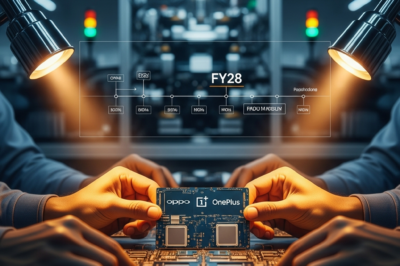
In a move that signals a tectonic shift in the electronics manufacturing landscape of South Asia, industry giants Oppo, OnePlus, and Realme are reportedly set to outsource their smartphone production to Amber Enterprises. According to recent reports from Moneycontrol, this strategic partnership is slated to fully materialize by the fiscal year 2028 (FY28), marking a significant departure from traditional manufacturing paradigms in the subcontinent. This development is not merely a corporate agreement; it is a testament to India’s growing prowess as a global manufacturing hub and a direct result of the Indian government’s aggressive ‘Make in India’ and Production Linked Incentive (PLI) schemes. For years, BBK Electronics—the parent group for Oppo, OnePlus, and Realme—has maintained a mix of self-owned manufacturing facilities and partnerships with global contract manufacturers. However, the decision to pivot toward Amber Enterprises, a company traditionally known for its dominance in the air conditioning component sector, highlights a deepening of the domestic electronics manufacturing services (EMS) ecosystem. This transition is expected to streamline supply chains, reduce logistics costs, and provide a buffer against geopolitical volatilities that have occasionally hampered cross-border trade in the tech sector.
The Evolution of Amber Enterprises: From Cooling Systems to High-Tech Electronics
To understand the magnitude of this deal, one must look at the trajectory of Amber Enterprises India Ltd. For decades, Amber has been the backbone of the Indian HVAC (Heating, Ventilation, and Air Conditioning) industry, supplying critical components and finished goods to brands like LG, Panasonic, and Daikin. However, the company’s leadership recognized early on that the future of Indian industrial growth lay in electronics diversification. Through a series of strategic acquisitions—most notably ILJIN Electronics and Ever Electronics—Amber successfully pivoted into the Electronics Manufacturing Services (EMS) space. These acquisitions allowed Amber to gain immediate access to Printed Circuit Board Assembly (PCBA) capabilities, which are the fundamental building blocks of any modern electronic device, including smartphones. By moving into the mobile phone assembly space for heavyweight brands like those under the BBK umbrella, Amber is moving up the value chain. No longer just a component supplier, the company is positioning itself as a comprehensive solutions provider capable of handling complex precision engineering required for high-end smartphones like the OnePlus series or the feature-rich Oppo Reno lineup. This evolution mirrors the global journey of companies like Foxconn, which started with smaller electronic components before becoming the world’s largest contract manufacturer.
The Strategic Pivot for Oppo, OnePlus, and Realme
For Oppo, OnePlus, and Realme, the move to partner with Amber Enterprises by FY28 is driven by both economic necessity and strategic foresight. India is the world’s second-largest smartphone market, and the consumer base here is increasingly demanding high-quality devices at competitive price points. By localizing production with a partner like Amber, these brands can mitigate the risks associated with currency fluctuations and import duties on finished units or sub-assemblies. Furthermore, the Indian government has been tightening regulations around companies with significant foreign investment, particularly from neighboring countries. By partnering with a publicly listed Indian entity like Amber, BBK-owned brands can demonstrate a deeper commitment to the local economy and align themselves more closely with the national interest of fostering domestic champions. The move also allows these brands to focus on their core competencies: research and development, software optimization, and marketing. Managing a massive factory workforce and navigating the complexities of Indian labor and environmental laws can be outsourced to a specialist like Amber, which already has extensive experience operating large-scale manufacturing facilities across various Indian states.
The Role of Government Policy and PLI Schemes
The transition of such massive tech volume to Amber Enterprises would likely have been impossible without the catalysts provided by the Government of India. The Production Linked Incentive (PLI) scheme for Large-Scale Electronics Manufacturing has been a game-changer. It offers financial incentives to companies based on incremental sales of goods manufactured in India, effectively lowering the cost of production and making Indian-made electronics competitive on the global stage. Amber Enterprises has been a proactive participant in these schemes, not just for smartphones but also for white goods. By the time FY28 arrives, the ecosystem for components—such as displays, batteries, and camera modules—is expected to be much more mature in India. The government’s goal is to increase the domestic value addition of mobile phones from the current average of 15-20% to over 35-40% in the coming years. This deal serves as a cornerstone for that ambition. When brands as large as Realme and OnePlus commit to an Indian EMS provider, it sends a signal to component manufacturers worldwide to set up shops in proximity, creating a ‘cluster effect’ that benefits the entire industry.
Operational Dynamics: Building the Infrastructure for High-Tech Assembly
Transitioning from assembling air conditioners to sophisticated 5G smartphones is no small feat. It requires cleanroom environments, high-speed Surface Mount Technology (SMT) lines, and rigorous quality control protocols. Amber Enterprises is expected to invest heavily in its manufacturing infrastructure over the next few years to meet the stringent standards required by Oppo and OnePlus. This involves not just the hardware but also the human capital. We are likely to see a massive upskilling initiative as thousands of technicians and engineers are trained in precision electronics assembly. The FY28 timeline is strategic; it provides Amber with a multi-year window to phase in production, test prototypes, and scale up to the millions of units required annually by these brands. For the consumers, this transition should ideally result in faster product launches and potentially more aggressive pricing, as the ‘Time to Market’ is significantly reduced when the factory is located within the target market’s borders.
Competitive Landscape: How This Move Affects Dixon and Foxconn
The entry of Amber Enterprises into the top-tier smartphone manufacturing space introduces a new level of competition for established players like Dixon Technologies and international giants like Foxconn and Pegatron. Dixon has long been the darling of the Indian EMS sector, manufacturing for brands like Motorola and Xiaomi. With Amber now entering the fray with the massive volumes of BBK Electronics, we are seeing the emergence of a healthy, competitive duopoly or triopoly in the domestic EMS market. This competition is good for the industry; it drives down costs, encourages technological innovation, and gives smartphone brands more leverage during contract negotiations. While Foxconn remains the primary partner for Apple in India, the rise of Amber shows that Indian companies are now capable of competing for the business of the world’s most demanding tech companies. It shifts the narrative from India being a place for ‘low-end assembly’ to a destination for ‘sophisticated manufacturing.’
The Broader Economic Impact: Employment and Export Aspirations
The socioeconomic implications of this deal are profound. The electronics sector is one of the most labor-intensive industries, and a partnership of this scale is expected to create tens of thousands of direct and indirect jobs by FY28. From assembly line workers to logistics providers and security personnel, the ripple effect on the local economy will be substantial. Furthermore, this move is a stepping stone toward making India a global export hub for Oppo, OnePlus, and Realme. Currently, the majority of the production from these brands in India is consumed domestically. However, as the partnership with Amber matures and production efficiencies improve, India could easily become the primary export base for these brands to markets in the Middle East, Africa, and Southeast Asia. This would significantly help India in balancing its trade deficit and achieving its goal of becoming a $5 trillion economy. In conclusion, the collaboration between Amber Enterprises and the BBK group brands is a landmark event that highlights the maturity of the Indian manufacturing sector and sets the stage for a decade of unprecedented growth in the technology space. The journey to FY28 will be closely watched by analysts, investors, and consumers alike as India cements its position as the world’s electronics factory of the future.




































Leave a Reply