
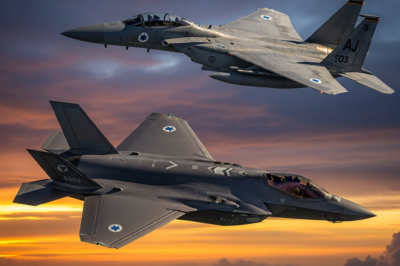
In a move that significantly recalibrates the balance of power in the Middle East, Prime Minister Benjamin Netanyahu and the Israeli defense establishment have formally greenlit a multi-billion-dollar acquisition of advanced fighter jets, including the Lockheed Martin F-35 Lightning II and the Boeing F-15IA. This decision, emerging amidst a backdrop of unprecedented regional volatility, signals Israel’s long-term commitment to maintaining its Qualitative Military Edge (QME) over potential adversaries. The procurement is not merely a purchase of hardware; it is a profound geopolitical statement aimed at deterring the ‘Axis of Resistance’ and ensuring the Israeli Air Force (IAF) remains the most potent aerial force in the region. As the Israeli government navigates a complex web of security challenges, from the northern border with Hezbollah to the deep-seated tensions with Iran, these new assets represent the tip of the spear in Israel’s defensive and offensive capabilities for the next four decades.
The Tactical Evolution: Integrating the F-35 Adir and F-15IA
The strategic logic behind the dual purchase of the F-35 and F-15IA lies in the concept of a ‘high-low’ or ‘complementary’ force structure. The F-35, known in Israel as the ‘Adir’ (The Mighty One), is a fifth-generation stealth fighter that excels in low-observability, advanced sensor fusion, and electronic warfare. Its primary role is to penetrate sophisticated integrated air defense systems (IADS) undetected, gather intelligence, and neutralize high-value targets. By completing the third squadron of F-35s, Israel is ensuring it has enough stealth capacity to conduct sustained operations in contested environments like the skies over Tehran or Damascus. However, while the F-35 is unparalleled in stealth, it has limitations in terms of internal weapons payload. This is where the F-15IA enters the frame. Based on the F-15EX Eagle II, the F-15IA is a fourth-generation-plus powerhouse capable of carrying a massive array of ordnance, including heavy bunker-busters and long-range stand-off missiles. The integration of these two platforms allows the IAF to use the F-35 as the ‘scout and assassin’ that clears the way, while the F-15IA acts as the ‘heavy lifter’ that delivers the decisive blow. This synergy is essential for a military that must prepare for multi-front conflicts where both precision and volume of fire are required.
Geopolitical Signaling: Deterrence Against Regional Adversaries
The timing of this defense push cannot be ignored. Netanyahu’s administration is sending a clear message to Tehran and its proxies: Israel is preparing for a long-term struggle. The approval of these jets serves as a deterrent against Iranian nuclear ambitions and its regional expansionism. For years, the ‘shadow war’ between Israel and Iran has played out through cyberattacks, maritime sabotage, and airstrikes in Syria. By investing in jets that can fly long distances without refueling and carry specialized munitions designed to penetrate underground facilities, Israel is highlighting its capability to reach any target in the Middle East. Furthermore, this move reassures regional allies—specifically those in the Abraham Accords—that Israel remains a reliable security guarantor. In a region where perception of strength is often as important as strength itself, the acquisition of 50 new high-performance aircraft reinforces the image of Israel as an unassailable fortress. It also serves to preemptively counter the potential modernization of rival air forces, such as Iran’s recent interest in Russian Su-35 fighters.
The Financial and Military Logistics of the Multi-Billion Dollar Deal
The acquisition of these fighter jets is a colossal financial undertaking, estimated to cost upwards of $18 billion. Much of this funding is expected to come from the United States’ Foreign Military Financing (FMF) program, which provides Israel with billions in annual military aid. This deal underscores the deep-seated institutional ties between the U.S. and Israeli defense departments, regardless of the political friction that may occasionally occur between the White House and the Prime Minister’s Office. From a logistics standpoint, the integration of these jets will require massive infrastructure upgrades at IAF bases, including new hardened hangars, specialized maintenance facilities for stealth coatings, and advanced simulation centers for pilot training. The deal also involves significant participation from the Israeli defense industry. Companies like Israel Aerospace Industries (IAI) and Elbit Systems are likely to be involved in producing wings for the F-35 and developing bespoke electronic warfare suites for the F-15IA, ensuring that while the airframes are American, the ‘brains’ of the aircraft are uniquely Israeli. This domestic involvement not only boosts the local economy but also ensures that the IAF can maintain and upgrade its fleet independently during times of crisis.
Technological Superiority: Stealth vs. Payload Capacity
To understand the necessity of this purchase, one must delve into the technological specifics that differentiate these platforms. The F-35’s AN/APG-81 AESA radar and its Distributed Aperture System (DAS) provide the pilot with 360-degree situational awareness, essentially allowing them to ‘see’ through the floor of the cockpit. In modern warfare, the pilot who sees the enemy first wins, and the F-35 ensures that Israeli pilots will almost always have that advantage. On the other hand, the F-15IA is built for endurance and power. It features the world’s fastest mission computer and the APG-82 radar, allowing it to track multiple targets simultaneously at vast distances. Most importantly for Israel, the F-15IA has a unmatched payload capacity, capable of carrying up to 29,500 pounds of munitions. This makes it the ideal platform for long-range missions where the F-35’s stealth might be compromised by external fuel tanks or weapon pods. By maintaining a fleet that balances the invisibility of the F-35 with the brute force of the F-15IA, Israel ensures it has a tool for every possible scenario, from surgical counter-terrorism strikes to full-scale conventional warfare.
Netanyahu’s Vision: A Fortress State in a Shifting Global Order
For Benjamin Netanyahu, this defense push is a cornerstone of his ‘Iron Wall’ philosophy—the idea that Israel must be so powerful that its enemies eventually lose hope of destroying it. This procurement comes at a time when the global order is shifting, with Russia and China increasing their influence in the Middle East. Netanyahu recognizes that relying solely on diplomatic assurances is insufficient. By locking in these long-term defense contracts, he is securing Israel’s security architecture for decades to come, ensuring that even under future administrations, the military’s backbone remains robust. Critics often point to the high cost and the dependency on the United States, but proponents argue that the cost of not having these assets, in terms of lost lives and compromised sovereignty, would be far higher. The purchase also serves a political purpose domestically, projecting an image of a leader who is focused on the existential security of the state above all else, even as domestic political debates continue to swirl around his leadership.
The US-Israel Defense Partnership: Navigating Diplomatic Complexities
The approval process for such high-stakes military hardware is never purely a military matter; it is deeply political. The U.S. government must balance its commitment to Israel’s security with its broader foreign policy goals in the region. Recent years have seen debates in the U.S. Congress regarding arms sales to the Middle East, with some lawmakers calling for more oversight. However, the F-35 and F-15IA deals have generally enjoyed bipartisan support, reflecting the consensus that a strong Israel is a stabilizing force in a chaotic region. For Israel, maintaining this partnership is vital. The technical support, intelligence sharing, and joint training exercises that accompany these sales are just as valuable as the planes themselves. As the IAF prepares to induct these new squadrons, the world will be watching closely. The presence of these jets in the hangars of the Israeli Air Force will change the calculus for every military planner from Beirut to Baghdad, reinforcing the reality that Israel’s reach is long, its eyes are sharp, and its resolve is unyielding. In conclusion, the purchase of the F-35 and F-15IA is more than a modernization effort; it is a fundamental pillar of Israel’s survival strategy in the 21st century.






































Leave a Reply