
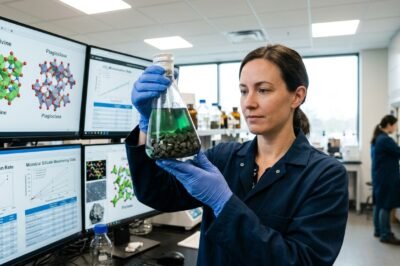
The climate crisis has reached a critical juncture where merely reducing emissions is no longer sufficient; we must actively remove carbon dioxide already present in our atmosphere. Among the most promising carbon dioxide removal (CDR) strategies is Enhanced Rock Weathering (ERW), a process that mimics the Earth’s natural geological cycles but at an accelerated pace. However, the traditional application of ERW—spreading crushed silicate rocks over vast areas—faces significant kinetic limitations. Enter the cutting-edge intersection of synthetic biology and geochemistry: the use of engineered bacteria to supercharge the carbon sequestration process. By leveraging the metabolic prowess of microbes, scientists have discovered a way to break down mineral structures faster than ever before, potentially unlocking a scalable, permanent solution to global warming. This breakthrough represents a paradigm shift in environmental engineering, moving away from purely physical interventions toward a sophisticated, biologically-augmented approach to planetary restoration. This technology doesn’t just promise to mitigate damage; it offers a blueprint for active climate repair through the synergy of nature and innovation.
## Understanding the Basics of Enhanced Rock Weathering
Natural rock weathering is a slow, multi-millennium process that has regulated Earth’s temperature for eons. It involves the reaction of atmospheric CO2 with rainwater to form weak carbonic acid, which then dissolves silicate rocks. This chemical reaction converts the carbon into stable bicarbonate ions that eventually wash into the oceans, where they are stored as limestone or shells for millions of years. While natural, this cycle is far too slow to counteract the gigatons of CO2 humans pump into the atmosphere annually. Enhanced Rock Weathering seeks to compress this timeline by grinding silicate minerals, such as basalt or olivine, into fine powders to increase their surface area. By spreading these powders on agricultural land or in coastal zones, the sequestration process can be shortened from thousands of years to mere decades. Despite this, the chemical kinetics often remain a bottleneck, leading researchers to investigate biological catalysts that can further expedite the mineral dissolution.
## The Role of Synthetic Biology in Carbon Sequestration
Recent research highlighted by Phys.org showcases a significant leap in using engineered bacteria to facilitate these chemical reactions. Microbiologists have identified specific bacterial strains that naturally produce organic acids and chelating agents, which are highly effective at leaching metals from silicate minerals. By applying synthetic biology techniques, these bacteria can be ‘reprogrammed’ to overproduce these substances or to thrive in the harsh environments of mine tailings or industrial waste sites. The engineered microbes act as biological ‘drills,’ targeting the mineral lattice and releasing the cations needed to react with CO2. This bio-acceleration can increase the rate of mineral dissolution by several orders of magnitude compared to abiotic weathering. The integration of life sciences into carbon management allows for a more targeted and efficient capture mechanism, transforming inert rock dust into an active carbon sponge.
## Quantitative Impacts: From Lab Success to Global Scale
Statistics surrounding the potential of microbially-enhanced rock weathering are staggering. Studies suggest that if implemented globally on agricultural soils, ERW could remove up to 2 to 4 gigatons of CO2 per year by 2050. The introduction of engineered bacteria could potentially double these estimates by ensuring that the rock particles react fully and quickly. In controlled laboratory settings, microbially-treated basalt showed a 300% increase in silicate dissolution rates compared to untreated controls over the same period. Furthermore, this method reduces the need for extreme grinding—which is energy-intensive—as the bacteria can handle coarser grains effectively. By optimizing the energy-to-carbon-removal ratio, these microbial interventions make the economics of CDR far more attractive to private investors and governments looking to meet net-zero targets under the Paris Agreement.
## Environmental Synergies and Agricultural Benefits
One of the most compelling aspects of using engineered bacteria in rock weathering is the secondary benefit to soil health. As the bacteria break down the silicate rocks, they release essential micronutrients like phosphorus, potassium, and silica into the soil. This can significantly reduce the dependence on synthetic fertilizers, which are themselves a major source of greenhouse gas emissions during production. The engineered microbes can be designed to maintain soil pH balance, creating an optimal environment for crop growth while simultaneously sequestering carbon. This creates a circular economy model where carbon removal supports food security. Farmers are more likely to adopt ERW practices if they see tangible improvements in crop yields and soil resilience against droughts, making the biological component crucial for the widespread adoption of the technology.
## Navigating Ethical and Regulatory Landscapes
As with any technology involving engineered organisms, there are significant ethical and safety concerns that must be addressed. The release of genetically modified bacteria into open environments triggers rigorous regulatory scrutiny. Scientists are currently working on ‘kill switches’ and genetic containment strategies to ensure these bacteria cannot survive outside their intended application zone or outcompete native microbial populations. There is also the question of long-term ecological impact; how will the influx of bicarbonate ions and released minerals affect local water tables and aquatic ecosystems? Comprehensive environmental impact assessments and transparent public discourse are essential to build trust. Establishing international standards for the monitoring, reporting, and verification (MRV) of carbon sequestered via microbial ERW is the next major hurdle for the industry.
## Future Implications: The Path to a Carbon-Negative Future
The future of carbon removal lies in the hybridization of disciplines. The success of engineered bacteria in rock weathering signals the start of a ‘Biotech Century’ for environmental science. Looking forward, we may see ‘bio-reactors’ integrated directly into industrial sites, or large-scale restoration projects where de-carbonization and re-wilding go hand in hand. As the technology matures, the cost per ton of CO2 removed is expected to drop significantly, potentially reaching the coveted sub-$100 threshold that would make it competitive with carbon taxes. We are witnessing the birth of a new industry that treats the atmosphere not as a waste dump, but as a managed resource. The marriage of geology and biology provides a robust, scalable, and permanent solution that could finally tip the scales back in favor of a stable climate, ensuring a habitable planet for generations to come.







































Leave a Reply