
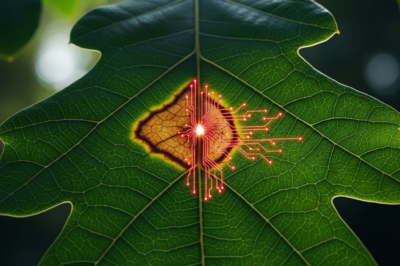
In a groundbreaking discovery that sounds like science fiction, researchers have identified a hidden self-destruct switch within the plant immune system. This mechanism, known as the Hypersensitive Response (HR), is a strategic sacrifice where individual cells undergo programmed death to prevent the spread of pathogens to the rest of the organism. By isolating the infection within a dead cell moat, the plant ensures its overall survival against aggressive bacteria and fungi. This discovery provides a new window into the complex biological warfare happening beneath the surface of every leaf and stem.
The Mechanics of the Hypersensitive Response
The core of this defense lies in specialized receptor proteins that act as sentinels within the plant. When these proteins detect the presence of a pathogen, they trigger a rapid influx of calcium ions and the production of reactive oxygen species. This chemical cascade effectively flips the switch, causing the cell membrane to rupture and the internal components to break down. This localized suicide mission is so precise that it leaves neighboring healthy cells untouched, demonstrating an incredible level of biological control. Scientists believe that by mapping these genetic pathways, they can better understand how different species react to environmental stressors and evolving threats.
Future Implications for Global Agriculture
The implications for global farming and food security are profound. As climate change introduces new pests and diseases to agricultural regions, understanding how to manipulate or strengthen this natural self-destruct switch could lead to the development of next-generation crops. These genetically optimized plants would be naturally more resistant to blights and infections, potentially reducing the global reliance on chemical pesticides. This discovery not only enhances our fundamental knowledge of botany but also provides a vital tool in the quest to protect the world’s food supply in an increasingly unpredictable climate.
Ultimately, the realization that plants possess such a sophisticated, active defense system changes our understanding of their resilience. It highlights the intricate ways in which nature has evolved to protect life, even when that protection requires the ultimate sacrifice of the few for the safety of the many.






































Leave a Reply