
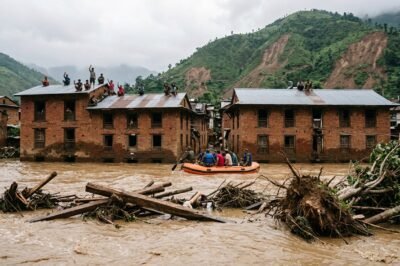
The Himalayan nation of Nepal is currently grappling with one of its most severe environmental catastrophes in recent history as the death toll from relentless monsoon-triggered floods and landslides has tragically climbed to 1,204. This staggering figure reflects a humanitarian crisis of unprecedented proportions, leaving thousands of families displaced and entire communities submerged under the weight of surging rivers and torrential debris. For weeks, the skies over Nepal have remained a somber grey, discharging a volume of rainfall that has overwhelmed the country’s fragile infrastructure and natural drainage systems. From the bustling streets of Kathmandu to the remote mountain villages of the Terai region, the sound of rushing water has replaced the usual rhythms of daily life, bringing with it a sense of profound grief and urgent desperation. As rescue teams struggle to reach isolated areas, the international community watches with bated breath, recognizing that this is not just a localized disaster but a stark warning of the increasing volatility of our global climate. This detailed analysis explores the multifaceted nature of the crisis, examining the immediate human cost, the logistical challenges of relief, and the long-term implications for a nation that finds itself on the front lines of an environmental war it did not start. The current situation in Nepal is a grim reminder of the vulnerability of mountainous regions to extreme weather events. The monsoon season, while essential for agriculture, has turned into a recurring nightmare for millions. The death count, now exceeding twelve hundred, includes men, women, and children who were caught in the sudden fury of flash floods or buried under the weight of hillsides that simply gave way. Hospitals in affected districts are overflowing with the injured, while makeshift shelters are struggling to provide the basic necessities of food, clean water, and medicine. The psychological toll on survivors, many of whom have lost their entire families and livelihoods in a matter of seconds, is immeasurable. Local authorities, supported by the army and police, have been working around the clock, yet the sheer scale of the destruction has made it difficult to provide a comprehensive response.
The Rising Human Cost: Analyzing the Casualty Figures
The rise in the death toll to 1,204 marks a dark milestone in Nepal’s history. The majority of these fatalities have been reported from the eastern and central regions, where the rainfall has been most intense. Landslides have proven to be particularly deadly, as they often occur in the middle of the night when residents are asleep and unable to escape. In many instances, entire hamlets have been wiped off the map. Beyond the confirmed deaths, hundreds remain missing, and the fear is that the toll will continue to climb as search operations reach the most remote corners of the country. The statistics represent more than just numbers; they represent shattered dreams and the total disruption of the social fabric in rural Nepal.
Infrastructure in Ruins: Bridges, Roads, and Power Plants
The physical destruction caused by the floods is staggering. Major highways, which serve as the lifelines for the delivery of goods and services, have been severed by landslides or washed away by surging rivers. Bridges that have stood for decades were snapped like twigs by the sheer force of the water. This has created a logistical nightmare for relief efforts, as many areas are now only accessible by helicopter. Furthermore, several hydropower plants, which provide a significant portion of Nepal’s electricity, have been forced to shut down due to damage or high siltation levels, leading to widespread power outages. The cost of rebuilding this infrastructure is estimated to be in the billions of dollars, a sum that the Nepalese economy will struggle to provide.
Rescue and Relief Operations: Challenges on the Ground
Despite the heroic efforts of the Nepal Army and local volunteers, rescue operations have been hampered by persistent bad weather and the difficult terrain. Helicopters have been grounded for days at a time due to low visibility, preventing the airlifting of the critically injured. On the ground, rescue workers are often forced to use primitive tools to dig through tons of mud and rock. There is also a growing concern about the outbreak of waterborne diseases such as cholera and dysentery in the cramped and unsanitary conditions of the relief camps. International aid agencies are beginning to mobilize, but the closure of roads and airports has slowed the arrival of much-needed supplies.
The Role of Climate Change and Rapid Urbanization
While Nepal has always been prone to seasonal flooding, experts agree that the intensity and frequency of these events are being exacerbated by climate change. The warming of the Himalayas is leading to more erratic rainfall patterns and the melting of glaciers, which increases the volume of water in the river systems. Simultaneously, rapid and often unplanned urbanization in cities like Kathmandu has led to the encroachment of riverbanks and the destruction of natural floodplains. When there is nowhere for the water to go, it inevitably spills into residential areas. This combination of global environmental shifts and local mismanagement has created a perfect storm of vulnerability for the Nepalese population.
Regional Impact: Downstream Effects in India and Beyond
The floods in Nepal do not stop at the border. The major rivers of Nepal flow south into the Ganges plains of India, where they are currently causing significant flooding in the states of Bihar and Uttar Pradesh. This regional dimension of the disaster highlights the need for transboundary water management and cooperation between neighboring countries. The shared tragedy emphasizes that environmental disasters recognize no political boundaries, and the solutions must be similarly collective. The displacement of people on both sides of the border is creating a secondary crisis of migration and resource scarcity that will require a coordinated regional response.
The Economic Burden and Future Implications
For a country that relies heavily on agriculture and tourism, the economic impact of these floods will be felt for years to come. Thousands of hectares of farmland have been ruined, and livestock has been lost in vast numbers. The tourism industry, a vital source of foreign exchange, has also taken a hit as trekking routes are destroyed and travel warnings are issued. As the waters eventually recede, Nepal will face the Herculean task of reconstruction. This must involve not just rebuilding what was lost, but building back better with climate-resilient infrastructure and improved early warning systems. The future of Nepal depends on its ability to adapt to a changing climate while the rest of the world must take responsibility for the carbon emissions that are driving these catastrophic events.




































Leave a Reply