
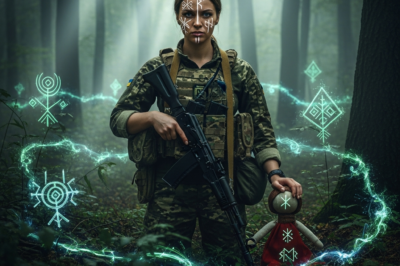
Since the onset of the full-scale Russian invasion of Ukraine, the world has become accustomed to images of advanced drone technology, sophisticated missile defense systems, and gritty trench warfare. However, a more ancient and esoteric form of resistance has emerged from the shadows of the Ukrainian landscape: a group of practitioners and believers known as the ‘Army of Witches.’ Recent reports, including comprehensive coverage by NDTV, have brought international attention to these women who claim to be using mystical rituals, ancestral knowledge, and psychological operations to target the invading Russian forces. This phenomenon, while seemingly out of place in the 21st century, serves as a powerful testament to the role of national identity, folklore, and psychological resilience in the face of existential threats. These ‘witches’ are not merely figures of myth; they are active participants in a broader information war that seeks to strike fear into the hearts of superstitious soldiers and bolster the morale of the Ukrainian populace.
The Origins of the ‘Army of Witches’: Folklore Meets Frontline
The concept of the Ukrainian witch is deeply rooted in the nation’s historical and literary traditions. Unlike the Western European image of the witch, which was often demonized during the Inquisition, the Ukrainian ‘Vidma’ or ‘Molfarka’ (in the Hutsul tradition) often occupies a more nuanced space in cultural memory. These figures are seen as keepers of nature’s secrets, herbalists, and protectors of the land. The current ‘Army of Witches’ draws heavily from the legend of the ‘Witch of Konotop,’ a 19th-century satirical novella by Hryhorii Kvitka-Osnovianenko, which has been revitalized as a symbol of defiance. In the early days of the 2022 invasion, a viral video showed a woman in Konotop shouting at a Russian soldier on a tank, warning him that ‘every second woman here is a witch’ and that he would eventually face a supernatural curse. This moment sparked a movement that transitioned from spontaneous civilian frustration into a coordinated, albeit decentralized, effort to utilize occult symbolism as a weapon of war. By tapping into these deep-seated cultural archetypes, Ukraine has created a narrative of an indomitable land that rejects the presence of invaders not just physically, but spiritually.
Psychological Warfare: The Strategic Value of the Mystical Narrative
From a military and psychological perspective, the ‘Army of Witches’ serves a very modern purpose. War is as much about the mind as it is about ammunition. Psychological operations (PSYOPs) are designed to influence the emotions, motives, and objective reasoning of the enemy. By publicly announcing rituals aimed at ‘hexing’ Russian equipment or causing ‘impotence’ and ‘misfortune’ among Russian generals, these groups exploit the superstitions that are still prevalent among many rural Russian conscripts. Historically, soldiers in high-stress environments are prone to magical thinking as a coping mechanism for the uncertainty of death. When a Russian tank breaks down or a commander is neutralized, the ‘Army of Witches’ claims credit, creating a feedback loop of fear. This narrative suggests that the very ground the Russians stand on is hostile to them, and that even the unseen forces of the universe are aligned with the Ukrainian cause. This can lead to decreased morale, increased desertion rates, and a general sense of unease within the ranks of the occupying forces.
Who Are the Witches? Profiles of Modern Practitioners in the War Zone
The individuals involved in this movement are diverse, ranging from professional occultists and tarot readers to ordinary citizens who find solace in traditional rituals. These women often gather in secret or semi-public locations to perform ‘cleansing’ rituals for Ukrainian soldiers and ‘binding’ rituals for the enemy. One prominent group, based in Kyiv, describes their work as a ‘magical front.’ They utilize candles, traditional embroidery (vyshyvanka), and specific incantations that date back centuries. Some of these practitioners have large followings on social media platforms like Telegram and TikTok, where they share ‘war horoscopes’ and instructions for civilians to perform minor protection spells for their loved ones on the front lines. The movement is also characterized by its inclusivity; it is not a centralized cult but a grassroots mobilization of spiritual energy. By framing their actions as a form of ‘energetic defense,’ these women provide a sense of agency to those who may not be able to carry a rifle but still wish to contribute to the national defense.
Tactical Impact: How ‘Cursing’ the Enemy Serves a Military Purpose
While skeptics may dismiss the tactical impact of a curse, the secondary effects are undeniable. The ‘Army of Witches’ has become a significant part of Ukraine’s soft power strategy. Their activities generate international headlines, keeping the conflict in the public eye through a unique and human-interest lens. Furthermore, the rituals often involve the community, fostering a sense of solidarity and shared purpose. In cities under constant bombardment, the act of gathering to pray or perform a ritual provides a psychological anchor for civilians. It transforms passive victimhood into active resistance. On the Russian side, the Kremlin’s state media has often responded with genuine alarm or counter-propaganda, sometimes labeling Ukrainians as ‘Satanists.’ This reaction proves that the ‘witch’ narrative is hitting a nerve. By forcing the Russian propaganda machine to address ‘magic,’ the Ukrainian resistance successfully disrupts the Kremlin’s preferred narrative of a ‘special military operation’ and reframes it as a struggle between good and evil, light and darkness.
Russian Reactions: Propaganda, Fear, and the Supernatural Counter-Narrative
The Russian response to the ‘Army of Witches’ has been a fascinating study in the collision of modern ideology and ancient fear. Russian state television frequently features pundits and ‘experts’ who warn of the dark occult practices being used by the Ukrainian military. High-ranking officials have even suggested that the West is supplying Ukraine with ‘black magic’ technology. This rhetoric serves two purposes: first, it dehumanizes Ukrainians by painting them as heretics or servants of evil, and second, it provides a convenient excuse for Russian military failures. If a battalion is defeated, it is easier for Russian commanders to blame ‘supernatural intervention’ than to admit to tactical errors or poor logistics. This has led to a bizarre ‘arms race’ of spiritualism, with some Russian units reportedly bringing their own shamans or priests to the front lines to perform ‘counter-spells’ and provide spiritual protection. This escalation highlights how the conflict has transcended the physical realm to become a full-scale battle for the soul of the region.
The Role of Social Media and Digital Witchcraft in Modern Conflict
The ‘Army of Witches’ is a uniquely 21st-century phenomenon because of its reliance on digital infrastructure. In past wars, folklore was passed through oral tradition or pamphlets. Today, it is disseminated via viral videos and encrypted messaging apps. This ‘Digital Witchcraft’ allows for the rapid mobilization of thousands of people across the globe. When a specific ritual is planned for a certain date (often aligned with celestial events or historical anniversaries), practitioners from Europe, North America, and beyond join in via livestreams. This globalized spiritual support network creates a sense of ‘metaphysical encirclement’ of the Russian state. The use of hashtags and aesthetic ‘witchcore’ imagery also appeals to a younger, tech-savvy generation, ensuring that the message of Ukrainian resistance remains trendy and shareable. This fusion of ancient belief and modern technology represents a new frontier in information warfare, where the lines between reality, myth, and propaganda are permanently blurred.
Conclusion: The Blending of Myth and Reality in 21st-Century Survival
The story of Ukraine’s ‘Army of Witches’ is more than just a curiosity for the news cycle; it is a profound reflection of how a nation under siege draws upon every available resource to survive. By leveraging the power of folklore, the Ukrainians have created a psychological shield that protects their own and a psychological sword that pierces the morale of their enemies. Whether or not one believes in the efficacy of magic is secondary to the reality of its impact: it inspires hope, fosters unity, and creates a narrative of inevitable victory. As the war continues, the ‘Army of Witches’ will likely remain a potent symbol of Ukraine’s refusal to be erased, proving that in the modern world, the oldest weapons can still be among the most effective. The integration of the supernatural into the geopolitical sphere serves as a reminder that behind every modern conflict lies a deep well of human emotion, history, and the enduring power of belief.



































Leave a Reply