
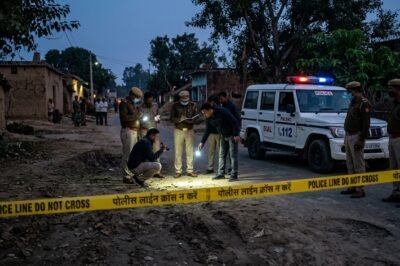
In the labyrinthine corridors of the Indian judicial system, few cases have elicited as much visceral public emotion and legal scrutiny as the Chhawla gang-rape and murder of 2012. The narrative took a chilling and unexpected turn recently when news broke that one of the men previously acquitted by the Supreme Court of India in this gruesome case was found dead. This development has sent shockwaves through the legal community and the public alike, serving as a grim postscript to a saga that has haunted the national conscience for over a decade. The death of the individual, identified as Vinod, occurs at a time when the echoes of the original crime still resonate with painful clarity. For many, his acquittal was a source of profound disillusionment with the state’s investigative machinery; for others, his sudden demise under mysterious circumstances raises uncomfortable questions about vigilantism, street justice, or perhaps a darker, internal conflict within the shadows of the criminal underworld. As the dust settles on this latest tragedy, we are forced to confront the intersection of legal technicalities and the raw, often unfulfilled, human desire for retribution, highlighting the complex dance between the letter of the law and the spirit of justice in a democratic society.
The Shadow of the 2012 Chhawla Tragedy
To understand the weight of the current news, one must revisit the horrific events of February 2012. A 19-year-old girl, returning home from work in the Chhawla area of Delhi, was kidnapped by three men in a red car. Her body was discovered days later in a field in Haryana, bearing marks of unimaginable cruelty. Forensic reports and police testimonies painted a picture of a crime so depraved it drew comparisons to the Nirbhaya case that would occur later that same year. The sheer brutality of the assault catalyzed a nationwide demand for swift justice, leading to the arrest of three men: Rahul, Ravi, and Vinod. The initial investigation was lauded as a success by local authorities, providing a semblance of closure to a grieving family and a terrified community.
The victim, a hardworking young woman who was the primary breadwinner for her family, became a symbol of the vulnerability faced by women in urban India. Her death sparked protests and calls for stricter laws against sexual violence. The legal proceedings that followed were intense, with the trial court and the Delhi High Court both finding the trio guilty of kidnapping, rape, and murder. They were sentenced to death, a move that was seen as a necessary deterrent against such heinous acts. For years, the case remained a benchmark for how the Indian legal system could respond to crimes against women, until the highest court in the land intervened and changed the trajectory of the narrative entirely.
From Death Row to Freedom: The Supreme Court Verdict
In November 2022, the Supreme Court of India delivered a bombshell judgment that overturned the death sentences of Rahul, Ravi, and Vinod. The bench, led by then-Chief Justice U.U. Lalit, acquitted the three men, citing “glaring lapses” in the prosecution’s case. The court pointed out that the evidence provided was insufficient to prove guilt beyond a reasonable doubt, specifically highlighting issues with the DNA samples, the identification of the accused, and the recovery of the vehicle used in the crime. The ruling emphasized that while the crime was undoubtedly heinous, the judicial system could not convict individuals based on moral conviction alone if the procedural and evidentiary standards were not met.
This acquittal was met with widespread outrage and disbelief. The family of the victim, who had waited ten years for justice, expressed profound heartbreak, stating that the system had failed their daughter. Legal experts were divided; some praised the court for upholding the principles of fair trial and the presumption of innocence, while others criticized the investigative agencies for their incompetence which led to the collapse of such a high-profile case. The acquittal of Vinod and his associates became a focal point for debates on judicial reform, the quality of police forensics, and the rights of the accused versus the rights of the victims in the Indian criminal justice system.
The Discovery: Death Under Mysterious Circumstances
Fast forward to the present, the news of Vinod’s death has added a new layer of complexity to this already convoluted story. According to police reports, Vinod was found dead in a village in Haryana, the very state where the victim’s body was discovered over a decade ago. Preliminary findings suggest that he may have been involved in a domestic or local dispute, but the timing and nature of his death have fueled rampant speculation. While the police have not yet confirmed any foul play linked specifically to his past acquittal, the public narrative has quickly pivoted toward the idea of ‘poetic justice’ or ‘divine intervention,’ reflecting a deep-seated frustration with the formal legal outcomes.
The investigation into Vinod’s death is currently ongoing, with forensic teams examining the scene for clues. Initial reports indicate that he had been living a marginalized life since his release, struggling to reintegrate into a society that still viewed him through the lens of the 2012 accusations. The death of an acquitted individual in such a high-profile case is a rare occurrence that necessitates a thorough and transparent inquiry to prevent further social unrest. Whether his death was an accident, a suicide, or a targeted killing remains to be seen, but it undoubtedly closes a chapter on one of the most controversial figures in recent Indian legal history.
Societal Implications and the Vacuum of Justice
The death of Vinod highlights a significant vacuum in the Indian social and legal landscape. When the state fails to provide a sense of justice that aligns with public morality, it often creates a fertile ground for alternative narratives. The acquittal in the Chhawla case left a wound in the public psyche that never truly healed. In many ways, the societal reaction to Vinod’s death is a symptom of a systemic failure where the procedural correctness of the courts clashes with the emotional reality of the citizenry. This gap between ‘law’ and ‘justice’ is where the most dangerous social tensions reside, potentially leading to a normalization of vigilante sentiments if not addressed through systemic reform.
Furthermore, this incident underscores the difficulties faced by those who are acquitted in high-profile crimes. In the eyes of the law, Vinod was an innocent man, yet in the eyes of the public, he remained a pariah. The lack of a rehabilitation or protection mechanism for acquitted individuals in such sensitive cases often leads to tragic ends. Whether through social isolation or physical harm, the life of an individual after a controversial acquittal is often fraught with peril, raising questions about the state’s responsibility toward those it returns to society after years of incarceration and public vilification.
Refining the Investigative and Forensic Framework
A critical lesson from the Chhawla case and its subsequent developments is the urgent need for refining the investigative and forensic framework in India. The Supreme Court’s acquittal was not a statement of the defendants’ innocence in a factual sense, but rather a condemnation of how the evidence was handled. This recurring theme in Indian jurisprudence—where cases fall apart due to shoddy police work, compromised crime scenes, and lack of scientific rigor—is a major hurdle to achieving genuine justice. For the Chhawla victim’s family, the death of Vinod provides no solace; instead, it serves as a reminder that the true failure occurred in the halls of the police stations and forensic labs years ago.
Moving forward, the Indian government and the judiciary must prioritize the professionalization of the police force. This includes better training in evidence collection, the implementation of strict protocols for DNA handling, and the insulation of investigators from political or public pressure. Statistics show that the conviction rate in rape cases in India remains distressingly low, often due to the same procedural lapses highlighted by the Supreme Court in the Chhawla verdict. Strengthening the foundational elements of the criminal justice system is the only way to ensure that such ‘gruesome’ cases reach a definitive and legally sound conclusion, preventing the kind of uncertainty and tragedy that has now claimed the life of an acquitted man.




































Leave a Reply