
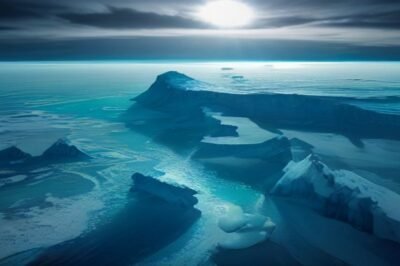
The Arctic is no longer a silent witness to climate change; it has become a screaming herald of a planet in transition. Recently, a colossal chunk of ice, measuring approximately 76 square kilometers—roughly the size of Manhattan—shattered away from Greenland’s largest remaining ice shelf, the Nioghalvfjerdsfjorden, often referred to as the 79N glacier. This event, captured by satellite imagery, is not merely a localized occurrence of glacial calving but a significant indicator of the accelerating degradation of the Greenland Ice Sheet. For decades, the 79N glacier was considered a relatively stable feature of the Northeast Greenland Ice Stream, but the recent fractures suggest that the warming of both the atmosphere and the surrounding ocean waters has reached a critical threshold. As this massive iceberg drifts into the North Atlantic, it carries with it a message of urgency for climate scientists and global leaders alike. The scale of the loss is difficult to comprehend without visualization, yet the implications for sea-level rise and global oceanic circulation are profound. This analysis delves into the mechanics of the break, the historical context of Arctic melting, and what this means for the future of our coastal civilizations. The Scale of the Event: Visualizing the Manhattan Comparison. To understand the gravity of a 76-square-kilometer iceberg breaking away, one must first grasp the sheer dimensions involved. Manhattan, the dense urban heart of New York City, covers approximately 59 square kilometers of land. The iceberg that detached from the Spalte glacier—a tributary of the 79N ice shelf—is significantly larger than that entire borough. When such a massive volume of ice transitions from a grounded or shelf state into the open sea, it represents a physical manifestation of energy imbalance. The 79N glacier itself is the leading edge of the Northeast Greenland Ice Stream, a massive frozen river that drains about 15 percent of the interior ice sheet. While calving is a natural process for glaciers, the frequency and magnitude of these events have reached unprecedented levels in the 21st century. The disintegration of the Spalte glacier branch is particularly concerning because it was once considered a robust buffer that protected the main ice shelf. Its loss exposes the core of the 79N glacier to further thermal erosion, potentially leading to an even larger collapse in the coming decade. The Role of Nioghalvfjerdsfjorden in Arctic Stability. The Nioghalvfjerdsfjorden, or 79N, is one of the few remaining ice tongues in Greenland that extends far into the ocean. Most other large ice shelves in the region have already disintegrated or significantly retreated. This specific glacier is vital because it acts as a ‘cork’ in a bottle, slowing down the flow of ice from the massive interior ice sheet into the ocean. As the shelf thins and breaks apart, the friction that holds back the land-based ice decreases, allowing the ice stream to accelerate its march toward the sea. Scientists from the Geological Survey of Denmark and Greenland (GEUS) have been monitoring this area with increasing alarm. They have noted that since the late 1990s, the shelf has lost dozens of square kilometers of ice. The recent 76-sq-km loss is part of a trend where the ice shelf is being attacked from two sides: above by record-high summer temperatures that create melt ponds, and below by warming Atlantic currents that penetrate deep into the glacial cavities. This dual-pronged attack is systematically weakening the structural integrity of the ice. Rising Ocean Temperatures: The Silent Catalyst. While atmospheric warming often gets the most headlines, the warming of the oceans is perhaps the more insidious driver of this recent calving event. Sub-surface ocean temperatures in the Arctic have been rising steadily, bringing relatively warm Atlantic water into contact with the base of Greenland’s glaciers. This process, known as basal melting, thins the ice from underneath, making it more susceptible to fracturing. In the case of the 79N glacier, researchers have identified a deep-water channel that allows this warm water to flow directly under the ice tongue. This creates a feedback loop; as the ice thins, the cavity underneath expands, allowing even more warm water to enter. This thermal erosion is invisible to the naked eye but is detected through sophisticated underwater sensors and satellite gravimetry. The detachment of the 76-sq-km iceberg is a clear sign that the basal melt has reached a point where the ice can no longer support its own weight against the stresses of ocean currents and internal pressure. Global Sea Level Implications: Beyond the Arctic Circle. The collapse of Greenland’s ice shelves is not just a problem for the Arctic; it is a direct threat to coastal cities from Miami to Mumbai. The Greenland Ice Sheet contains enough frozen water to raise global sea levels by approximately 7 meters (23 feet). While the 76-sq-km iceberg itself won’t cause an immediate rise—as much of it was already floating—its departure accelerates the flow of land-based ice into the water. This land-ice contribution is the primary driver of sea-level rise. Current projections suggest that if the current rate of melting continues, we could see sea levels rise by several feet by the end of the century. This would lead to the permanent inundation of low-lying islands, increased frequency of ‘sunny day’ flooding in coastal metropolises, and more destructive storm surges. The loss at 79N serves as a loud reminder that the ‘refrigerator’ of the Northern Hemisphere is failing, and the liquid water it releases will inevitably reshape the world’s map. Monitoring the Meltdown: Satellite Technology and Glaciology. Our ability to witness this event in real-time is a testament to modern science. Instruments such as the European Space Agency’s Sentinel-2 satellites provide high-resolution imagery that allows glaciologists to track individual cracks and meltwater ponds as they develop. This technology has revolutionized our understanding of glacial dynamics. In the past, a collapse at 79N might have gone unnoticed for months. Today, we can analyze the ‘hydrofracturing’ process—where meltwater on the surface sinks into cracks, forcing them open like a wedge—as it happens. These observations are crucial for refining the computer models that predict future sea-level rise. By comparing satellite data with historical records, scientists have confirmed that the Arctic is warming at least three times faster than the global average. The data from the 76-sq-km break provides a new data point in a terrifyingly consistent curve of ice loss. The Tipping Point: Is Greenland Past the Point of No Return? The central question facing climatologists today is whether the Greenland Ice Sheet has already crossed a tipping point. Some studies suggest that even if global temperatures were to stabilize today, the momentum of the melt might be irreversible. The loss of the Spalte glacier branch at 79N is a microcosm of this larger crisis. As the ice melts, the surface of the glacier sinks to lower, warmer altitudes, which in turn causes more melting. Additionally, the ‘albedo effect’ is diminished; as white ice is replaced by dark ocean water or melt ponds, the region absorbs more solar radiation instead of reflecting it. This self-reinforcing cycle of heat absorption and melting is what makes the Arctic so sensitive. While we may not be able to stop the process entirely, the rate of future loss depends heavily on our ability to reduce global carbon emissions. The 76-sq-km iceberg is a warning shot, indicating that the buffer zones of our planet are disappearing. Conclusion: A Call for Global Action. The detachment of a Manhattan-sized iceberg from Greenland is a visual and scientific landmark in the story of the 21st century. It represents a physical loss of a world that was once stable and predictable. The Nioghalvfjerdsfjorden glacier is no longer the impenetrable fortress of ice it once was; it is a crumbling relic under siege by a warming world. The implications of this event extend far beyond the remote shores of Greenland, affecting everything from global trade routes to the survival of coastal communities. As we observe these changes through the lens of satellite technology, the message is clear: the time for incremental change has passed. Addressing the root causes of Arctic melting requires a coordinated, global shift away from fossil fuels and toward a sustainable relationship with the Earth’s climate. If we fail to heed the warning of the 79N glacier, the Manhattan-sized icebergs of today will become the sea-level catastrophes of tomorrow.
The Manhattan-Sized Warning: Analyzing the Massive 76-Square-Kilometer Iceberg Break in Greenland
Posted by
Stories





-

Hunkkaar Teaser Analysis: Aneet Padda’s Gritty Transformation and the Evolving Landscape of Indian Thrillers
-

Mithila Palkar: The Relatable Queen of Indian Web Series and Her Meteoric Rise
-

Wamiqa Gabbi: The Meteoric Rise of Indian Web Series’ Most Versatile Leading Lady
-

Triptii Dimri Biography: The Evolution of India’s Newest Cinematic Sensation and Web Series Star
-

Wamiqa Gabbi: The Rise of India’s New Digital Icon and the Future of OTT Stardom
-

Mithila Palkar: The Unstoppable Evolution of India’s Digital Darling and Her Journey to the Silver Screen
-

Mithila Palkar: The Comprehensive Journey of India’s Web Series Sensation and Digital Pioneer
-

Mithila Palkar: The Relatable Queen of Indian Web Series and Her Inspiring Journey to Stardom
-

Sobhita Dhulipala Biography: The Meteoric Rise of India’s Most Versatile Web Series Star
-

Mithila Palkar: The Unstoppable Journey of India’s Digital Darling and Web Series Queen
-

Triptii Dimri: The Complete Biography of India’s Newest Cinematic Sensation and Web Series Icon
-

Wamiqa Gabbi: The Ethereal Rise of India’s Most Versatile Web Series Star
-

Sobhita Dhulipala: The Unstoppable Rise of India’s Most Versatile Web Series Icon
-

Wamiqa Gabbi: The Meteoric Rise of the New Queen of Indian Web Series and Her Unstoppable Journey to Stardom
-

Triptii Dimri: The Meteoric Rise of India’s New Cinema Sweetheart and Web Series Icon
-

Wamiqa Gabbi: The Versatile Queen of Indian OTT and Her Phenomenal Rise to Stardom
-

Tripti Dimri Biography: The Rise of India’s New National Crush and Her Journey from Laila Majnu to OTT Stardom
-

Wamiqa Gabbi Biography: The Meteoric Rise of India’s Newest OTT Sensation and Versatile Powerhouse
-

Wamiqa Gabbi Biography: The Meteoric Rise of the Digital Queen of Indian Web Series
-

The Rise of Wamiqa Gabbi: A Deep Dive into the Journey of India’s Most Versatile OTT Sensation
-

The Meteoric Rise of Triptii Dimri: Biography, Acting Prowess, and the Journey of India’s Newest Cinema Sensation

Launching Soon: The Future of News with Our E-Newspaper
In the ever-evolving landscape of media and technology, we are thrilled to announce the upcoming launch of our innovative e-newspaper, set to redefine the way news is consumed in the digital age. Embracing the convenience and accessibility that the digital world offers, our e-newspaper aims to deliver real-time news updates, insightful articles, and interactive features directly to your devices. With a commitment to journalistic integrity and a passion for storytelling, we are dedicated to keeping you informed, engaged, and connected, no matter where you are. Stay tuned for the launch of our e-newspaper, where the future of news awaits at your fingertips.
Recent News
- Asian Games 2026 Hockey: A Comprehensive Guide to Scores, Schedules, and the Quest for Continental Glory

- Stocks to Watch for September 23: Adani Firms, Tata Stocks, HDFC Bank, Persistent Systems and more – CNBC TV18

- Tragic Death of Class 2 Student in UP School Following Loud DJ Procession: A Comprehensive Report

- Donald Trump At UN General Assembly: Make Deal Or Drive Iran Into Hell? – A Comprehensive Geopolitical Analysis

- Supreme Court Critiques ‘Machine-Generated’ Delhi SIR Notices: A Deep Dive into Judicial Concerns over Automated Governance

- Asian Games 2026 Kabaddi: A Comprehensive Analysis of Scores, Match Results, and the Evolving Points Table

Politics
- Donald Trump At UN General Assembly: Make Deal Or Drive Iran Into Hell? – A Comprehensive Geopolitical Analysis
- Supreme Court Critiques ‘Machine-Generated’ Delhi SIR Notices: A Deep Dive into Judicial Concerns over Automated Governance
- India Rejects Pakistan-China Boundary Joint Commission: A Detailed Analysis of Sovereign Rights and Geopolitical Tensions

- Seven Former Australia Captains Voice Grave Welfare Concerns for Imran Khan: A Cricket-Diplomacy Crisis

- Sanjeev Sanyal’s Stand: Why ‘Dhurandhar’ Is a Cultural Narrative, Not Propaganda

- Strategic Reshuffle: Analyzing the Impact of Sachin Pilot Replacing Bhupesh Baghel in Punjab

Categories
- Art & Culture 101
- Auto 85
- Beauty 15
- Blog 278
- Books 7
- Business 359
- Celebrities 217
- Crime Files 139
- Democracy 308
- Education 84
- Entertainment 154
- Environment 133
- epaper 1
- Fashion 37
- Food 59
- Gadgets 87
- Guide 150
- Handicrafts 11
- Health 270
- Healthy Living 107
- History 5
- incidents 161
- Lifestyle 41
- Music 7
- Photography 15
- Politics 437
- Science & Technology 160
- Sports 254
- Tech 130
- Television 2
- Travel 68
- Travel & Tourism 30
- Trends 47
- Weather 8
- Web Series 97
- Workout 4
- World 660
Leave a Reply