
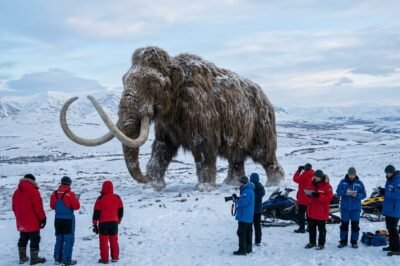
For over ten thousand years, the woolly mammoth has been a ghost of the Ice Age, a creature of legend preserved in the frozen archives of the Siberian permafrost. Today, however, the line between science fiction and biological reality is blurring as a new era of de-extinction biology takes center stage. Led by visionary geneticists and well-funded biotechnology firms like Colossal Biosciences, the project to resurrect this ancient titan is no longer a mere academic exercise but a high-stakes endeavor that could redefine our relationship with the natural world. The prospect of a mammoth walking the Earth again evokes a sense of primordial wonder, yet it simultaneously triggers a fierce debate over the ethics of genetic manipulation and the priorities of global conservation. As scientists piece together the genetic puzzle of the mammoth, they are not just looking to recreate a museum piece; they are attempting to engineer a biological tool capable of stabilizing the fragile Arctic ecosystem. This analysis explores the sophisticated methodology, the ecological motivations, and the profound moral questions surrounding the most ambitious biological project of the twenty-first century.
The Genetic Blueprint: Decoding Ancient DNA
The foundation of the mammoth de-extinction project lies in the remarkable preservation of genetic material found in the Arctic. Unlike many extinct species whose soft tissues have long since vanished, mammoths have been found nearly intact, frozen in time. Scientists have successfully sequenced the mammoth genome by extracting DNA from hair, skin, and bone samples that are thousands of years old. This genetic map provides the essential code for the traits that defined the species: their thick, insulating fur, their massive fat deposits for energy storage, and their iconic high-domed skulls. However, DNA degrades over time, leaving scientists with a fragmented puzzle rather than a complete manual.
To fill these gaps, researchers are utilizing the genome of the Asian elephant, which shares 99.6% of its DNA with the woolly mammoth. By comparing the two sequences, geneticists can identify the specific genes responsible for the mammoth’s cold-weather adaptations. This is where CRISPR-Cas9, the revolutionary gene-editing tool, comes into play. Rather than cloning a mammoth in the traditional sense, scientists are editing the Asian elephant’s genome to include these mammoth-specific traits. The goal is to create a functional hybrid—a cold-resistant elephant that looks, acts, and survives like its prehistoric ancestors. This process involves precise alterations at the molecular level, ensuring that the resulting organism can thrive in sub-zero temperatures that would be fatal to a modern elephant.
Engineering the Proxy: The CRISPR Revolution
The technical heart of the project is the manipulation of pluripotent stem cells. Once the Asian elephant’s DNA has been edited to include mammoth traits, these cells are reprogrammed into an embryonic state. This phase is incredibly complex, as it requires not just the presence of specific genes, but their correct expression throughout the developmental process. Scientists must ensure that the mammoth’s thick coat grows correctly and that its circulatory system can handle the extreme cold through specialized hemoglobin. Each genetic tweak is a step toward a biological symphony that has not been heard for millennia.
Furthermore, the project relies on the development of advanced reproductive technologies. Because the Asian elephant is an endangered species, using live surrogates to carry mammoth-hybrid embryos is ethically and practically problematic. To solve this, researchers are working on synthetic wombs—artificial environments designed to mimic the complex conditions of an elephant’s uterus over a twenty-two-month gestation period. While still in its infancy, the development of an ex-vivo gestation system is a monumental task that could revolutionize veterinary science and human neonatal care, even if the mammoth project itself faces delays. This intersection of synthetic biology and reproductive engineering represents the absolute cutting edge of modern science.
The Pleistocene Park: Ecological Restoration through De-Extinction
The motivation behind bringing back the mammoth extends far beyond scientific curiosity; it is rooted in a radical theory of ecological restoration. During the Pleistocene epoch, the Arctic was not a barren tundra but a lush, high-productivity grassland known as the mammoth steppe. Large herbivores like the mammoth played a crucial role in maintaining this ecosystem by trampling mosses, knocking down trees, and fertilizing the soil. Their absence led to the collapse of the steppe and the rise of the modern moss-heavy tundra, which is less efficient at sequestering carbon and more prone to melting.
By reintroducing mammoth-like hybrids, scientists hope to restore the mammoth steppe. These massive animals would act as natural geo-engineers. By scraping away snow to find grass, they expose the soil to freezing air, which helps keep the permafrost frozen and prevents the release of massive amounts of greenhouse gases, such as methane. This “Pleistocene Park” concept suggests that de-extinction could be a powerful tool in the fight against climate change. If successful, the return of these giants could create a self-sustaining cycle that protects the Arctic permafrost and provides a habitat for other endangered northern species.
Ethical Dilemmas: The Morality of Playing God
Despite the potential benefits, the plan to recreate a mammoth is fraught with ethical concerns. Critics argue that the hundreds of millions of dollars being funneled into de-extinction would be better spent protecting extant species that are currently on the brink of extinction. There is a fear that the promise of “bringing species back” might reduce the perceived urgency of conservation efforts today. Furthermore, the welfare of the resulting hybrid animals is a primary concern. Mammoths were highly social creatures; a single hybrid born into a world without others of its kind would face significant psychological and behavioral challenges.
There are also questions about the unintended consequences of reintroducing an apex herbivore into a modern ecosystem that has evolved for ten thousand years without it. Would the mammoth-hybrid disrupt current wildlife populations? Could it introduce ancient pathogens preserved in the ice? The legal status of such a creature is also unclear—is it a mammoth, an elephant, or a new laboratory-created species? These questions require a global dialogue between scientists, ethicists, and policymakers to ensure that the pursuit of scientific progress does not outpace our moral and regulatory frameworks.
Scientific Ripple Effects and Future Innovations
Even if the first mammoth-hybrid is decades away, the research being conducted today is yielding significant benefits across multiple scientific disciplines. The advancements in CRISPR technology, stem cell research, and artificial womb development have immediate applications in human medicine and biodiversity conservation. For example, the techniques used to edit the mammoth genome are being adapted to help modern elephants fight off deadly viruses like Elephant Endotheliotropic Herpesvirus (EEHV), which is a major threat to juvenile elephants worldwide.
Additionally, the project is pushing the boundaries of what we thought was possible in synthetic biology. By learning how to resurrect lost traits, we are gaining the ability to






































Leave a Reply