
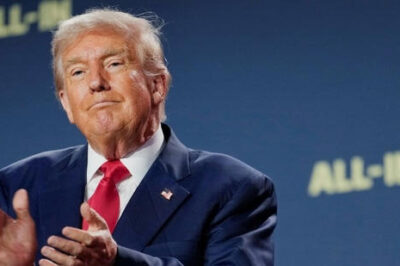
In Shorts:
- A video showing Donald Trump appearing to doze off during a cabinet meeting goes viral, dividing social media.
- While critics raise health concerns, supporters dismiss it as a moment of boredom or a simple “blink.”
- The incident highlights how every physical cue from a political figure is intensely scrutinized and politicized.
Body Content:
A seemingly mundane snippet from a White House cabinet meeting has exploded across social media, proving once again that in modern politics, there is no such thing as a minor moment. The video, circulating widely, shows former President Donald Trump sitting still at the head of the table, his eyes closed for several seconds as discussions continue around him. The clip, often looped or slowed down, has become a Rorschach test, with interpretations splitting sharply along partisan lines.
Online, the moment was instantly dubbed a “nap” by critics and commentators. Questions about his energy levels and health were quickly resurrected, with users dissecting the footage frame-by-frame. “This is more than just tired,” one viral post claimed, suggesting it warranted medical scrutiny. The narrative fit neatly into longstanding political attacks questioning the vigor of older candidates, turning a few seconds of video into a potent symbolic weapon.
However, Trump’s defenders and allies swiftly pushed back with an alternative reading. They framed the moment as nothing more than a prolonged blink, a sign of sheer boredom during a routine administrative meeting, or even strategic listening. This counter-narrative aimed to normalize the behavior, chalking the reaction up to yet another episode of biased media magnification. The split in perception underscores a familiar theme: in today’s polarized climate, even a person’s involuntary expressions are filtered through a pre-existing political lens.
Body language experts often caution against definitive diagnoses based on brief, out-of-context clips. They note that fatigue, concentration, or even dry eyes can explain such moments. However, they also acknowledge that for public figures, especially those in the highest offices, the optics of perceived alertness are inextricably tied to perceptions of capability and control. The video’s wildfire spread is less about medical analysis and more about political storytelling, where a candidate’s physical presence is a constant subject of campaign discourse.
Ultimately, the “blink-or-snooze” debate reveals the intense, often unforgiving scrutiny facing presidential candidates. Every pause, every expression, and every gesture is captured, amplified, and weaponized. Whether a brief lapse in attention or a simple human moment, the incident has successfully shifted the conversation, reminding everyone that in the race for the White House, the candidates’ energy is always on the ballot.



























Leave a Reply