
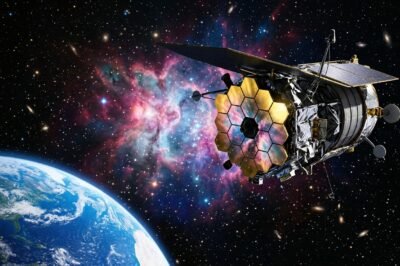
The Visionary Who Touched the Stars
In the vast, silent expanse of our universe, few names resonate with as much quiet authority and lasting impact as Nancy Grace Roman. Often referred to as the ‘Mother of Hubble,’ Roman was not just a scientist; she was a pioneer who broke through the glass ceilings of the mid-20th century to fundamentally change how humanity observes the cosmos. As NASA prepares for the next great leap in astronomical technology, the naming of the Nancy Grace Roman Space Telescope (formerly WFIRST) serves as a poignant tribute to her enduring legacy. This mission represents a bridge between the historical successes of the past and the uncharted territories of the future, promising to unlock secrets of dark energy, exoplanets, and the very structure of the universe. To understand why NASA chose to honor Roman with their newest flagship observatory, one must look back at a career defined by tenacity, scientific brilliance, and an unwavering belief that space was the ultimate laboratory. Her journey from a child fascinated by the night sky to the first Chief of Astronomy at NASA is a story of overcoming institutional bias and setting the stage for the greatest discoveries of our time.
Early Life and a Trailblazing Career in Astronomy
Born in 1925, Nancy Grace Roman’s interest in the stars began early, despite the cultural expectations that often steered women away from the hard sciences. By the time she was in fifth grade, she had already formed an astronomy club with her peers. This passion only grew as she pursued her education, eventually earning a Ph.D. in astronomy from the University of Chicago in 1949. During this era, female astronomers were frequently relegated to secondary roles, often serving as ‘computers’ or assistants rather than lead researchers. Roman, however, pushed back. Her early research focused on stellar spectroscopy and galactic structure, leading to the discovery that stars made of different compositions had different orbits within the Milky Way. This work was foundational in understanding the evolution of our galaxy. Despite her success, she faced constant hurdles; at one point, she was told that a woman could not be a professor of astronomy at a major university. This rejection, while stinging, ultimately pushed her toward a path that would change the course of human history: the nascent space agency known as NASA.
The First Chief of Astronomy at NASA
In 1959, just a year after NASA was established, Nancy Grace Roman joined the agency. She wasn’t just another employee; she became the first woman to hold an executive position at NASA, serving as the first Chief of Astronomy in the Office of Space Science. In this role, she had the monumental task of organizing and funding the nation’s space-based astronomical programs from the ground up. Roman was a master at bridging the gap between the scientific community and the federal government. She traveled across the country, meeting with astronomers to hear their needs and convincing them that putting telescopes in space—above the distortion of Earth’s atmosphere—was the future of the field. Under her leadership, NASA launched several successful orbiting observatories, which proved that the technology was viable. Her ability to manage complex budgets, navigate political landscapes, and maintain scientific integrity made her an indispensable asset during the early days of the Space Age. She wasn’t just managing programs; she was building an entire scientific discipline.
Architect of the Hubble Space Telescope
While her title was Chief of Astronomy, Nancy Grace Roman’s most famous contribution was her role as the primary architect of the Hubble Space Telescope. In the 1960s and 70s, the idea of a large, space-based telescope was seen by many as an impossible dream—too expensive, too technically difficult, and too risky. Roman, however, saw it as a necessity. She spent years lobbying Congress, working with engineers, and refining the scientific requirements for what was then known as the Large Space Telescope. She was the one who put together the first committee of scientists and engineers to study the feasibility of the project and was instrumental in convincing the public and lawmakers of its value. Without her advocacy and her ability to organize the scientific community behind a singular vision, it is highly likely that the Hubble Space Telescope would never have been built. She didn’t just help build a machine; she fostered a global change in how we perceive our place in the universe. Her nickname, ‘Mother of Hubble,’ is not just a honorary title; it is a literal description of her role in the birth of the world’s most famous observatory.
The Nancy Grace Roman Space Telescope: A New Era
Today, NASA is honoring her legacy with the Nancy Grace Roman Space Telescope (RST). This next-generation observatory is designed to address some of the most pressing questions in modern astrophysics. Unlike the Hubble, which focuses on small, high-resolution snapshots of the sky, the Roman Telescope is designed for wide-field surveys. It features a 2.4-meter mirror—the same size as Hubble’s—but its field of view is 100 times larger. This means it can capture much more of the sky in a single image than Hubble ever could, while maintaining similar resolution. The RST is equipped with two primary instruments: the Wide Field Instrument and a Coronagraph Instrument. The Wide Field Instrument will conduct large-scale surveys of the universe in infrared light, while the Coronagraph will test new technologies for blocking out the glare of distant stars to take direct images of planets orbiting them. This mission is expected to launch in the mid-2020s and will reside at the second Lagrange point (L2), approximately one million miles from Earth, providing a stable environment for deep-space observation.
Scientific Missions: Dark Energy and Exoplanets
The primary scientific goals of the Roman Space Telescope are as ambitious as the woman it was named after. One of its main missions is to investigate the mystery of dark energy—the mysterious force that is causing the expansion of the universe to accelerate. By mapping the distribution of hundreds of millions of galaxies, the RST will help scientists determine if dark energy is a constant property of space or if it changes over time. Additionally, the telescope will be a powerhouse for exoplanet research. Using a technique called gravitational microlensing, the Roman Telescope will be able to detect planets that are thousands of light-years away, including those that are far from their host stars or even ‘rogue’ planets that float freely through the galaxy. This will provide the most comprehensive census of planets in the Milky Way to date, helping us understand how common Earth-like planets really are. The data collected by the RST will be made public immediately, fostering a global collaborative effort to decode the mysteries of the universe.
Legacy and the Future of Space Exploration
Nancy Grace Roman passed away in 2018, but her impact on the world of science continues to grow. Her legacy is not just found in the hardware orbiting our planet, but in the doors she opened for others. She was a tireless advocate for women in STEM, often speaking about the importance of encouraging young girls to pursue their interests in science and math. The naming of the Roman Space Telescope is a significant step in recognizing the contributions of women who have long been overlooked in the history of space exploration. As the RST begins its mission, it will work in tandem with the James Webb Space Telescope and Hubble, creating a multi-generational fleet of observatories that provide a holistic view of the cosmos. Roman’s vision was always about the ‘big picture’—both figuratively and literally. By naming this revolutionary telescope after her, NASA ensures that her name will forever be associated with the discovery of the unknown.
Conclusion: The Eternal Voyager
In the end, Nancy Grace Roman’s life was a testament to the power of curiosity and the importance of looking upward. She transitioned from a time when space travel was science fiction to an era where we can see the dawn of the universe. The Nancy Grace Roman Space Telescope is more than just a collection of mirrors and sensors; it is the embodiment of a dream that began with a young girl and a five-cent star chart. As this telescope takes its place among the stars, it carries with it the spirit of a woman who dared to imagine a telescope in the heavens. Her work ensured that we would never stop searching for our origins or wondering what lies beyond the next horizon. The ‘Mother of Hubble’ has finally been given her own window to the stars, and through it, the rest of humanity will see further and more clearly than ever before. This mission marks the beginning of a new chapter in astronomy, one that will undoubtedly reveal secrets we cannot yet imagine, all thanks to the foundation laid by Nancy Grace Roman.





































Leave a Reply