
Key Highlights
- Strategic Diversification: Actively seeking new export markets and trade agreements to reduce dependency on any single economy.
- Domestic Strength: Boosting local manufacturing through production-linked incentives (PLIs) and promoting ‘Made in India’ brands.
- Diplomatic Leverage: Engaging in calculated negotiations while exploring partnerships with other nations affected by similar trade policies.
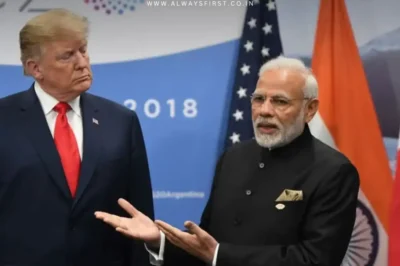
NEW DELHI – The specter of steep, potential 50% tariffs on Indian exports has shifted from a trade concern to a central policy challenge in New Delhi. However, rather than a purely defensive posture, sources indicate the Modi government is crafting a multi-layered response aimed at transforming this external pressure into a catalyst for internal economic strength.
Gone are the days of reactive trade policy. The current administration’s approach, as analyzed by AlwaysFirst, is built on a triad of strategic pillars designed to mitigate immediate pain while securing long-term gains.
The first and most crucial element is market diversification. India is aggressively accelerating free trade agreement (FTA) negotiations with key partners like the United Kingdom, the European Union, and nations within the Gulf Cooperation Council (GCC). The objective is clear: to create alternative export corridors that ensure Indian goods—from textiles to engineering products—retain their competitive edge and market access, insulating the economy from volatility in any single region.
Parallelly, the government is doubling down on its domestic empowerment agenda. The successful Production-Linked Incentive (PLI) schemes, which have already spurred significant investment in sectors like electronics and pharmaceuticals, are being looked at with renewed vigor. The ‘Make in India’ initiative is being infused with a new sense of urgency, aiming to build a self-reliant manufacturing ecosystem that not only substitutes imports but also creates world-class products for global consumption. This internal strengthening is seen as the ultimate buffer against external trade shocks.
Finally, India is employing sharp diplomatic and strategic negotiation. The approach is not merely retaliatory but calculated. By engaging in dialogue while simultaneously demonstrating a clear roadmap to alternative markets and domestic resilience, India aims to position itself from a point of strength. Furthermore, building coalitions with other nations facing similar trade challenges could provide additional leverage in international forums.
In essence, the government’s playbook moves beyond the headline-grabbing idea of tariffs. It is a comprehensive effort to future-proof the Indian economy by making it more innovative, self-sufficient, and intricately woven into the global trade fabric on its own terms. The immediate tariff threat, therefore, is being treated not just as a problem to be solved, but as an opportunity in disguise to fast-track a more resilient and assertive economic future.




































Leave a Reply