
In Shorts
- Comet 2I/Borisov is only the second confirmed object to visit our solar system from interstellar space, following ‘Oumuamua.
- The comet made its closest approach to the Sun in December 2019 and was best viewed through telescopes in the following weeks.
- While not visible to the naked eye, this visitor provides astronomers with a rare opportunity to study the composition of another star system.
AlwaysFirst | Science Desk
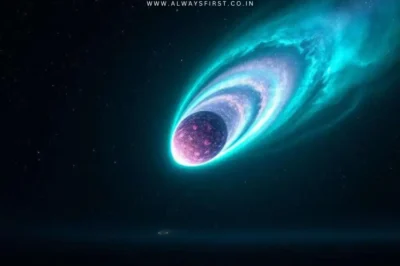
The cosmos has sent us another rare messenger. Following the enigmatic ‘Oumuamua in 2017, our solar system is currently playing host to a second confirmed interstellar visitor: Comet 2I/Borisov. This icy wanderer, hurtling through space from an unknown star system, is offering astronomers an unprecedented peek into the building blocks of worlds far beyond our own.
Discovered by Crimean amateur astronomer Gennady Borisov in August 2019, the comet was swiftly confirmed by the International Astronomical Union to be on a hyperbolic, unbounded orbit—a definitive sign that it is a tourist just passing through our cosmic neighborhood. Its trajectory indicates it was not born here and will not remain here, destined to drift back into the interstellar void after its solar flyby.
When Was Comet 2I/Borisov Closest to Earth?
The comet’s journey through our system was a swift one. It made its closest approach to the Sun, a point called perihelion, on December 8, 2019. Its nearest pass to Earth occurred shortly after, on December 28, 2019, when it came within approximately 180 million miles of our planet—about twice the distance between the Earth and the Sun. While this sounds vast, in astronomical terms, it was a close and fortuitous encounter for scientists eager to study it.
Could It Be Seen With the Naked Eye?
For hopeful stargazers, the answer, unfortunately, is that it was not a naked-eye spectacle. During its closest approach, Comet 2I/Borisov was a dim object, peaking at a magnitude that placed it firmly within the reach of professional telescopes and high-powered amateur equipment, but not visible without aid. Its visibility was also dependent on its location in the sky, primarily in the southern hemisphere constellations before moving northward.
Despite its faint appearance, the comet’s significance is monumental. Unlike the asteroid-like ‘Oumuamua, 2I/Borisov has a familiar composition, with a distinct coma and tail of gas and dust—characteristics that make it strikingly similar to comets within our own solar system. This suggests that the processes that form comets around our Sun might be common throughout the galaxy.
The brief visit of Comet 2I/Borisov has provided a cosmic laboratory for astronomers. By analyzing the light from its tail, they have been able to decipher its chemical signature, gaining direct insight into the materials present in its home star system. As it continues its eternal journey back into deep space, it leaves behind a treasure trove of data, reminding us that we are part of a dynamic and interconnected galaxy.






































Leave a Reply