
In Shorts
- Tarique Rahman’s return after 17 years reshapes Bangladesh’s political landscape.
- His message of unity and democratic renewal challenges hardline Islamist narratives.
- India is closely watching developments as regional ties and electoral outcomes hang in the balance.
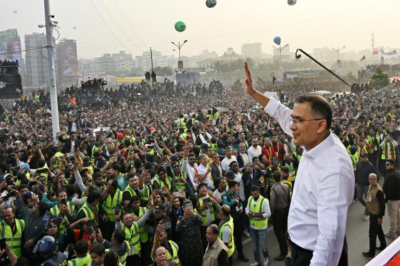
Dhaka is witnessing a dramatic political moment as Tarique Rahman, acting chairman of the Bangladesh Nationalist Party (BNP), returned to the country after about 17 years abroad. His arrival on December 25 brought massive crowds, energising his party and injecting fresh momentum into a fractured political environment ahead of the crucial February general elections. Rahman’s homecoming comes amid ongoing unrest, a recent change in government and heightened attention on Bangladesh’s future direction.
Recognised as a likely contender for prime minister, Rahman stepped onto Bangladeshi soil to scenes of jubilant support. He used the platform to outline his vision of a “safe and inclusive Bangladesh” where citizens of all faiths can thrive. In a speech that invoked unity and a break from past polarisation, he framed his return as a chance to renew democratic politics and strengthen the nation’s institutions.
Rahman’s rhetoric has struck a contrast with the positions of some Islamist groups such as Jamaat-e-Islami, which had previously allied with other hardline forces and pursued a more confrontational stance toward regional powers. His emphasis on orderly elections and rejection of violence directly challenges the tactics of those groups and has unsettled factions that rely on street mobilisation and unrest to sustain influence.
India, closely monitoring the developments next door, has urged all political stakeholders in Bangladesh to ensure that the electoral process is free, inclusive, and peaceful. New Delhi’s statements reflect concerns over rising instability and the treatment of religious minorities, which have at times strained bilateral relations. Indian officials have signalled that they favour democratic norms and stability, even as they avoid alignment with any particular party.
Beyond partisan reactions, Rahman’s return has sparked wider debate within Bangladesh on the future of its democratic culture. Supporters view his homecoming as a turning point that could curb disorder and reinvigorate political engagement, while critics question whether a long absence from grassroots politics might limit his effectiveness. Analysts also note that his leadership could influence how opposition forces coalesce or fragment ahead of polling.
With the general election approaching, Rahman’s presence is now central to discussions about Bangladesh’s political stability and its relationships with powerful neighbours. His focus on national unity and democratic renewal offers a new narrative at a time when the country stands at a crossroads.





































Leave a Reply