
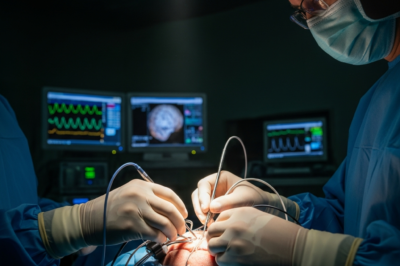
In a significant medical breakthrough that underscores India’s growing prowess in advanced neurosurgery, Wockhardt Hospitals has successfully performed Deep Brain Stimulation (DBS) on a patient suffering from advanced Parkinson’s disease. This successful intervention, recently highlighted by The Indian Practitioner, represents a beacon of hope for thousands of individuals struggling with the debilitating motor symptoms of this progressive neurological disorder. As medication becomes less effective in the later stages of the disease, surgical interventions like DBS are becoming the gold standard for restoring quality of life.
The Science Behind Deep Brain Stimulation (DBS)
Deep Brain Stimulation is often referred to as a ‘brain pacemaker’ for its ability to regulate neural activity. The procedure involves the surgical implantation of electrodes into specific areas of the brain, which produce electrical impulses that regulate abnormal impulses. For patients with advanced Parkinson’s, where traditional medications like Levodopa may lose efficacy or cause severe side effects like dyskinesia, DBS offers a way to regain control over body movements. By targeting the subthalamic nucleus or the globus pallidus, surgeons can significantly reduce tremors, stiffness, and bradykinesia, allowing patients to perform daily tasks with newfound independence and dignity.
Setting New Standards in Neurological Excellence at Wockhardt
The success at Wockhardt Hospitals is attributed to a multidisciplinary approach involving highly skilled neurosurgeons, neurologists, and specialized nursing staff. Utilizing state-of-the-art neuro-imaging and precision guidance systems, the surgical team can map the brain with sub-millimeter accuracy. This level of precision is crucial for ensuring the efficacy of the stimulation while minimizing risks. The patient’s recovery and the subsequent reduction in medication dependence serve as a testament to the hospital’s commitment to adopting cutting-edge medical technologies for better patient outcomes. This case study highlights why specialized centers of excellence are vital for managing complex neurological conditions.
As Parkinson’s disease continues to affect an aging global population, the availability and success of DBS in Indian healthcare institutions mark a pivotal shift in the medical landscape. This milestone not only highlights the clinical expertise available at Wockhardt Hospitals but also reinforces the importance of early intervention and the accessibility of advanced surgical options. The future of Parkinson’s care in India looks promising as more patients gain access to life-altering technologies that provide relief where traditional medicine falls short.





































Leave a Reply