
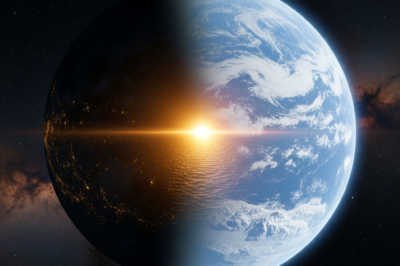
The quest to find a twin for Earth has taken a monumental leap forward as astronomers unveil groundbreaking data concerning a nearby exoplanet known as LHS 1140b. For years, the scientific community has looked toward distant stars with the hope of finding a world that mirrors our own—a rocky terrestrial planet with the right temperature for liquid water and, potentially, the biological precursors of life. Recent findings, facilitated by the unparalleled sensitivity of the James Webb Space Telescope (JWST), suggest that LHS 1140b might be even more habitable than previously imagined. Located a mere 48 light-years away in the constellation Cetus, this ‘Super Earth’ has transitioned from being a mere curiosity to becoming the primary target in the search for extraterrestrial life, surpassing even the famous TRAPPIST-1 system in terms of immediate potential. This discovery represents a paradigm shift in exoplanetary science, moving us from the theoretical detection of planets to the detailed characterization of their atmospheres and surfaces.
What is LHS 1140b? The Discovery of a New Cosmic Neighbor
LHS 1140b is an exoplanet that orbits a small, cool red dwarf star approximately one-fifth the size of our Sun. Initially discovered in 2017 by the MEarth project and later observed by the High Accuracy Radial velocity Planet Searcher (HARPS), the planet was originally thought to be a ‘mini-Neptune’—a planet shrouded in a thick, suffocating envelope of hydrogen and helium gas. However, as measurement techniques improved, the density of the planet suggested a much more interesting composition. It is roughly 1.7 times the diameter of Earth but possesses significantly more mass. The star it orbits, LHS 1140, is notably calmer than other red dwarfs, such as the active TRAPPIST-1, which frequently blasts its orbiting planets with lethal radiation and stellar flares. This relative stability of the host star is a crucial factor in the planet’s habitability, as it allows for the long-term survival of an atmosphere. Unlike many other exoplanets that are blasted into barren rocks, LHS 1140b appears to have held onto its volatile compounds, setting the stage for a world that could actually support a biosphere.
Redefining Habitability: The Shift from Mini-Neptune to Water World
The most shocking revelation from recent studies, led by researchers at the University of Montreal, is the revised estimate of the planet’s composition. New data suggests that LHS 1140b is not a gaseous giant but likely a rocky or icy world. Most importantly, models now indicate that water could account for as much as 10% to 20% of its total mass. To put this into perspective, Earth’s oceans account for only about 0.02% of its mass. This means LHS 1140b could be a true ‘Water World.’ However, because of its distance from its sun, this water isn’t necessarily all liquid. The planet resides in the ‘Goldilocks Zone,’ the orbital region where temperatures are just right for water to exist without boiling away or freezing solid. Given its proximity to the cool red dwarf, the planet is likely tidally locked, meaning one side always faces the star while the other remains in perpetual darkness. This leads to the fascinating ‘Eyeball Earth’ theory, where a massive circular ocean exists on the day-side, surrounded by an expanse of ice on the rest of the planet.
The James Webb Space Telescope’s Role in Unveiling Atmospheric Secrets
The shift in our understanding of LHS 1140b is largely due to the James Webb Space Telescope. By using a method called transmission spectroscopy, astronomers can analyze the light filtering through the planet’s atmosphere as it passes in front of its host star. Each chemical element leaves a unique ‘fingerprint’ on the light spectrum. The JWST data has strongly hinted at the absence of a thick hydrogen-rich atmosphere, which is usually the hallmark of uninhabitable gas planets. Instead, the evidence points toward a much thinner, secondary atmosphere composed of heavier molecules like nitrogen. Nitrogen makes up about 78% of Earth’s atmosphere and is vital for life as we know it. The presence of a nitrogen-rich atmosphere on LHS 1140b would provide the atmospheric pressure necessary to keep liquid water stable on the surface. While the detection isn’t yet definitive, the signal is the strongest evidence to date of a terrestrial-like atmosphere on a temperate exoplanet outside our solar system. This discovery has energized the global scientific community, as it proves that JWST is capable of sniffing out the components of life on planets dozens of light-years away.
The ‘Eyeball Earth’ Phenomenon: A Unique Planetary Climate
One of the most intriguing aspects of LHS 1140b is its potential climate architecture. Because it is tidally locked, the planet does not have day and night cycles like Earth. Instead, it has a permanent ‘hot spot’ directly beneath its sun. If the planet has an atmosphere and oceans, the heat would be distributed, but the center of the day-side would remain the warmest point. This creates the ‘Eyeball’ look: a central, blue liquid ocean of perhaps 4,000 kilometers in diameter, surrounded by a white shell of ice and glaciers. According to climate simulations, the surface temperature at the center of this ocean could be a comfortable 20 degrees Celsius (68 degrees Fahrenheit). This localized ‘tropical’ zone would be shielded by the surrounding ice and could potentially harbor a stable ecosystem. The contrast between the frozen wastes of the dark side and the temperate waters of the light side creates unique weather patterns and ocean currents that scientists are only beginning to model. Such a configuration offers a stable environment that could persist for billions of years, providing a much longer window for life to evolve than has been available on Earth.
The Search for Life: Bio-signatures and Future Observations
With the confirmation of a potential ocean and atmosphere, the next step for astronomers is the search for bio-signatures—chemical indicators that could signify the presence of life. These include oxygen, methane, and carbon dioxide. On Earth, these gases are maintained in our atmosphere largely through biological processes. The presence of both methane and oxygen in a planet’s atmosphere simultaneously would be a ‘smoking gun’ for biological activity, as these gases react with each other and would disappear without a constant source of replenishment. Future observations with JWST and the upcoming Extremely Large Telescopes (ELTs) will focus on detecting these specific gases. Astronomers are also looking for ‘techno-signatures,’ such as artificial pollutants or light patterns, though bio-signatures remain the primary focus. The fact that LHS 1140b is relatively close to Earth means we can collect more photons and achieve higher resolution data than we can for more distant candidates. This makes it the most promising laboratory for the study of astrobiology in the next decade.
Why LHS 1140b Outshines the TRAPPIST-1 System
For a long time, the TRAPPIST-1 system, with its seven Earth-sized planets, was considered the ‘Holy Grail’ of exoplanet research. However, recent JWST observations of the innermost TRAPPIST planets have been somewhat disappointing, showing them to be airless rocks stripped of their atmospheres by the intense solar activity of their host star. TRAPPIST-1 is a very active M-dwarf, prone to violent flares that can erode a planet’s protective layer. In contrast, LHS 1140 is a much older and ‘quieter’ star. Its lower activity levels mean that any atmosphere developed by LHS 1140b has a much higher chance of surviving over eons. This stability is why many researchers are now pivoting their focus toward LHS 1140b. It represents a more ‘gentle’ environment, which is likely a prerequisite for the delicate chemical reactions that lead to the origin of life. The discovery of LHS 1140b’s potential habitability reinforces the idea that we should be looking for ‘quiet’ stars rather than just ‘Earth-sized’ planets.
Conclusion: A New Era in Space Exploration
The discovery that LHS 1140b could be a habitable ‘Eyeball Earth’ is more than just a news headline; it is a milestone in our journey to understand our place in the universe. We are no longer just asking ‘Are there other planets?’ but rather ‘What is the weather like on those planets, and could we survive there?’ While much work remains to be done—including more years of JWST observations to confirm the nitrogen atmosphere—the preliminary results are the most promising we have ever seen. LHS 1140b stands as a testament to human ingenuity and our relentless desire to explore the unknown. As we continue to peer into the depths of space, this nearby Super Earth serves as a shimmering blue-and-white beacon of hope that we are not alone in the cosmos. Whether it is a barren icy wasteland or a thriving oceanic world, LHS 1140b will undoubtedly be at the center of astronomical research for decades to come, potentially providing the first definitive answer to the greatest question of all: is there life beyond Earth?







































Leave a Reply