
Introduction: The Ongoing Craze of NYT Strands
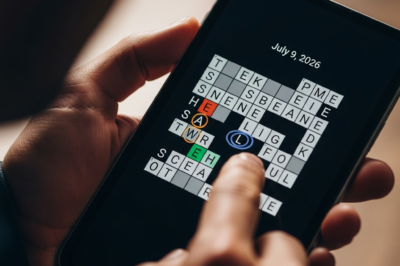
In the high-stakes world of digital word games, few titles have managed to capture the collective imagination quite like the New York Times Strands. Since its initial beta launch, Strands has evolved from a niche experiment into a global daily ritual, standing shoulder-to-shoulder with titans like the NYT Crossword, Wordle, and Connections. Today, on July 9, 2026, players across the globe are waking up to a fresh grid of letters, eager to uncover the hidden theme and the elusive Spangram that defines their morning intellectual challenge. The appeal of Strands lies in its unique fusion of word search mechanics with a thematic twist, requiring not just a large vocabulary but also lateral thinking and spatial awareness. For many, the daily puzzle is more than just a game; it is a moment of meditative focus in an otherwise chaotic digital landscape. As we delve into the hints and answers for today’s puzzle, we recognize that the journey of discovery is just as important as the final solution. Whether you are a seasoned veteran looking to maintain a multi-year streak or a newcomer trying to understand why your social media feed is filled with colored circles, this comprehensive guide will provide everything you need to conquer the July 9, 2026, Strands board.
The Evolution of the NYT Games Ecosystem and the Birth of Strands
To understand why a guide for July 9, 2026, is so sought after, we must look back at the trajectory of the New York Times Games division. Over the last several years, the NYT has successfully transitioned from a legacy newspaper to a lifestyle and entertainment powerhouse. This transformation was catalyzed by the 2022 acquisition of Wordle, which proved that simple, shareable, and intellectually stimulating daily puzzles could drive massive engagement and subscription growth. Following the success of Wordle and the subsequent rise of Connections, the NYT Games team began experimenting with new formats that moved away from the traditional grid of the crossword. Strands was born from this spirit of innovation. Unlike Wordle, which limits users to six guesses for a single five-letter word, Strands presents a complex 6×8 or 8×10 grid where every letter must eventually be used to form theme-related words. The introduction of the ‘Spangram’—a word that spans the entire board from one side to the other—added a layer of complexity that distinguishes Strands from a standard word search. By mid-2026, the game has reached a level of maturity where the themes are more abstract, the word placements more devious, and the community of solvers more dedicated than ever before. The game has become a cornerstone of the ‘NYT Games App’ culture, influencing how competitors like Mashable SEA and Forbes cover daily digital trends.
Deciphering Today’s Theme: July 9, 2026 Hint and Logic
Every Strands puzzle begins with a cryptic clue that hints at the underlying theme. For July 9, 2026, the provided hint is ‘Celestial Bodies and Beyond.’ This theme immediately directs the player’s mind toward the stars, planets, and the vast expanse of the universe. However, as any experienced Strands player knows, the NYT editors often include ‘red herring’ words that might seem to fit the theme but are actually part of the unrelated filler letters—though in Strands, unlike traditional word searches, every single letter belongs to a theme word eventually. The challenge today lies in identifying the Spangram first. The Spangram for July 9, 2026, is ‘COSMOS,’ which stretches vertically from the top row to the bottom, bisecting the grid and providing a visual anchor for the other words. Once ‘COSMOS’ is identified, the board becomes much more manageable. Players should look for clusters of letters that form astronomical terms. The difficulty curve today is rated as a 4 out of 5, meaning the connections aren’t always immediate. You might find ‘STAR’ or ‘MOON’ quickly, but the more complex terms like ‘NEBULA’ or ‘QUASAR’ require a keen eye for diagonal connections. The logic of today’s board relies heavily on the ‘S’ and ‘A’ vowels, which are clustered in the center, making it essential to branch out toward the corners early in the solving process.
The Full List of Answers for July 9, 2026
If you have found yourself stuck and the ‘Hint’ button isn’t giving you the clarity you need, here are the official answers for the Strands puzzle on July 9, 2026. The words are meticulously placed to utilize every letter on the board. The primary theme words are: 1. PLANET (found in the upper left quadrant), 2. NEBULA (curving through the middle right), 3. GALAXY (tucked into the bottom left corner), 4. COMET (running horizontally across the third row), 5. ORBIT (a short but tricky vertical word near the center), 6. PULSAR (located in the top right), and 7. ASTEROID (the longest theme word excluding the Spangram, wrapping around the bottom edge). The Spangram, as mentioned previously, is COSMOS. Solving these words in order can often help, as clearing out the corners early prevents you from getting trapped with isolated letters later on. It is worth noting that ‘STAR’ is also present but acts as a component of larger words or as a distraction depending on the specific grid layout of the day. The July 9 board is particularly clever because it avoids common astronomical terms like ‘SUN’ in favor of more scientific terminology, reflecting the increasing difficulty of the game as it nears its third anniversary of mainstream popularity.
The Psychological Appeal: Why We Are Addicted to the Spangram
What is it about finding a word like ‘COSMOS’ that provides such a profound sense of satisfaction? Psychologists suggest that games like Strands tap into our innate desire for order and pattern recognition. The ‘aha!’ moment that occurs when a player finally sees the Spangram is a result of the brain releasing dopamine, the neurotransmitter associated with reward and pleasure. This ‘dopamine hit’ is amplified by the visual feedback of the game—the letters changing color, the word being highlighted, and the satisfying sound effects of the NYT Games interface. Furthermore, Strands offers a form of ‘controlled challenge.’ Unlike the stresses of real-world problems, the Strands grid is a closed system with a guaranteed solution. On July 9, 2026, a day that might be filled with work deadlines or personal stressors, the five to ten minutes spent solving this puzzle offer a mental sanctuary. It is a form of ‘flow state’ where the solver is fully immersed in the task at hand. The social aspect also cannot be ignored. The ability to share your results—represented by a grid of emojis without spoiling the actual words—creates a sense of community and friendly competition. When you see your friends have solved the July 9 puzzle in fewer hints than you, it spurs a drive to improve, ensuring you return to the grid the following day.
Comparing Strands with Wordle and Connections in 2026
By July 2026, the hierarchy of the NYT Games suite has stabilized, and Strands occupies a unique middle ground between the linguistic simplicity of Wordle and the logical complexity of Connections. Wordle remains the gateway drug for many, offering a quick 2-minute fix. Connections, on the other hand, is often cited as the most frustrating and rewarding, as it relies on category-based misdirection. Strands is arguably more ‘fair’ than Connections because it provides all the letters upfront; the challenge is purely one of perception and vocabulary. However, Strands is physically more demanding than Wordle, as the act of dragging your finger (or mouse) across the grid to connect letters requires more coordination than simply typing a word. Data from 2025 and early 2026 shows that while Wordle has the highest number of daily active users, Strands has the highest ‘completion rate’ among those who start the puzzle. This suggests that once a player engages with a Strands board, they are highly likely to see it through to the end. The July 9, 2026, puzzle is a perfect example of why this is the case: the ‘Celestial Bodies’ theme is accessible enough to be inviting, yet the word placement is challenging enough to be engaging.
Expert Strategies for Mastering Strands Without Hints
For those looking to elevate their game and stop relying on the ‘Hint’ button, several strategies can be applied to the July 9, 2026, board and beyond. First, always look for uncommon letters like ‘X,’ ‘Z,’ ‘Q,’ or ‘J.’ In today’s puzzle, the ‘X’ in ‘GALAXY’ is a dead giveaway for the word’s location, as there are very few words that can be formed using an ‘X’ in a space-themed puzzle. Second, try to identify the Spangram early. The Spangram always touches two opposite sides of the grid. By scanning the edges for potential starting and ending points, you can often narrow down the Spangram within the first minute. Third, work from the outside in. Letters in the corners are the most restricted, meaning they have fewer potential neighbors. If you can identify the words that utilize corner letters—like the ‘A’ in ‘ASTEROID’ or the ‘P’ in ‘PLANET’—the rest of the board will naturally start to reveal itself. Finally, don’t be afraid to find ‘non-theme’ words. In Strands, finding words that are not part of the theme fills up your ‘Hint’ meter. If you are truly stuck on the July 9 puzzle, finding three or four simple words like ‘CAT’ or ‘DOG’ (if the letters are available) will grant you a hint that highlights the letters of a theme word, giving you the nudge you need to proceed.
The Future Outlook: AI and Gamification in Daily News
As we look toward the remainder of 2026, the success of Strands signals a broader trend in the media industry: the gamification of news and information. The New York Times is no longer just a news provider; it is an essential part of the daily cognitive routine. We are seeing AI-generated puzzle themes that adapt to current events, potentially allowing for ‘Breaking News Strands’ where the theme reflects the headlines of the day. For now, the July 9, 2026, puzzle remains a curated, human-designed experience that challenges our brains and brings us together. The enduring popularity of these games suggests that despite the rise of immersive VR and high-octane gaming, there will always be a place for the simple elegance of a word puzzle. The future of Strands likely involves more interactive elements, perhaps including competitive multiplayer modes or historical archives that allow users to play every puzzle from the past two years. Regardless of the technological advancements, the core appeal—the human vs. the grid—remains unchanged.
Conclusion: Embracing the Challenge of July 9
Solving the NYT Strands for July 9, 2026, is a rewarding way to kickstart your brain and engage with a global community of thinkers. Today’s ‘Celestial Bodies’ theme reminds us of our place in the universe while providing a grounded, satisfying mental workout. By using the hints provided, understanding the mechanics of the Spangram, and applying expert strategies, you can ensure that your streak remains intact. As you close the app for the day, take a moment to appreciate the blend of linguistics, logic, and art that goes into every Strands board. Whether you solved it in record time or needed every hint available, you participated in a digital tradition that continues to define the modern age of puzzles. Join us tomorrow for more hints and answers as we continue to navigate the ever-evolving world of the New York Times Games.






































Leave a Reply