
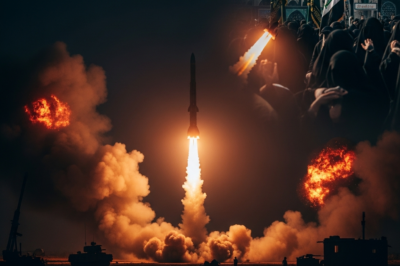
The geopolitical landscape of West Asia has reached a perilous and perhaps irreversible juncture as Tehran officially shifts its military and diplomatic focus toward Bahrain and Kuwait. This significant escalation follows a series of intensive U.S. airstrikes designed to neutralize Iranian-backed assets, creating a volatile feedback loop of violence and retribution. As the regional security architecture crumbles, the global community is witnessing a dramatic expansion of the conflict zone, moving beyond traditional flashpoints into the heart of the Gulf Cooperation Council (GCC) territories. The tension is further amplified by the unfolding funeral procession of Iran’s Supreme Leader, Ayatollah Ali Khamenei, which is being uniquely hosted on Iraqi soil. This symbolic move underscores the deep-seated influence of the ‘Axis of Resistance’ and the shifting loyalties that now define the modern Middle East. This article provides a comprehensive analysis of these developments, exploring the strategic motivations, the humanitarian implications, and the potential for an all-out regional war.
The Strategic Shift: Why Tehran is Targeting Bahrain and Kuwait
For decades, Bahrain and Kuwait have occupied a delicate position in the Middle East, serving as essential hubs for Western military operations while attempting to maintain a facade of regional neutrality. However, the recent targeting of these nations by Tehran signals a paradigm shift in Iranian military doctrine. Bahrain is of particular strategic importance as it hosts the United States Navy’s Fifth Fleet, the primary maritime force responsible for maintaining security in the Persian Gulf and the Red Sea. By directing threats and potentially kinetic operations toward Manama, Tehran is striking at the very heart of American naval projection in the region. The Iranian leadership views the Fifth Fleet not just as a defensive entity, but as a launchpad for the very strikes that have recently devastated IRGC-linked facilities.
Kuwait, on the other hand, serves as a vital logistics and staging ground for U.S. Army Central (ARCENT). With thousands of American troops stationed at Camp Arifjan and Ali Al Salem Air Base, Kuwait is the backbone of U.S. ground logistics in West Asia. Tehran’s decision to include Kuwait in its crosshairs is a calculated attempt to disrupt the supply lines and operational continuity of the American military. This shift from proxy warfare to direct threats against sovereign Gulf states represents a ‘total war’ mindset, where the distinction between the primary adversary (the U.S.) and its regional hosts is being systematically erased. Analysts suggest that this is also a warning to other GCC members, such as the UAE and Saudi Arabia, that their security cooperation with the West will come at an increasingly high price.
A Nation in Mourning: The Symbolic Significance of Khamenei’s Funeral in Iraq
The decision to host the funeral procession for Ayatollah Ali Khamenei in Iraq—specifically moving through the holy cities of Najaf and Karbala before reaching Baghdad—is a move laden with historical and religious symbolism. While Khamenei was the Supreme Leader of Iran, his influence as a Marja (religious authority) extended deep into the Shia heartlands of Iraq. By conducting the procession in Iraq, Tehran is consolidating its ‘soft power’ and demonstrating its reach over the Iraqi state. The event has seen hundreds of thousands of mourners, many of whom are members of the Popular Mobilization Forces (PMF), the state-sanctioned paramilitary groups that maintain close ties to the IRGC.
This funeral is more than a period of mourning; it is a massive geopolitical demonstration. It signals to the world that Iraq, despite years of U.S. investment and presence, remains firmly within the Iranian sphere of influence. The presence of high-ranking Iraqi officials alongside IRGC commanders during the procession effectively blurs the lines between the two nations’ security apparatuses. For Washington, the sight of Iranian flags flying alongside Iraqi ones in the streets of Baghdad is a stark reminder of the limitations of American influence in a post-invasion Iraq. The funeral has also served as a recruitment tool, with various militias vowing to avenge both the U.S. strikes and the loss of their spiritual leader, further radicalizing the regional youth and ensuring a steady supply of fighters for the ongoing conflict.
The U.S. Military Footprint: Strategic Implications of Recent Airstrikes
The U.S. strikes that precipitated this current crisis were described by the Pentagon as ‘necessary and proportionate’ responses to ongoing attacks on American personnel in Jordan and Syria. However, the scale and depth of these strikes—targeting command and control centers, intelligence hubs, and drone manufacturing sites—have clearly struck a nerve in Tehran. The U.S. military is currently operating in a highly complex environment where its ‘deterrence’ strategy is being openly challenged. The traditional model of ‘tit-for-tat’ engagement has evolved into a continuous loop of escalation where each side feels compelled to have the final word.
From a strategic standpoint, the U.S. finds itself in a precarious position. While it possesses superior firepower, its assets in the region are fixed and vulnerable. The targeting of Bahrain and Kuwait puts the U.S. in a reactive mode, forced to bolster the defenses of its allies while maintaining its own offensive posture. Furthermore, the political climate in Washington is divided, with some calling for a direct strike on Iranian territory and others warning of the catastrophic consequences of a third major war in the Middle East. The military implications are also logistical; if Kuwait and Bahrain become active combat zones, the ability of the U.S. to sustain long-term operations in the Levant will be severely compromised.
Regional Fragility: The Economic and Security Impact on the GCC
The GCC countries, once seen as islands of stability in a chaotic region, are now facing an existential threat. The targeting of Bahrain and Kuwait has sent shockwaves through global energy markets. The Persian Gulf remains the world’s most critical transit point for oil and liquefied natural gas (LNG). Any sustained conflict in these waters would lead to a dramatic spike in energy prices, potentially triggering a global recession. For the GCC states, the economic fallout is coupled with a profound security dilemma. They must decide whether to lean further into their security pacts with the U.S. or attempt to de-escalate with Iran through secret diplomatic channels.
The internal stability of these nations is also at risk. Bahrain, in particular, has a significant Shia population that has historically been at odds with the ruling Sunni monarchy. Tehran has often been accused of fomenting dissent within Bahrain, and the current crisis provides a perfect cover for domestic unrest. In Kuwait, the government is navigating a difficult path, trying to maintain its long-standing alliance with Washington without becoming a direct target of Iranian missiles. The collective defense mechanism of the GCC is being tested like never before, and the lack of a unified response reflects the deep-seated fears and differing priorities of the member states.
The Role of Iraq as a Geopolitical Buffer Zone
Iraq has long been the ‘lungs’ of Iranian foreign policy, providing both a physical and political buffer between Tehran and its rivals. In the current crisis, Iraq’s role is dual-faceted. On one hand, it is the host of the Iranian mourning rituals, providing a platform for anti-Western sentiment. On the other, it remains a nation that hosts U.S. troops and relies on Western financial systems. The Iraqi government, led by Prime Minister Mohammed Shia al-Sudani, is performing a delicate balancing act, trying to prevent his country from becoming the primary battlefield of a U.S.-Iran war.
However, the hosting of Khamenei’s funeral suggests that the balance is tilting heavily in Tehran’s favor. The Iraqi parliament has faced renewed pressure to pass legislation demanding the immediate withdrawal of all foreign forces. If the U.S. is forced to leave Iraq, its ability to monitor and counter Iranian influence in Syria and Lebanon would virtually evaporate. This would create a land bridge for Iran to move weapons and personnel from its borders all the way to the Mediterranean, fundamentally changing the security map of the entire Middle East. Iraq’s sovereignty is currently a fiction maintained by both sides to avoid a vacuum, but the current escalation may finally tear that veil away.
Future Outlook: Potential Scenarios for De-escalation or All-Out War
The path forward is fraught with danger, and the international community’s ability to mediate is at an all-time low. One potential scenario is a ‘controlled escalation,’ where both sides continue to strike proxy targets while avoiding direct conflict on each other’s sovereign soil. However, the targeting of Bahrain and Kuwait suggests that we may have already moved past this stage. A second, more dire scenario is a full-scale regional war. This would involve direct missile exchanges between Iran and its neighbors, the total closure of the Strait of Hormuz, and a massive American intervention that would likely draw in other global powers like Russia or China.
A third possibility is a diplomatic ‘grand bargain,’ though this seems increasingly unlikely in the current climate of mourning and militarism. For any de-escalation to work, there would need to be a fundamental rethink of the security architecture in West Asia, one that includes Iran as a stakeholder rather than just an adversary. Until then, the cycle of violence is likely to continue. The funeral of Khamenei marks the end of an era, but the actions taken by Tehran in its wake suggest that the next chapter will be defined by even greater instability and bloodshed. The world must prepare for a long and difficult period of volatility in West Asia, where the lines between state and non-state actors continue to blur and the risk of miscalculation remains at an all-time high.



































Leave a Reply