
Introduction: A Bombshell Allegation Shakes the Subcontinent
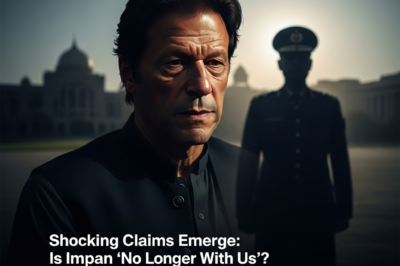
In a political landscape already fraught with tension, a sensational claim has emerged from the heart of Pakistan that has sent shockwaves through the international community. A noted Pakistani journalist, citing anonymous but high-level ‘military sources’, has suggested that the former Prime Minister and Chairman of the Pakistan Tehreek-e-Insaf (PTI), Imran Khan, is ‘no longer with us’. This phrase, loaded with ambiguity and potential dread, has ignited a firestorm of speculation regarding the physical well-being and political future of the man who remains arguably the most popular figure in the country despite his incarceration. Whether this implies a permanent physical absence or a definitive, irreversible removal from the political chessboard remains the subject of intense debate. This report comes at a time when Pakistan is grappling with an unprecedented economic crisis, a surge in militant activity, and a deep-seated institutional conflict between the civilian leadership and the powerful military establishment. The mere suggestion that the military has moved to permanently resolve the ‘Imran Khan problem’ raises terrifying questions about the rule of law and the stability of a nuclear-armed nation already teetering on the edge of chaos.
The Anatomy of the Allegation: Deciphering the Journalist’s Claim
The report, which first surfaced through digital channels and was later highlighted by major international outlets like The Times of India, hinges on the testimony of a seasoned media professional with deep ties to the Pakistani security apparatus. According to the claim, these ‘military sources’ have indicated that the chapter of Imran Khan in Pakistani politics has been closed in a manner that allows for no return. In the Byzantine world of Pakistani intelligence, such leaks are rarely accidental. They often serve as trial balloons or psychological operations designed to gauge public reaction or to demoralize the opposition. However, the gravity of this specific claim—using language that traditionally hints at demise—has led to a frantic search for clarity. Supporters of the PTI have reacted with a mix of fury and disbelief, demanding immediate proof of life from the authorities at Adiala Jail. The lack of a swift, transparent, and verifiable rebuttal from the government or the Inter-Services Public Relations (ISPR) has only served to fan the flames of conspiracy. If these reports are even partially accurate in their implication of foul play or complete isolation, it marks a dark turning point in the history of a nation that has seen its prime ministers hanged, assassinated, or sent into permanent exile.
The Troubled History of Imran Khan and the ‘Establishment’
To understand the weight of these rumors, one must look back at the volatile relationship between Imran Khan and the Pakistani military, often referred to as ‘The Establishment’. Khan rose to power in 2018 in an election widely believed to have been managed by the military to sideline the traditional dynastic parties, the PML-N and the PPP. For three years, Khan and the military were famously on the ‘same page’, with the Prime Minister acting as the civilian face of a hybrid regime. However, the relationship soured over the appointment of the Director-General of the Inter-Services Intelligence (ISI) and disagreements on foreign policy, particularly concerning the United States and Afghanistan. Following his ouster via a vote of no-confidence in April 2022—an event Khan claims was a US-backed regime change operation supported by the military—the former cricketer-turned-politician turned his rhetoric against the very generals who once supported him. This culminated in the events of May 9, 2023, where PTI supporters allegedly attacked military installations following Khan’s arrest. Since then, the state has launched a massive crackdown, dismantling the PTI’s leadership structure and confining Khan to a series of legal battles and prison cells.
Inside Adiala Jail: The Veil of Secrecy and Health Concerns
Imran Khan has been held in Adiala Jail for months, facing a litany of charges ranging from the Toshakhana corruption case to the Cipher case involving state secrets. His legal team and family have repeatedly raised concerns about his living conditions, alleging that he is being kept in a small, damp cell with limited access to basic amenities. More alarmingly, there have been frequent claims of ‘slow poisoning’ or medical neglect. These allegations, while dismissed by the government as ‘political drama’, provide the necessary backdrop for rumors of his demise to take root. In a country where the state controls the flow of information from high-security prisons, the public is often left to rely on leaked reports and hearsay. The recent claims by the journalist tap into this deep-seated distrust of the official narrative. If Khan is indeed incapacitated or worse, the question arises: why now? Is it a response to his refusal to strike a ‘deal’ to leave the country, or is it a desperate measure to prevent a PTI-led resurgence in the lead-up to future political cycles? The opacity of the Pakistani prison system ensures that until a neutral third party or a verified video is released, the truth remains obscured by the thick walls of Adiala.
Geopolitical Ripple Effects: A Region on High Alert
The stability of Pakistan is a matter of global concern, and any development regarding Imran Khan has immediate geopolitical consequences. For India, a destabilized Pakistan poses a significant security risk, as internal turmoil often leads the Pakistani military to escalate tensions on the border to distract the domestic audience. For the United States, which has had a frosty relationship with Khan, the priority remains a stable partner for counter-terrorism efforts in the region. China, Pakistan’s ‘all-weather friend’, has billions invested in the China-Pakistan Economic Corridor (CPEC) and views any civil unrest as a threat to its strategic interests. If the rumor of Khan’s end proves true, it could trigger a massive civil uprising. The PTI’s base is large, young, and increasingly radicalized by what they perceive as the theft of their democratic rights. A leaderless, angry mob in a country with significant internal divisions is a recipe for a civil war-like scenario. International observers are watching the situation with bated breath, knowing that the fallout from such an event would not be contained within Pakistan’s borders but would bleed into the security dynamics of the entire South Asian region.
The Information Warfare: Social Media vs. State Narrative
We are living in an era of digital warfare, and Pakistan is a primary theater for this conflict. The claim that Khan is ‘no longer with us’ first gained traction on social media platforms like X (formerly Twitter) and YouTube, where pro-PTI vloggers and independent journalists battle the state-aligned mainstream media. The Pakistani government has frequently resorted to internet shutdowns and blocking social media to control the narrative, but this has only increased the reliance on unverified sources. The ‘military sources’ cited by the journalist represent a classic trope in Pakistani media—a way to lend authority to a claim without needing to provide concrete evidence. However, in the absence of a free press, these leaks are sometimes the only way for dissident voices to communicate urgent warnings. The danger lies in the potential for misinformation to trigger real-world violence. If the PTI base believes their leader has been eliminated, the resulting chaos could provide the military with a pretext to impose martial law or further suspend civil liberties, creating a feedback loop of authoritarianism and resistance.
Constitutional Crisis and the Future of the PTI
Should the claims regarding Imran Khan be substantiated—whether they refer to his death, a permanent medical coma, or a forced ‘disappearance’—Pakistan faces a constitutional and existential crisis. Khan is not just a politician; he is the sun around which the PTI orbits. Without him, the party risks fracturing into several smaller factions, as different leaders vie for control. However, the ‘Imran Khan brand’ is built on his personal charisma and his stance against corruption and foreign interference. If he becomes a martyr, his influence could potentially become even more potent, serving as a rallying cry for a movement that the military cannot easily suppress. On the other hand, the current government, led by the PML-N and PPP coalition, would find itself in an impossible position, carrying the blame for a tragedy they may not have directly caused but benefited from. The legal succession within the party is also unclear, as many of Khan’s top lieutenants are either in jail or have been forced to leave politics. The future of democracy in Pakistan hangs by a thread, and the resolution of this mystery will determine if the country moves toward a fragile recovery or a total systemic collapse.
Conclusion: The Urgent Need for Transparency
The explosive claim that Imran Khan is ‘no longer with us’ serves as a stark reminder of the volatility of Pakistani politics and the opacity of its power structures. Whether this report is a grim reality or a sophisticated piece of disinformation, it highlights the dangerous levels of polarization within the country. For the sake of national stability and the prevention of widespread violence, the Pakistani authorities must provide immediate and incontrovertible proof of Imran Khan’s status. Silence is no longer an option. As the world watches, the ‘military sources’ cited by the journalist have thrown a gauntlet that the establishment must address. If Pakistan is to move forward, it must break the cycle of political victimization and state-sponsored secrecy. The life or death of Imran Khan is no longer just a personal matter or a party concern; it is the ultimate test of Pakistan’s survival as a functioning state. The implications of this claim will echo for years to come, potentially reshaping the destiny of millions in one of the world’s most sensitive regions.





































Leave a Reply