
The Stakes of the Durand Cup 2026 Quarterfinals
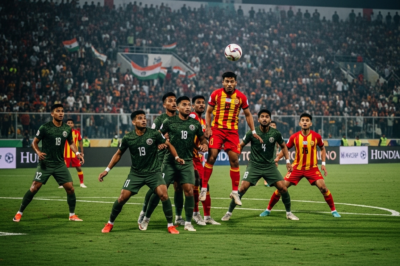
The 135th edition of the Durand Cup has reached its fever pitch as the knockout stages commence, bringing together two contrasting yet equally determined sides: the Indian Army Football Team (IAFT) and the legendary East Bengal FC (EBFC). This quarterfinal clash is not merely a game of football; it is a battle of ideologies, a test of professional flair against military discipline, and a significant milestone in the 2026 Indian football calendar. As the sun beats down on the hallowed turf, the atmosphere is electric, with thousands of fans draped in red and gold clashing with the stoic, disciplined presence of the armed forces supporters. The scoreline currently reads 0-0, but this deadlock hides the tactical chess match unfolding on the pitch. For East Bengal, a club with a century of history, this tournament represents a chance to reclaim their status as the kings of Indian football. For the Indian Army FT, it is an opportunity to prove that the grit and physical conditioning of the services can overcome the technical superiority of a top-tier professional club. The narrative of this match is deeply rooted in the history of the Durand Cup itself, the oldest football tournament in Asia and the third oldest in the world, which began in Simla in 1888 as a way to keep the British Indian Army fit and engaged. Today, that legacy continues as the Army side looks to upstage one of the most successful clubs in the competition’s history.
Tactical Breakdown: Rashid and Vishnu in Focus
In the opening exchanges of this quarterfinal, two names have stood out on the team sheets: Rashid for the Indian Army FT and Vishnu for East Bengal. Rashid, operating in a pivotal midfield role for the Army side, has been the engine room that keeps their defensive shape intact. His ability to intercept play and immediately transition into a counter-attacking posture has been crucial in the first thirty minutes. The Army team typically utilizes a 4-4-2 formation that emphasizes narrow defensive lines, making it incredibly difficult for teams like East Bengal to play through the middle. On the other hand, Vishnu has been the spark for East Bengal. Known for his explosive pace and technical dribbling, Vishnu has been tasked with stretching the Army’s backline. The coaching staff at East Bengal has clearly instructed him to stay wide, drawing the Army’s full-backs out of position to create gaps for the late-arriving midfielders. The duel between Vishnu’s flair and Rashid’s tactical awareness is the defining subplot of this 0-0 stalemate. Statistics from the first half show that while East Bengal has enjoyed nearly 65% of the possession, the Indian Army FT has recorded more successful tackles and interceptions in the final third. This suggests that while the Red and Gold brigade has the ball, they are finding it nearly impossible to penetrate the ‘Great Wall’ of the services. The physical conditioning of the IAFT players allows them to press high without losing their shape, a trait that often frustrates professional sides accustomed to more time and space on the ball.
The Historical Significance of the Durand Cup for East Bengal
For East Bengal, the Durand Cup is more than a pre-season warm-up; it is a sacred competition. Having won the title 16 times (joint most with Mohun Bagan), the club views this trophy as a barometer of their upcoming season. In the 2026 season, the pressure on the management and the players is immense. After a series of mixed results in the league, a deep run in the Durand Cup is seen as a necessity to pacify a demanding fan base. Historically, East Bengal has always thrived in the high-pressure environment of the knockout stages. The club’s identity is built on ‘Ghoti’ pride and a relentless attacking philosophy. However, the modern game has evolved, and as seen in this quarterfinal, East Bengal is having to adapt to the high-pressing, physically demanding style of teams like the Indian Army FT. The transition from the legacy of the 1970s and 80s to the tactical nuances of 2026 has been a journey of highs and lows. This match serves as a litmus test for their progress. If they can break down a disciplined military unit, it will signal that their offensive patterns are finally clicking under the current tactical regime. The supporters, known for their vocal presence, are currently expectant, their chants echoing through the stadium, demanding a moment of magic from their stars to break the 0-0 deadlock.
The Rise of the Services Teams in Indian Football
The Indian Army Football Team’s presence in the quarterfinals of the 2026 Durand Cup is no fluke. Over the last few years, there has been a concerted effort within the Services Sports Control Board (SSCB) to modernize their training facilities and coaching staff. No longer are the Army teams seen as merely ‘fit’ sides that lack technical depth. They are now recruiting young talent from across the country and providing them with a platform that rivals many professional academies. The performance against East Bengal today highlights their defensive organization. Each player knows their role precisely, a hallmark of military training translated onto the football field. In the group stages, the IAFT showed they could handle pressure, coming through difficult fixtures with clean sheets. Their journey to this quarterfinal has been characterized by a ‘never say die’ attitude. Even when pinned back by the likes of East Bengal, the IAFT players exhibit a level of composure that is often missing in younger professional squads. This rise is beneficial for the national ecosystem, as it provides a different style of competition for the ISL and I-League clubs, forcing them to find creative solutions to rigid defensive structures. The scoreline of 0-0 at this stage of the match is a testament to the tactical parity that the Services teams have achieved through sheer hard work and strategic planning.
Key Match Dynamics and Future Outlook
As the game progresses into the second half, the physical toll will begin to show. This is where the Indian Army FT might find an advantage. Their players are conditioned for extreme endurance, often outlasting professional opponents in the final fifteen minutes of matches. East Bengal, conversely, will look to their bench strength. With the 2026 season being particularly congested, squad depth is vital. We can expect substitutions around the 60-minute mark to inject fresh energy into the wings. If the score remains 0-0, the possibility of extra time and penalties looms large. For IAFT, taking the game to penalties against a giant like East Bengal would already be seen as a moral victory, but their eyes are firmly on the semifinal prize. For East Bengal, failure to score within 90 minutes would be seen as a tactical setback. Looking beyond this match, the winner will likely face a formidable opponent in the semifinals, making this quarterfinal a crucial building block for momentum. The growth of the Durand Cup as a premier tournament in the Indian football calendar ensures that the stakes will only get higher. The 2026 edition has already seen record viewership, and matches like IAFT vs EBFC are the reason why. It represents the diversity of the sport in India—where the professional elite must constantly look over their shoulders at the rising power of the institutional and services teams. The technical analysis of the remaining minutes will likely focus on whether East Bengal can find the verticality needed to bypass the Army’s midfield or if a set-piece will be the deciding factor in this cagey encounter.
Conclusion: A Defining Moment for Indian Football
The 0-0 draw in the initial stages of this quarterfinal between Indian Army FT and East Bengal is a microcosm of the current state of Indian football: competitive, tactically evolving, and unpredictable. While East Bengal brings the prestige and the individual brilliance of players like Vishnu, the Indian Army FT brings a collective unit led by the likes of Rashid that refuses to be intimidated. As the Durand Cup 2026 continues, this match will be remembered as a tactical masterclass regardless of the final score. It highlights the narrowing gap between professional clubs and institutional sides, a trend that bodes well for the overall depth of the talent pool in the country. Fans of the Red and Gold will be hoping for a breakthrough, while the neutral observer will appreciate the sheer resilience of the IAFT. Ultimately, the Durand Cup continues to serve its purpose: providing a grueling, high-stakes platform where legends are made and underdogs find their voice. As the referee’s whistle signals the continuation of play, all eyes remain fixed on the pitch to see who will blink first in this high-octane battle for a place in the semifinals.






































Leave a Reply