
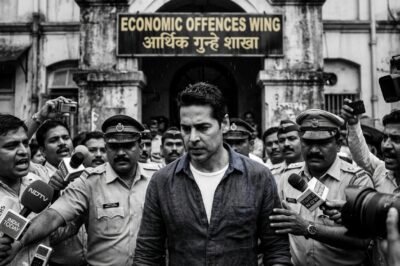
The glitz and glamour of Bollywood have once again been overshadowed by the dark clouds of legal scrutiny as the Mumbai Police Economic Offences Wing (EOW) took the unprecedented step of arresting actor Dino Morea in connection with the multi-crore Mithi River cleaning scam. This development has sent massive shockwaves through both the entertainment industry and the political corridors of Maharashtra, marking a significant escalation in a case that has been brewing for several years. The Mithi River, a vital yet chronically neglected waterway in Mumbai, has been the subject of numerous rejuvenation projects since the catastrophic floods of 2005, but these efforts have frequently been bogged down by allegations of systemic corruption, financial mismanagement, and the siphoning of public funds. The arrest of a high-profile figure like Morea suggests that investigators have uncovered substantial evidence linking the elite circles of Mumbai to the murky world of municipal contract fraud. As the news broke, crowds gathered outside the EOW office, reflecting the public’s intense interest in a case that combines celebrity lifestyle with the grim realities of urban infrastructure failure. This analysis delves deep into the specifics of the allegations, the historical context of the Mithi River project, and the potential long-term ramifications for all parties involved.
The Foundation of the Mithi River Project Controversy
To understand the gravity of the current situation, one must look back at the history of the Mithi River and the various desilting contracts awarded by the Brihanmumbai Municipal Corporation (BMC). Following the 2005 deluge that paralyzed Mumbai, the Mithi River Authority was formed with the mandate to widen, deepen, and beautify the 17.8-kilometer stretch of the river. Over the last decade and a half, thousands of crores of taxpayers’ money have been pumped into these projects. However, despite the massive expenditure, the river remains heavily polluted and prone to overflowing during the monsoon seasons. Investigative audits have repeatedly pointed toward a pattern of over-invoicing by contractors who were allegedly paid for work that was never fully executed.
The EOW’s investigation into this particular scam focuses on a series of contracts awarded between 2017 and 2021. During this period, several shell companies were allegedly utilized to divert funds away from the actual cleaning operations. These companies, many of which existed only on paper, were used to create a complex web of financial transactions designed to mask the ultimate beneficiaries of the diverted capital. The arrest of Dino Morea comes after months of forensic accounting where the EOW traced a portion of these funds to entities allegedly associated with the actor, raising questions about the role of celebrity intermediaries in government contracts.
The EOW Investigation and Specific Charges
The Economic Offences Wing has been meticulous in its approach, conducting raids across multiple locations in Mumbai and Thane before making the move to arrest Morea. Sources within the department indicate that the actor was questioned for over ten hours regarding his financial associations with a prominent infrastructure firm that held the primary contract for the river’s desilting process. The charges filed against him include Section 406 (Criminal breach of trust), Section 420 (Cheating), and Section 120B (Criminal conspiracy) of the Indian Penal Code. The EOW alleges that Morea served as a ‘brand consultant’ for certain firms involved in the scam, a position they believe was a facade for money laundering activities.
Furthermore, the investigation highlights that several of the trucks used for transporting silt were found to have registration numbers belonging to two-wheelers and passenger cars in the BMC’s records. This blatant forgery indicates a high level of collusion between the contractors and the administrative officials overseeing the project. The EOW is currently probing whether Morea’s involvement was limited to financial transactions or if he played a role in facilitating meetings between contractors and high-ranking bureaucrats to secure these lucrative but fraudulent tenders.
Deciphering the Financial Trail and Shell Companies
At the heart of the EOW’s case is a digital paper trail consisting of thousands of bank statements and internal memos. The prosecution argues that funds meant for the purchase of heavy machinery and the wages of laborers were instead funneled through a series of five distinct layers of transactions to obscure their origin. One of these layers reportedly involves a media and lifestyle company where Morea held a significant stake. Investigators claim that nearly INR 25 crore was transferred into this company’s accounts under the guise of ‘marketing and event management’ services that were never actually provided to the river project.
This method of operation is typical in large-scale white-collar crimes in India, where the reputations of public figures are leveraged to provide a veneer of legitimacy to illegal operations. The EOW is working closely with forensic experts to decode encrypted communications found on seized electronic devices, which they believe will reveal the exact nature of the instructions given regarding the movement of these funds. The actor’s legal team, however, maintains that all transactions were legitimate business payments and that Morea is being unfairly targeted due to his public profile.
Impact on the Entertainment Industry and Brand Endorsements
The arrest of a veteran actor and entrepreneur like Dino Morea has immediate and severe implications for the Bollywood brand landscape. Morea, who transitioned from a successful modeling career to acting and later to various business ventures, has been a familiar face in the Indian luxury and fitness markets. Brands associated with him are now in a state of crisis management, with many moving to distance themselves or suspend active contracts. The incident reinforces the growing demand for stricter due diligence regarding the private business dealings of celebrities who serve as the faces of major corporations.
In the film and web series industry, the arrest creates a logistical nightmare for ongoing productions. Morea, who recently saw a career resurgence with prominent roles in digital streaming platforms, has several projects in various stages of post-production. The legal uncertainty surrounding his availability for promotional activities or potential re-shoots could lead to significant financial losses for production houses. This case serves as a cautionary tale for the industry, highlighting how personal business ventures and political associations can suddenly derail professional acting careers.
Legal Ramifications and the Judicial Path Forward
As Dino Morea is produced before the court for remand, the focus shifts to the legal strategies that will be employed by both the prosecution and the defense. The EOW is expected to seek maximum custody to prevent any potential tampering with evidence or influencing of witnesses, given the high stakes and the involvement of powerful contractors. The defense is likely to argue for bail on the grounds of cooperation with the investigation and the lack of direct involvement in the operational aspects of the Mithi River project. However, in cases involving the siphoning of public funds, the judiciary often takes a stringent view, prioritizing the recovery of assets and the exposure of the entire conspiracy.
The legal proceedings are expected to be lengthy, involving a multitude of witnesses ranging from BMC engineers to junior accounts officers. If the EOW can prove a direct link between the scam proceeds and Morea’s personal assets, the case could move toward the Attachment of Property under the Prevention of Money Laundering Act (PMLA). This would represent a significant blow to the actor’s financial standing and could set a legal precedent for how celebrity involvement in infrastructure scams is handled in the future.
Conclusion: Future Implications and Public Accountability
The arrest of Dino Morea in the Mithi River scam case is a watershed moment for Mumbai’s administrative and legal history. It signals a shift toward holding not just the contractors and officials accountable, but also the influential figures who lend their names and platforms to questionable enterprises. As the investigation continues to unfold, it is likely that more names from the social and political elite will emerge, further exposing the depth of the rot within the city’s infrastructure management systems. The public, which bears the brunt of the annual flooding caused by the Mithi River’s poor condition, will be watching closely to see if this arrest leads to actual reform or if it remains a high-profile diversion.
Ultimately, the resolution of this case will be a test for the Mumbai EOW and the Maharashtra judicial system. It provides an opportunity to demonstrate that the law applies equally to all, regardless of their status in the world of entertainment. For the Mithi River, the hope remains that the spotlight brought by this scandal will finally lead to genuine cleaning efforts and the proper utilization of public funds, ensuring that the citizens of Mumbai are protected from future environmental disasters. The coming months will be crucial in determining whether this arrest is the first step toward justice or just another chapter in the long history of the city’s unresolved controversies.




































Leave a Reply