
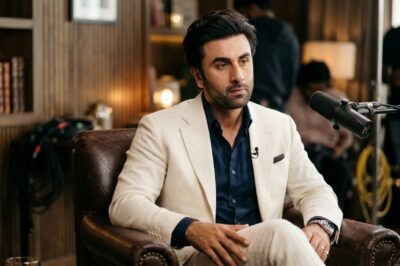
Ranbir Kapoor, often hailed as the most versatile actor of his generation, finds himself at the epicenter of a monumental cinematic storm. As he prepares to step into the divine shoes of Lord Rama for Nitesh Tiwari’s magnum opus, Ramayana, the actor has faced an unprecedented wave of skepticism and criticism. This project isn’t just another film; it is a cultural artifact that carries the weight of a billion people’s faith and expectations. Kapoor’s recent response to this criticism—brushing it off to focus on those who value his artistic intentions—is not just a personal statement but a strategic positioning in a landscape where Bollywood is struggling to find its footing amidst shifting audience loyalties. By focusing on intentions, Kapoor attempts to shift the narrative from religious scrutiny to artistic integrity, a move that is as risky as it is necessary. In this deep dive, we explore the financial implications of this casting, the historical context of mythological adaptations, and why this specific film represents a make-or-break moment for the Indian film industry’s big-budget future. The discourse surrounding the film has transcended mere fan chatter, evolving into a broader debate about representation and the responsibility of public figures when handling sacred texts.
The Weight of the Crown: Portraying Lord Rama in a Hyper-Critical Era
The portrayal of Lord Rama is perhaps the most scrutinized role in Indian cinema history. Unlike conventional roles, Rama carries the weight of divinity and the moral compass of a civilization. For Ranbir Kapoor, this transition comes on the heels of the massive success of Animal, a film that was criticized for its portrayal of toxic masculinity. The juxtaposition of these two roles has provided fuel for critics who argue that the actor’s recent filmography is at odds with the sanctity required for Ramayana. However, supporters argue that an actor’s job is to inhabit different worlds, and Kapoor’s dedication—rumored to include strict dietary changes and voice training—shows his commitment to the role.
The criticism often stems from a place of deep-seated reverence for the source material, where any deviation from the established iconography is met with resistance. Kapoor’s strategy of focusing on intentions suggests that the production is aiming for a version of the epic that is emotionally grounded and spiritually respectful, rather than just a visual spectacle. This nuanced approach is essential in an era where social media can amplify minor grievances into full-scale boycotts. By addressing the noise early, Kapoor is attempting to build a shield of authenticity around the project before the promotional engine even begins to roar at full capacity.
Market Dynamics: Why the Ramayana Franchise is a High-Stakes Gamble
From a financial perspective, Ramayana is not just a film; it is a massive economic engine. The Indian film industry is currently witnessing a trend of Pan-Indian epics that aim to capture both domestic and international markets. The budget for Nitesh Tiwari’s trilogy is estimated to be among the highest in Indian cinema history, potentially crossing the 500-crore mark for the first installment alone. This necessitates a box office return that surpasses traditional blockbusters, requiring a perfect alignment of star power, storytelling, and cultural sentiment.
Investors and distributors are watching closely, as the success of this film could dictate the trajectory of mythological storytelling for the next decade. If the film resonates, it opens the doors for a massive ecosystem of merchandise, theme parks, and digital spin-offs. However, a failure would be catastrophic, potentially leading to a period of risk-aversion among major studios. Kapoor’s public stance is a crucial part of this financial puzzle, as it seeks to stabilize the brand’s image amidst early PR tremors. The market demands stability, and the lead actor’s composure is a key indicator of the project’s internal confidence.
Analyzing Kapoor’s Media Strategy: Intentions vs. Public Perception
Analyzing Kapoor’s media strategy reveals a shift toward emotional branding. By acknowledging the criticism but refusing to be deterred by it, he is signaling to his core audience that the project is being handled with care. This approach aims to bypass the cancel culture that often plagues high-profile Bollywood releases. In the past, defensive reactions from stars have often backfired, leading to boycotts. By contrast, Kapoor’s calm and collected response serves to de-escalate the situation, shifting the burden of proof onto the film itself rather than the actor’s personal life.
The intentions he speaks of refer to the creative team’s desire to present a definitive version of the Ramayana for the modern generation—one that honors the past while utilizing the cutting-edge technology of the present. This narrative is essential for winning over the fence-sitters who may be skeptical of yet another adaptation. Furthermore, by framing the project as a personal journey of intent, he humanizes the production, making it harder for critics to attack it as a mere commercial cash grab. This strategy is reflective of a more mature Bollywood PR machine that understands the value of emotional resonance over aggressive marketing.
The Nitesh Tiwari Factor: Directorial Vision Amidst Scriptural Debates
A significant factor in Kapoor’s confidence is the involvement of Nitesh Tiwari. Known for Dangal, a film that balanced commercial success with emotional depth, Tiwari is seen as a director who can handle sensitive cultural narratives without succumbing to hyperbole. His vision for Ramayana is reportedly rooted in the Valmiki version, focusing on the human elements of the divine characters. This directorial choice is vital because it provides Kapoor with a framework that prioritizes substance over style, ensuring the characters feel real despite their divine stature.
The collaboration between Tiwari and Kapoor is expected to yield a performance that is nuanced and relatable. For the industry, this partnership represents the gold standard of talent and vision. Much of the market’s optimism is tied to Tiwari’s proven track record of delivering high-quality content that resonates with both urban and rural audiences. By trusting Tiwari’s vision, Kapoor is essentially outsourcing the cultural validation of the film to a director who has already earned the public’s trust, thereby mitigating some of the personal heat he might otherwise face.
Comparative Landscapes: Bollywood’s Recent Struggles with Mythology
The shadow of Adipurush looms large over any new adaptation of the Ramayana. That film’s struggle with VFX and dialogue serves as a cautionary tale for Kapoor and Tiwari. The audience’s reaction to Adipurush demonstrated that they will not accept a sub-par representation of their deities, regardless of the star power involved. Consequently, the team behind the new Ramayana is reportedly taking extra precautions with the script and the visual language. They are aware that the margin for error is non-existent when dealing with such sacred material.
This comparison is unavoidable, but it also provides a strategic advantage. By observing where previous films failed, the current production can fine-tune its approach to avoid the same pitfalls. Kapoor’s insistence on the intentions of the team serves as an assurance that they have learned the lessons of the past. The focus on high-end VFX, managed by globally renowned studios like DNEG, suggests a commitment to a visual standard that can compete on the world stage, further distancing it from previous failures and setting a new benchmark for Indian cinema.
Global Ambitions: Can Ramayana Transcend Cultural Barriers for Universal Success?
Beyond the domestic market, Ramayana is being positioned as India’s answer to global fantasy franchises like Lord of the Rings. The universal themes of good versus evil, duty, and sacrifice have the potential to transcend cultural barriers if presented with high production values. The casting of Yash as Ravana adds a significant South Indian appeal, making it a truly Pan-Indian project. This diversity is a strategic move to ensure that the film has a massive opening across all regions of India, unifying different cinematic markets under one banner.
Furthermore, the international distribution rights are expected to fetch record-breaking prices. Kapoor’s global recognition as a top-tier actor adds a layer of prestige that is necessary for attracting international audiences. The film’s success internationally would not only boost its financial standing but also elevate the profile of Indian cinema as a whole, proving that it can produce world-class epics that are culturally authentic yet globally accessible. This global ambition is why the intentions of the lead actor are so vital—they set the tone for how the film is perceived in the international press.
Conclusion: The Future of Pan-Indian Epics and the Legacy of the Kapoor Clan
The road ahead for Ranbir Kapoor and the Ramayana team is fraught with challenges, both creative and commercial. However, Kapoor’s ability to brush off early criticism and remain focused on the long-term vision is a promising sign for the film’s stability. The film represents a pivotal moment for Bollywood, testing its ability to handle sacred narratives in a modern, polarized world. As the production moves forward, the focus will inevitably shift from the actors’ personal lives to the quality of the footage. Ultimately, the audience will be the final judge of whether Kapoor’s intentions have translated into a cinematic experience that honors the legacy of the Ramayana.
If successful, this project will not only redefine Kapoor’s career but also set a new benchmark for mythological storytelling in the 21st century. The implications for the business of cinema are clear: the future belongs to those who can marry grand spectacle with deep-rooted cultural resonance. Ranbir Kapoor is betting his legacy on being the one to lead that charge, and the industry is holding its breath to see if his intentions can indeed transform into a historic success. The ripples of this film will be felt for years, shaping how stories of faith are told on the silver screen.







































Leave a Reply