
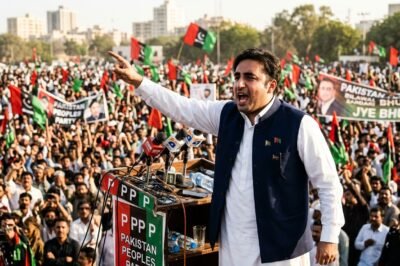
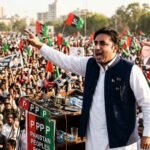
The political landscape of Pakistan has been pushed into a state of high-octane turbulence following the explosive warnings issued by Bilawal Bhutto Zardari, the Chairman of the Pakistan Peoples Party (PPP). In a move that has sent ripples through the corridors of power in Islamabad and the bustling streets of Karachi, Bilawal has voiced a vehement and uncompromising opposition to any plans aimed at redrawing the administrative map of the Sindh province. The rhetoric used—invoking images of ‘bloodshed’ in the nation’s most vital urban centers, Karachi and Hyderabad—highlights the existential nature of this conflict. For the PPP, the sanctity of Sindh’s borders is not merely a matter of administrative preference but a cornerstone of their political identity and ethnic survival. This standoff comes at a time when Pakistan is already grappling with an unprecedented economic crisis and a fragile democratic transition, making the prospect of internal ethnic strife a nightmare scenario for regional stability.
Bilawal’s warnings are a direct response to renewed discussions regarding the creation of new administrative units or potentially even new provinces within Pakistan. While proponents of these changes argue that Karachi and Hyderabad require autonomous governance to manage their unique urban challenges, the PPP views such proposals as a deliberate attempt to bifurcate the Sindhi identity and strip the provincial government of its most lucrative economic assets. The emotional weight of this issue cannot be overstated; for the Sindhi-speaking population, Karachi is the heart of their ancestral land, while for the Mohajir (migrant) community, it is their political and cultural center. This clash of narratives is the fuse that Bilawal Bhutto warns could ignite a firestorm of violence, reminiscent of the dark decades of ethnic conflict that paralyzed Karachi in the late 20th century.
The Historical Context of the Sindh Province Identity
To understand why the suggestion of redrawing the map of Sindh is met with such hostility, one must look deep into the historical and cultural fabric of the region. Sindh has a distinct identity that predates the creation of Pakistan in 1947. The Sindhi people possess a profound sense of ownership over their land, often referring to it as the ‘Land of the Sufis.’ Following the partition of India, a massive influx of Urdu-speaking migrants (Mohajirs) settled in the urban centers of Karachi and Hyderabad. While this demographic shift initially led to a vibrant cultural synthesis, it also sowed the seeds of a long-standing ethnic competition for resources, jobs, and political representation.
The PPP has historically positioned itself as the guardian of Sindhi interests, using the ‘Sindh Card’ to mobilize support against perceived federal overreach. Any attempt to detach Karachi—the capital and the economic jewel of the province—from the rest of Sindh is seen as an assault on the territorial integrity of the province itself. Bilawal Bhutto Zardari’s stance is a continuation of the legacy of his grandfather, Zulfikar Ali Bhutto, and his mother, Benazir Bhutto, both of whom championed the rights of the provinces against a centralized power structure. By framing the debate as a choice between provincial unity and ‘bloodshed,’ Bilawal is tapping into deep-seated fears of marginalization among the Sindhi population.
The Administrative Proposal: Efficiency vs. Political Maneuvering
The argument for redrawing the map usually stems from the administrative difficulties of governing a city as massive and complex as Karachi from a provincial level. Supporters of the ‘Karachi Province’ or ‘Federal City’ model argue that the city’s infrastructure, security, and public services have been neglected by the PPP-led provincial government, which they claim focuses more on its rural base. They suggest that smaller administrative units would allow for more local accountability and efficient resource allocation. From a purely technocratic perspective, the idea has merit; Karachi is a megacity of over 20 million people, and its needs are vastly different from those of the agrarian hinterlands of Upper Sindh.
However, Bilawal Bhutto and the PPP view these arguments as a smoke screen for political gerrymandering. They argue that the primary movers behind these proposals are rival political factions, such as the Muttahida Qaumi Movement (MQM) and certain elements within the federal establishment, who wish to carve out a power base where they can challenge the PPP’s hegemony. For Bilawal, the timing of these suggestions is particularly suspicious, appearing whenever the federal government feels the need to exert pressure on the provincial administration. The PPP maintains that administrative efficiency can be achieved through local government reforms rather than a traumatic redrawing of boundaries that would inevitably lead to ethnic polarization.
Economic Implications: The Battle for Karachi’s Revenue
At the core of the opposition to redrawing the map is a cold, hard economic reality. Karachi is the financial powerhouse of Pakistan, contributing more than 70% of the federal government’s revenue and a significant portion of the provincial GDP. It houses the country’s only major ports, its largest stock exchange, and the headquarters of its major banks and corporations. If Karachi were to be separated from the rest of Sindh, the remaining province would lose its primary source of income, leaving the rural areas of Sindh in a state of severe economic distress.
The PPP argues that the revenue generated by Karachi is essential for the development of the entire province. Schools, hospitals, and infrastructure projects in the interior of Sindh are funded by the taxes collected in the urban centers. Bilawal Bhutto has repeatedly pointed out that the division of Sindh would not just be a political loss but an economic catastrophe for millions of people. This economic interdependence is one of the strongest arguments the PPP uses to maintain the status quo. Furthermore, any move to create a separate administrative unit for Karachi would lead to disputes over debt sharing, water rights, and the distribution of federal funds, potentially leading to a complete breakdown of governance.
Constitutional Roadblocks and Legal Battles
Redrawing the map of a province in Pakistan is not a simple administrative task; it is a constitutional monumental undertaking. According to Article 239 of the Constitution of Pakistan, any amendment that would alter the boundaries of a province requires a two-thirds majority in both the National Assembly and the Senate. Crucially, it also requires the approval of the provincial assembly of the affected province by a two-thirds majority. Since the PPP holds a dominant position in the Sindh Assembly, any legal attempt to redraw the map is dead on arrival as long as the PPP remains in power.
Despite this constitutional safeguard, the fear within the PPP is that the federal government might attempt to use ‘judicial activism’ or emergency powers to bypass the provincial assembly. Bilawal’s warnings of ‘bloodshed’ are also a message to the judiciary and the military establishment: that any attempt to subvert the constitutional process regarding Sindh’s boundaries will meet with massive civil resistance. The legal battle is therefore just one front in a much larger struggle for provincial autonomy that has defined Pakistani politics since the passage of the 18th Amendment, which significantly devolved powers from the center to the provinces.
The Threat of Violence and Social Cohesion
The most alarming aspect of Bilawal Bhutto’s rhetoric is the explicit mention of bloodshed in Karachi and Hyderabad. These two cities have a dark history of ethnic violence between the Sindhi-speaking and Urdu-speaking populations. In the 1980s and 90s, political disagreements frequently escalated into street battles, targeted killings, and city-wide strikes that crippled the economy. The scars of those conflicts remain, and the social fabric of these cities is still fragile. Bilawal is warning that raising the issue of partitioning Sindh is like opening a Pandora’s box of ethnic resentment.
Social cohesion in Sindh is predicated on a delicate balance of power. The PPP has spent years trying to bridge the gap between urban and rural constituencies, often with varying degrees of success. By raising the stakes to the level of potential violence, Bilawal is signaling that the PPP will not hesitate to mobilize its street power to protect what it sees as the territorial integrity of its homeland. This stance, while popular among his core base, risks escalating tensions further if rival groups like the MQM-P decide to counter-mobilize, leading to a volatile situation that the overstretched security forces may struggle to contain.
Conclusion: The Future of the Federation
The standoff between the PPP and those advocating for a redrawn map of Sindh is more than just a local dispute; it is a test of the Pakistani federation’s ability to manage its internal diversity. Bilawal Bhutto Zardari’s stark warnings of ‘bloodshed’ in Karachi and Hyderabad serve as a grim reminder of the high stakes involved in tampering with provincial identities. While the need for better urban governance in cities like Karachi is undeniable, the path to reform must be paved with political consensus rather than unilateral administrative decisions that threaten to tear the social fabric of the country apart.
For the future, the stability of Pakistan depends on whether its political leaders can move beyond ethnic zero-sum games and toward a more inclusive form of governance. The 18th Amendment provided a framework for provincial autonomy, but the ongoing friction suggests that the distribution of power and resources remains a deeply contested issue. As Bilawal Bhutto stands his ground, the federal government must tread carefully, recognizing that the cost of redrawing a map could be far higher than the benefits of administrative efficiency. The ghosts of past ethnic conflicts still haunt the streets of Karachi, and any move that risks bringing them back to life could have catastrophic consequences for the entire nation.






























Leave a Reply